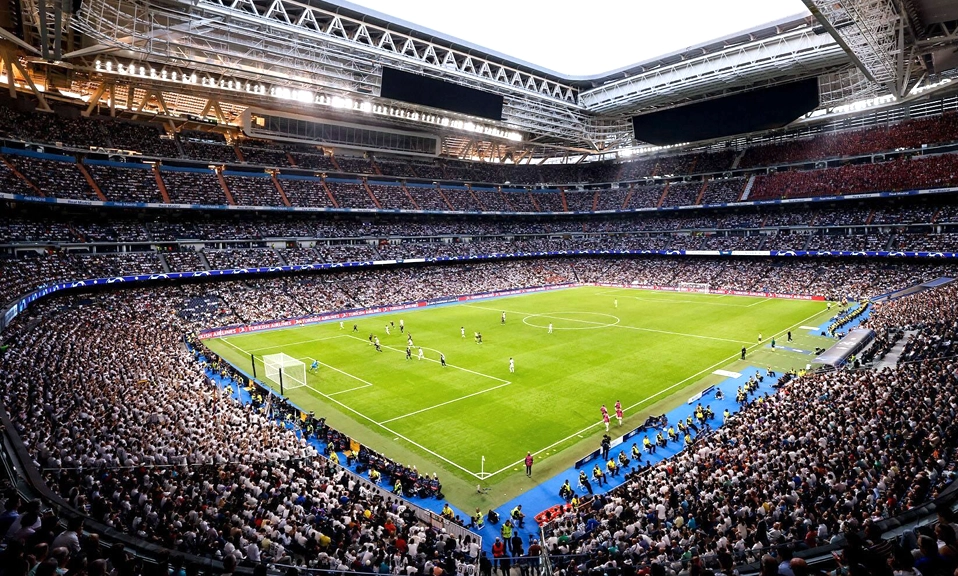
The billion-dollar giants of global sports have never been worth more. In 2026, the most expensive teams are no longer just beloved local institutions—they are global entertainment brands, real estate portfolios, and media empires rolled into one. From the Dallas Cowboys’ record-shattering $17 billion valuation to Real Madrid’s fifth consecutive year atop world football, the numbers are staggering. But what’s driving this explosion, and who exactly sits at the top of the pyramid? Here’s a closer look at the billion-dollar giants dominating global sports in 2026.
🏈 The NFL: The Undisputed Financial Engine
The National Football League is, without question, the most valuable sports league on the planet. Its 32 franchises are now worth a combined $300 billion**, with the average team valued at **$9.5 billion—a 34% increase from the previous year.
The Dallas Cowboys remain the gold standard. Valued at a record-breaking $17 billion**, they are the most valuable sports franchise in the world for the 20th consecutive year. Despite not winning a Super Bowl since 1996, the Cowboys generated nearly **$1.28 billion in revenue last season—the largest total Forbes has ever measured for a sports team—and posted an estimated $677 million in operating income, making them the world’s most profitable sports team.
Behind them, the gap is closing. The Los Angeles Rams are valued at $13.5 billion**, followed by the **New York Giants** at **$12 billion and the New England Patriots at **$10.5 billion**. Ten NFL clubs now exceed $10 billion in enterprise value—nearly a third of the league—just two years after the Cowboys became the first franchise from any sport to cross that threshold. Even the least valuable team, the Cincinnati Bengals at $8 billion, would have tied for the league lead as recently as 2022.
🏀 The NBA: The Fastest-Growing League
If the NFL is the most valuable league, the NBA is the fastest-growing. The league’s 30 teams are now worth a combined $199 billion**, with the average franchise valued at **$6.64 billion—up 21% year-over-year and a staggering 183% since 2020.
The Golden State Warriors lead the way for the fifth straight year at $14.5 billion**, followed by the **New York Knicks** at **$12.8 billion and the Los Angeles Lakers at $12.5 billion**. The Warriors’ revenue of **$895 million (net of revenue-sharing) is 26% higher than any other team, and their sponsorship revenue alone topped $190 million last season.
The NBA’s growth is being fueled by a new 11-year, **$76 billion national media deal** that kicked in this season, a 160% jump in annual TV revenue, and a booming expansion process that has seen markets like Las Vegas command enormous premiums. The **Los Angeles Clippers** ($8.21 billion) and Chicago Bulls ($8.13 billion) round out the top five, illustrating that even teams without recent championship success are riding the league’s valuation wave.
⚽ Soccer: Global Reach, Concentrated Value
Soccer is the world’s most popular sport, but its financial landscape is more concentrated than the NFL’s or NBA’s. Real Madrid remains the most valuable football club on the planet for the fifth consecutive year, valued at $9.5 billion**. The Spanish giants posted **$1.27 billion in revenue during the 2024-25 season, edging the Dallas Cowboys’ previous record for the highest revenue total Forbes has ever measured for a sports team.
Barcelona is second at $7.5 billion**, followed by **Manchester United** at **$7.2 billion, Liverpool at $6.2 billion**, **Paris Saint-Germain** at **$5.8 billion, and Bayern Munich at $5.7 billion**. The 30 most valuable soccer clubs are worth a combined **$87 billion, with an average value of $2.9 billion—a 21% increase from 2025.
The Premier League dominates representation with 11 clubs in the top 30, followed by Major League Soccer with seven and Serie A with four. The gap between soccer’s top tier and the American leagues is stark: only Real Madrid would crack the top 10 of a combined global list, a reflection of how much more developed the sports business is in the United States.
⚾ MLB: The Yankees’ Enduring Empire
Baseball’s most valuable franchise remains its most famous. The New York Yankees are valued at $12 billion** in CNBC’s September 2026 valuations, a 28% increase in just six months. The **Los Angeles Dodgers**, the reigning World Series champions, sit second at **$8 billion, followed by the Boston Red Sox at $6.65 billion**. The average MLB team is worth **$4.04 billion, less than half the NFL average but still a remarkable figure for a sport that was once considered a slower-growing business.
📊 The Scorecard: The Top 10 Most Valuable Sports Teams in 2026
| Rank | Team | League | Valuation |
|---|---|---|---|
| 1 | Dallas Cowboys | NFL | $17 billion |
| 2 | Golden State Warriors | NBA | $14.5 billion |
| 3 | Los Angeles Rams | NFL | $13.5 billion |
| 4 | New York Knicks | NBA | $12.8 billion |
| 5 | Los Angeles Lakers | NBA | $12.5 billion |
| 6 | New York Giants | NFL | $12 billion |
| 7 | New York Yankees | MLB | $12 billion |
| 8 | New England Patriots | NFL | $10.5 billion |
| 9 | Real Madrid | La Liga | $9.5 billion |
| 10 | Los Angeles Clippers | NBA | $8.21 billion |
Sources: Forbes NFL (Sept 2026), Sportico NBA (Oct 2026), CNBC MLB (Sept 2026), Forbes Soccer (May 2026)
💎 Why the Numbers Keep Climbing
The explosion in sports team valuations is being driven by three interconnected forces. Media rights have become astronomically expensive as streaming platforms and traditional broadcasters compete for live content, with the NBA’s new deal serving as the most recent example. Global fanbases—particularly in soccer and basketball—have turned local clubs into international brands capable of generating revenue from sponsorships, merchandising, and digital content across continents. And scarce supply means that when a franchise becomes available, the competition among billionaire buyers and private equity firms drives prices to unprecedented heights.
The result is a landscape where even a team worth nearly $10 billion—like the Seattle Seahawks, who sold for $9.6 billion in 2026—can be only the 14th-most-valuable franchise in its own league. The billion-dollar giants of global sports are no longer just teams. They are asset classes, entertainment conglomerates, and cultural institutions all at once. And in 2026, their value has never been higher.