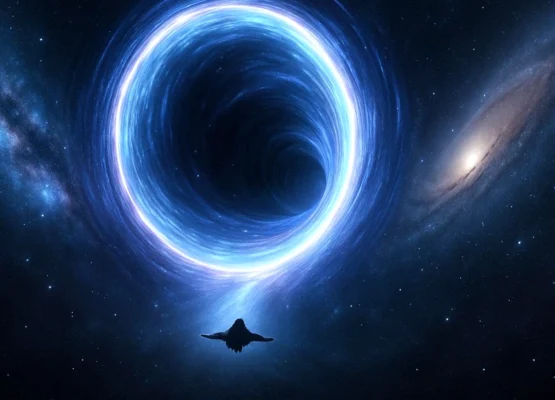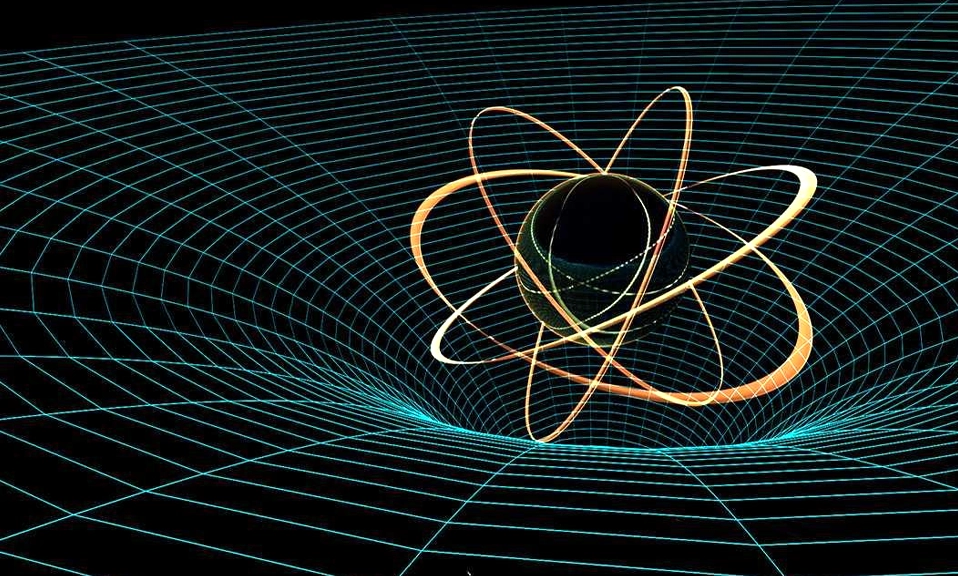
Space is not short of wonders. But every so often, astronomers find something that doesn’t just surprise them—it confounds them. These are the discoveries that resist easy explanation, that generate dozens of competing theories and still leave researchers scratching their heads. From a signal in an empty patch of sky to a star that dims in ways that shouldn’t be possible, here are 10 strange discoveries in space that scientists still cannot fully explain.
1. The JWST Signal From Empty Space
In October 2026, astronomers using the James Webb Space Telescope made a discovery that should not exist. While observing a seemingly empty patch of sky in the constellation Fornax—a region that had been studied for decades by both Hubble and Webb—they detected a single, bright emission line at about 1.6 micrometers. It appeared not once, but twice, in observations separated by 88 days. Every previous observation of that same patch had shown absolutely nothing there.
The signal is baffling because emission lines usually appear in groups, as the “fingerprints” of atoms and molecules. This one was entirely isolated. If it came from a persistent source, it should have been bright enough to appear in earlier deep images. Researchers have considered three main explanations—a primordial galaxy, a fading active galactic nucleus, or a star being torn apart by a black hole—but each comes with problems that don’t quite fit the data. For now, the signal’s origin remains unknown.
2. The Invisible Object in the “Mass Gap”
In November 2026, scientists reported finding a completely invisible object lurking in the distant star system J0008+0128. They detected it not by seeing it, but by observing its gravitational influence on a nearby red giant star. The object appears to have a mass of up to 2.8 times that of the Sun, placing it squarely in a mysterious region known as the “mass gap” —the range between roughly 2.5 and 5 solar masses where very few stellar remnants have ever been observed.
The mass gap exists because of how stars die: stars below a certain mass become neutron stars, and stars above it become black holes. The boundary between the two is poorly understood, and objects in the gap are rare. This invisible object could be an extremely rare supermassive neutron star, but its unusually wide orbit—taking about 1,218 days to complete one revolution—and its extreme mass defy thousands of scientific simulations. Whether it is a neutron star or something entirely unprecedented, it is forcing scientists to rethink the limits of stellar remnants.
3. Hypersoft X-Ray Sources: A New Class of Object
In November 2026, astronomers combing through decades of archival data from NASA’s Chandra X-ray Observatory identified a new class of cosmic objects that behave unlike anything catalogued before. Dubbed “hypersoft X-ray sources,” these objects emit unusually low-energy X-rays and intense levels of ultraviolet radiation. 84 of them were found across six galaxies, including Andromeda and the Pinwheel galaxy.
“We’ve never encountered a group of objects that act like this,” said lead researcher Mustafa Muhibullah. Researchers believe they may be binary systems in which a compact object—a white dwarf, neutron star, or black hole—is pulling material from a companion star, heating it until it glows. Their unusual behaviour could help solve two long-standing puzzles: what triggers Type Ia supernovae (used to measure the universe’s expansion) and what strips electrons from diffuse gas in galaxies, shaping star formation. But why they behave the way they do remains an open question.
4. Tabby’s Star: The Star That Won’t Behave
KIC 8462852, better known as Tabby’s Star, has been confounding astronomers since 2015, when NASA’s Kepler Space Telescope observed a series of rapid, unexplained dimming events. The dips were unlike anything astronomers had seen: irregular, dramatic, and not consistent with a planet passing in front of the star.
Speculation has ranged from a swarm of comets to debris from a shattered planet to—most controversially—an alien megastructure. The mystery deepened when a longer-term study found that the star hadn’t just been dimming; it had also brightened significantly in 2007 and 2014, behaviour that is incompatible with most hypotheses. “We haven’t solved the mystery yet,” said Carnegie’s Josh Simon. The leading explanation now is scattered dust, but the exact mechanism that produces such erratic and extreme dimming remains elusive.
5. VT J1906+0849: Twenty Years of Unexplained Radio Signals
Somewhere in our galaxy, an object called VT J1906+0849 has been producing radio signals for at least two decades that no one can explain. It was first noticed in 2017 and is the brightest transient object found in the Very Large Array Sky Survey (VLASS). It has been visible on more than 30 occasions since 2005, its brightness has varied dramatically, and its spectrum shifts between 0.8 and 2.2 GHz.
The object is powerful—estimates place it 50,000 to 110,000 light-years away, meaning it must be generating an enormous amount of energy. In 2026, researchers found a counterpart at infrared wavelengths, a single spectral line at 2.146 μm, which may be the best clue yet to its nature. But no known astrophysical object matches its full set of properties. It remains one of the strangest radio sources in the sky.
6. The Wow! Signal
On August 15, 1977, Ohio State University’s “Big Ear” radio telescope detected a powerful, 72-second radio pulse at the 1420 MHz frequency of neutral hydrogen—the “universal communication frequency” that any technologically capable civilization would likely recognize. Astronomer Jerry Ehman was so impressed that he wrote “Wow! ” next to the printout.
The signal was never detected again, despite repeated searches of the same region of sky. It remains the most famous candidate for an extraterrestrial transmission, but a natural explanation has always been possible. In October 2026, astronomers announced that they may have finally identified the culprit: a comet passing through the telescope’s field of view, whose hydrogen cloud could have produced the signal. The debate is not entirely settled, but the Wow! signal remains a legend—a 72-second mystery that has haunted astronomy for nearly half a century.
7. Fast Radio Bursts
Fast Radio Bursts (FRBs) are millisecond-long flashes of radio waves that originate primarily from outside our galaxy. They are among the brightest cosmic radio explosions known, and their origin is still unknown. More than 50 theories have been proposed, including magnetars (neutron stars with extremely intense magnetic fields), merging black holes, and even alien civilizations.
The breakthrough came when a magnetar inside our own galaxy, SGR 1935+2154, emitted a burst similar to an FRB, confirming that magnetars are at least one source. But not all FRBs fit the magnetar model. Some have been traced to globular clusters—dense regions of old, dead stars—which is a surprising location for the young magnetars that are thought to produce most FRBs. The origin of these brilliant flashes remains one of the biggest open questions in astrophysics.
8. ‘Oumuamua: The First Interstellar Visitor
In October 2017, astronomers detected the first known object from outside our solar system: ‘Oumuamua (1I/2017 U1). It was immediately strange. Its trajectory was highly eccentric, its shape appeared elongated, and it showed half a dozen anomalies relative to comets or asteroids in our solar system.
Most strikingly, ‘Oumuamua accelerated slightly as it left the inner solar system—a behaviour that could be explained by outgassing, but it showed no visible comet tail. Some researchers suggested it could be a thin, artificial craft pushed by sunlight, though most astronomers consider a natural origin far more likely. In 2023, a team proposed that ‘Oumuamua was a comet that released hydrogen gas as it warmed in the Sun, explaining both its orbit and its lack of a tail. The explanation is compelling, but not definitive. ‘Oumuamua remains the most enigmatic object ever observed passing through our solar system.
9. Dark Energy
Dark energy is the name given to the mysterious force driving the accelerated expansion of the universe. Discovered in 1998, it is thought to constitute about 68% of the total energy budget of the universe. And yet, physicists have almost no idea what it is.
The standard cosmological model treats dark energy as a cosmological constant—a fixed, unchanging energy inherent to space itself. But a growing set of observations, including preliminary results from the Dark Energy Spectroscopic Instrument (DESI) in 2024–2025, suggest that dark energy may change over time. If confirmed, this would overturn the standard model and require a fundamentally new understanding of physics. “Arguably the greatest mystery of humanity today,” one analysis noted, “is the prospect that 75% of the universe is made up of a substance known as ‘dark energy’ about which we have almost no knowledge at all”.
10. The Black Hole Information Paradox
The black hole information paradox is not a single discovery but a profound tension at the heart of modern physics. It arises from the conflict between general relativity (which describes gravity and black holes) and quantum mechanics (which describes the behaviour of particles). According to quantum mechanics, information cannot be destroyed—it must be conserved. But according to general relativity, anything that falls into a black hole is gone forever, and when the black hole evaporates via Hawking radiation, that information appears to be lost.
This is not a minor technical issue. It strikes at the foundations of physics. Stephen Hawking’s own calculations suggested that black holes destroy information, a conclusion that would require quantum mechanics to be fundamentally rewritten. Decades of theoretical work—including ideas about holography, firewalls, and unitarity—have attempted to resolve the paradox, but no consensus has emerged. The black hole information paradox remains one of the deepest unsolved problems in theoretical physics, a mystery that will likely require a fully developed theory of quantum gravity to resolve.
The Universe Is Stranger Than We Imagine
These 10 discoveries share a common thread: they are all cases where the universe has refused to conform to our expectations. A signal from empty space. A star that dims and brightens without explanation. A radio source that has been broadcasting for decades. A substance that makes up most of the cosmos but remains completely unidentified. Each one is a reminder that our understanding of the universe is still profoundly incomplete—and that the most exciting discoveries are often the ones we never saw coming. The cosmos is not just stranger than we imagine. It is stranger than we can imagine. And that is exactly why we keep looking.