It’s a Tuesday morning. You’re scrolling through your phone, half-awake, when a notification pops up from a news app.
“BREAKING: NASA and the European Space Agency confirm the detection of a rocky, Earth-sized planet in the habitable zone of a Sun-like star, 100 light-years from Earth. Initial spectroscopic analysis suggests the presence of water vapor, oxygen, and methane in its atmosphere.”
You stop scrolling. Your coffee goes cold.
Within minutes, the world stops with you.
This isn’t just another exoplanet discovery. This is the discovery. The one humanity has been waiting for since we first pointed a telescope at the stars. A second Earth. A place where, at least in theory, life could exist.
But what would actually happen next? Would we pack our bags? Would religions collapse? Would nations go to war over who gets to claim it?
Here is the realistic, science-grounded breakdown of what would happen in the days, years, and centuries after we found our cosmic twin.
🔭 Day 1: The Greatest Scientific Frenzy in History
The first 24 hours would be pure, unadulterated scientific chaos.
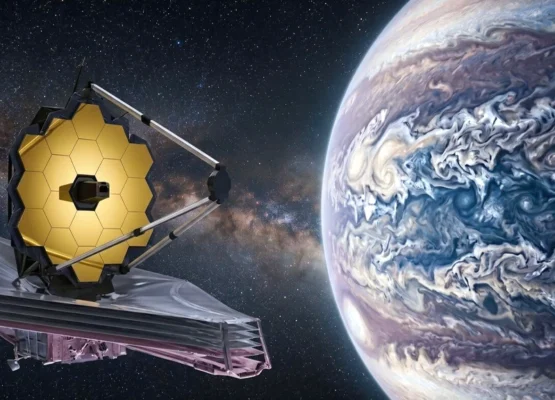
Every major telescope on Earth—and in orbit—would immediately pivot to confirm the finding. The James Webb Space Telescope, the upcoming Extremely Large Telescope in Chile, and every radio array on the planet would be pointed at that single coordinate in the sky.
Astrophysicists would work around the clock, analyzing the planet’s atmosphere for biosignatures—the chemical fingerprints of life. The presence of oxygen and methane together is particularly exciting because, on Earth, these gases are constantly produced by living organisms and would rapidly disappear without them.
Within a week, the scientific community would release a cautious but monumental statement: “We cannot confirm life, but we can confirm that this planet is capable of supporting it.”
That sentence would change human history forever.
🌍 Week 1: The Global Psychological Shift
The public reaction would be unlike anything we’ve ever experienced. It would be a strange cocktail of awe, terror, existential reflection, and meme culture.
1. The “Overview Effect” for the Entire Species Psychologists talk about the “Overview Effect”—the cognitive shift astronauts experience when they see Earth from space. This discovery would trigger a species-level version of it. For the first time, humanity would viscerally understand that we are not the center of the universe. We are one possible outcome among countless others.
2. The Philosophical and Religious Reckoning Religious leaders would face a profound challenge. Some faiths would adapt beautifully, framing the discovery as evidence of a vast, creative universe. Others would struggle with the theological implications: Does God care about beings on another world? Did they have their own version of salvation? The Vatican, which has already stated that extraterrestrial life would not contradict Catholic doctrine, would likely lead a thoughtful theological response.
3. The Existential Dread (and Hope) A significant portion of the population would feel a deep, unsettling anxiety. Are they watching us? Are they hostile? Are we insignificant? But an equally large group would feel a surge of hope and wonder. For the first time, the future wouldn’t just be about solving problems on Earth—it would be about reaching for the stars.
🚀 Year 1: The “Can We Get There?” Reality Check
Here’s the cold, hard physics that would sober everyone up:
100 light-years means 100 years of travel at the speed of light.
And we can’t even come close to that speed. Our fastest spacecraft, the Parker Solar Probe, travels at about 430,000 mph (700,000 km/h). At that speed, it would take roughly 165,000 years to reach this new Earth.
So, the immediate question becomes: Is there any theoretical way to get there within a human lifetime?
The Contenders:
- Laser-Pushed Light Sails: Projects like Breakthrough Starshot are already working on tiny, gram-scale probes that could be accelerated to 20% the speed of light by a massive Earth-based laser array. At that speed, the journey would take 500 years. Better, but still not a lifetime.
- Nuclear Fusion Propulsion: If we crack controlled fusion (which we’re getting closer to), we could build ships that travel at 5-10% the speed of light. Journey time: 1,000 to 2,000 years.
- Antimatter Engines: Theoretically, antimatter propulsion could get us to 40-50% light speed. Journey time: 200-250 years. This would require “generation ships”—massive, self-sustaining arks where the descendants of the original crew would be the ones to arrive.
The verdict? We couldn’t go there soon. But we could start planning to go there eventually.
📡 Year 5: The Great Debate—Do We Say Hello?
This is where things get controversial.
Once we confirm the planet is habitable (or even inhabited), a fierce global debate would erupt: Should we send a message?
The “Yes” Camp (METI – Messaging Extraterrestrial Intelligence): Scientists like Seth Shostak and organizations like METI International argue that if there’s a civilization there, we should introduce ourselves. We could send powerful radio bursts or laser pulses containing mathematical constants, maps of our solar system, and information about humanity. After all, they’re 100 light-years away. Our message would take 100 years to reach them, and their reply would take another 100 years to come back. We’d be starting a conversation that would span 200 years minimum.
The “No” Camp (The Dark Forest Theory): Inspired by Liu Cixin’s sci-fi masterpiece The Three-Body Problem, this camp argues that broadcasting our location is suicidal. If there’s a hostile, expansionist civilization out there, we just handed them our home address. Better to stay quiet, listen, and learn. Prominent voices like the late Stephen Hawking warned against actively contacting aliens, comparing it to Columbus arriving in the Americas—”which didn’t turn out so well for the Native Americans.”
The UN would likely convene an emergency assembly to decide. The decision would be the most consequential in human history.
🏛️ Year 10: The Geopolitical Space Race 2.0
Make no mistake: the nations of Earth would immediately start jockeying for position.
1. Who Gets to Go? Under the 1967 Outer Space Treaty, no nation can claim sovereignty over a celestial body. But that treaty was written before we discovered a habitable world. Legal scholars would scramble to rewrite international space law. Would the planet be considered a “common heritage of mankind”? Or would the first nation to land there have de facto control?
2. The New Space Race The US, China, the EU, India, and private entities like SpaceX would pour trillions of dollars into propulsion research. The goal wouldn’t be to send humans (yet), but to send the fastest, most advanced probes possible. Whoever gets the first close-up images of the planet’s surface would gain an unimaginable scientific and strategic advantage.
3. The Privatization of the Stars Billionaires like Elon Musk, Jeff Bezos, and their successors would see this as the ultimate business opportunity. “Interstellar colonization” would become the most ambitious startup pitch in history. We’d see the rise of interstellar venture capital, with investors betting on 100-year returns.
🔬 Year 50: The Technological Renaissance
The mere knowledge that a second Earth exists would supercharge human innovation in ways we can barely predict.
- Materials Science: To build ships that can survive 500 years of interstellar travel, we’d need self-repairing hulls, radiation shielding, and materials stronger than anything we have today.
- Biology and Medicine: To keep a crew alive for centuries, we’d crack the code on suspended animation, genetic engineering to resist radiation, and closed-loop life support systems.
- AI and Robotics: We’d develop autonomous AI capable of making decisions during the centuries-long journey, long after the original programmers are dead.
- Energy: The quest for interstellar travel would finally force us to master fusion power, solving Earth’s energy crisis in the process.
The discovery wouldn’t just inspire us to leave Earth—it would force us to become a more advanced, more capable civilization while we’re still here.
🌌 Year 100+: The First Arrival (Maybe)
If everything goes according to the most optimistic plans, a probe—or perhaps a small, robotic precursor mission—would arrive at the new Earth around the year 2126.
The images it sends back would be the most watched event in human history. Billions of people would gather around screens, holding their breath as the first close-up photographs of an alien world appear.
- Scenario A: It’s Barren. A beautiful, Earth-like world, but no signs of life. We’d feel a mix of relief and profound loneliness. We’d know we’re truly alone in the universe, and the pressure to protect Earth would become overwhelming.
- Scenario B: It Has Microbial Life. We’d find evidence of simple, single-celled organisms. This would be the greatest scientific discovery of all time, proving that life is not unique to Earth. It would fundamentally change biology, philosophy, and our understanding of our place in the cosmos.
- Scenario C: It Has Intelligent Life. The probe detects cities, radio signals, or industrial activity. Everything changes. We are not alone, and we never were. The next 1,000 years of human history would be dedicated to one question: How do we communicate with them?
The Discovery Changes Us Before We Ever Leave
Here’s the most important thing to understand: even if we never send a single ship to this new Earth, the mere knowledge that it exists would transform humanity.
It would give us a destination. A purpose. A reason to look up at the night sky and feel not just wonder, but possibility.
For all of human history, we’ve been trapped on a single planet, fighting over scraps of land, convinced that our little world is the entirety of existence. The discovery of a second Earth would shatter that illusion. It would remind us that we are a cosmic species, capable of understanding the universe, and perhaps, one day, of reaching out and touching it.
We might not live to see a human set foot on that distant world. But our great-grandchildren might. And that thought—that the story of humanity doesn’t end here, on this one fragile blue dot—is the greatest gift such a discovery could ever give us.