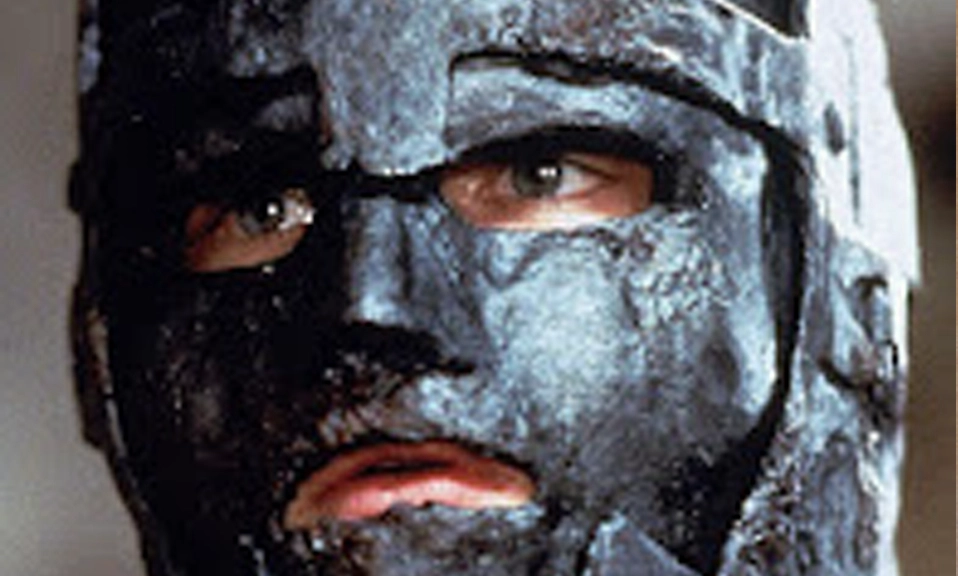
He was arrested in 1669 and died in the Bastille in 1703—thirty-four years of captivity without ever being tried, without anyone ever seeing his face. His identity remains one of history’s most enduring enigmas. The Man in the Iron Mask has captivated imaginations for over three centuries, inspiring countless books, films, and theories. But what do we actually know about this mysterious prisoner? And who was he really?
The Historical Facts
On 19 July 1669, the Marquis de Louvois, France’s Secretary of State for War, wrote to the governor of Pignerol prison with unusual instructions. A new prisoner was coming—one “Eustache Dauger.” The orders were extraordinary: the prisoner was to be held in a room with double doors to prevent anyone from hearing him. Only the governor was permitted to see him, personally bringing food and water. And if the prisoner spoke about anything other than his immediate needs, he was to be killed immediately.
Dauger arrived at Pignerol in late August 1669. Over the next three decades, he would be moved four times, always in the custody of the same jailer, Bénigne Dauvergne de Saint-Mars, through successive French prisons including the fortress of Sainte-Marguerite and finally the Bastille in Paris.
When he died at the Bastille on 19 November 1703, his burial certificate bore another pseudonym: “Marchioly.” His true identity has never been confirmed.
The Mask: Iron or Velvet?
Here’s where legend and history part ways. The famous iron mask? Almost certainly a myth. Historical documents suggest the prisoner’s face was hidden by a mask of black velvet cloth—not iron.
The prisoner was required to cover his face only on specific occasions: when traveling between prisons after 1687, or when going to prayers within the Bastille in his final years. Modern historians believe Saint-Mars may have imposed this measure partly to increase his own prestige, fueling rumors about this seemingly important prisoner.
The iron mask legend was popularized by the philosopher Voltaire, who misreported the velvet mask as iron. Alexandre Dumas later seized on this detail for his novel, cementing the image in popular culture forever.
The Theories: Who Was He?
Over fifty candidates—real and hypothetical—have been proposed over the centuries. The most enduring theories include:
The Royal Twin – Voltaire claimed the prisoner was an older, illegitimate brother of Louis XIV. Dumas famously portrayed him as the king’s identical twin in The Vicomte of Bragelonne. During his lifetime, rumors circulated that he was a Marshal of France, a son of Oliver Cromwell, or even Louis XIV’s own son.
The English Connection – Some scholars suggested he was Henry Cromwell, second son of Oliver Cromwell, held as a hostage by Louis XIV. Others proposed the Duke of Beaufort, or an illegitimate son of Charles II.
The Italian Diplomat – The burial name “Marchioly” led some historians to conclude the prisoner was Ercole Antonio Mattioli, an Italian diplomat who betrayed Louis XIV in a treaty negotiation.
The Valet – This is where the evidence points most convincingly. The arrest warrant named him “Eustache Dauger.” Contemporary documents describe him as “only a valet.”
The Most Likely Explanation
Professor Paul Sonnino of UC Santa Barbara, after nearly three decades of research, offers the most compelling solution. According to Sonnino, Eustache Dauger was the valet of the treasurer of Cardinal Mazarin, the principal minister of France during Louis XIV’s childhood.
Mazarin had accumulated a huge fortune, some of which he had “ripped off” from the previous king and queen of England. Years later, as Louis XIV was trying to negotiate an alliance with the current King of England, Dauger—who knew too much about this embarrassing financial secret—”must have blabbed at the wrong time.”
He was arrested and informed that if he ever revealed his identity to anyone, he would be killed immediately. That explains the extreme secrecy, the isolation, and the lifelong imprisonment. He wasn’t a royal twin or a political rival. He was simply a servant who knew a secret that could embarrass the Sun King.
Why the Mystery Endures
What makes this story so compelling isn’t just the uncertainty—it’s what the uncertainty reveals about power, secrecy, and the human imagination. Louis XIV, the absolute monarch who built Versailles and declared “L’État, c’est moi” (“I am the state”), could have anyone disappear for any reason, and nobody would ever know why.
As Sonnino observed, “Historians insist on making it antiseptic, moralistic, sensible. Life does not make sense. Humans are much more complicated than that.”
The Man in the Iron Mask remains a symbol of absolute power’s darkest capacity: to erase a person completely, to bury a secret so deep that even three centuries of investigation cannot fully unearth it. He was buried under a false name, his face hidden, his voice silenced.
And yet, in a twist of historical irony, his silence has made him one of the most famous prisoners in history.