The Major Change African Football Could Be Facing
The Africa Cup of Nations has been held every two years since 1968. In December 2025, CAF announced it would move to a four-year cycle from 2028. Less than a year later, that decision is on the verge of being reversed.
On Friday, October 9, 2026, at the CAF Strategy Conference in Cape Verde, Confederation of African Football president Patrice Motsepe confirmed that the organisation is reviewing its decision to stage AFCON every four years — and that a return to the biennial format is firmly back on the table.
“We’ve discussed it over the last few days to say, we are looking at everything, including having AFCON coming back every two years,” Motsepe said. “We are very clear, the matter is being reviewed”.
The announcement represents a stunning U-turn. Just ten months ago, CAF announced it would move AFCON to a four-year cycle after the 2027 edition in East Africa and a 2028 edition, aligning the tournament with the European Championship and Copa América. The decision was meant to reduce fixture congestion and synchronise with the FIFA international calendar.
Instead, it triggered a backlash across the continent — and, according to multiple reports, a financial reality check that CAF could not ignore.
Why CAF Is Reconsidering
The shift to a four-year cycle was met with immediate criticism from national associations, coaches, and players. Former Mali manager Tom Saintfiet said: “It cannot be that Europe decides — the big clubs, FIFA, UEFA — what we have to do”. Egypt head coach Hossam Hassan suggested the proposal “seems designed for African players based in Europe whose European clubs do not want to release them for their national teams”.
But the more compelling argument may have been financial.
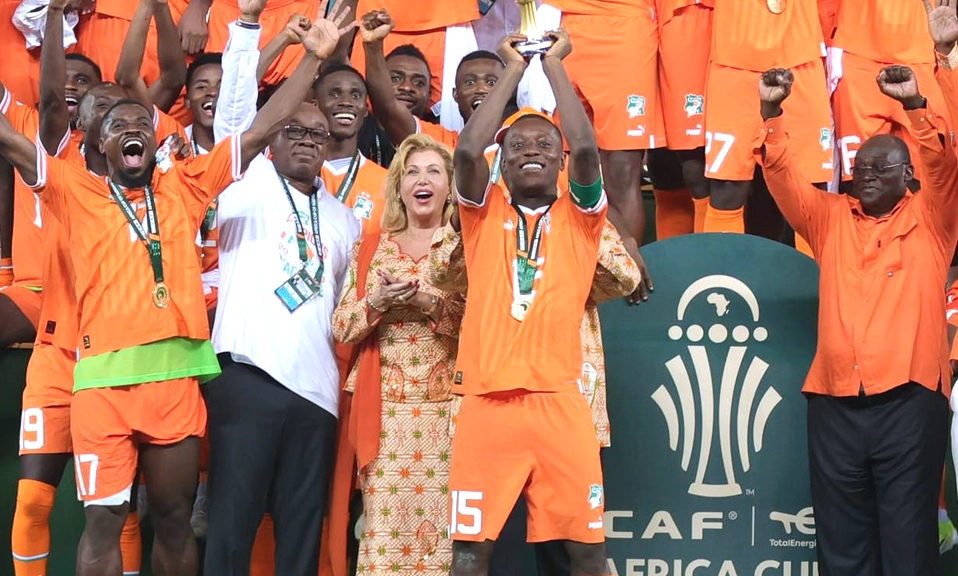
AFCON is CAF’s primary revenue generator. The 2023 tournament in Ivory Coast generated between $75 million and $80 million in commercial and sponsorship revenue. The 2025 edition in Morocco brought in over $190 million — an increase of more than 90%.
According to analysis, CAF failed to secure guarantees that the proposed African Nations League — which was set to launch in 2029 and fill the calendar gap — would generate anything close to that revenue. Moving to a four-year cycle would mean CAF going three years without its biggest payday. For an organisation that relies on AFCON to fund its operations, that was a risk too far.
“The harsh reality is that moving away from holding AFCON after two years would leave them in financial ruin,” one report noted.
The FIFA Factor
The U-turn also raises uncomfortable questions about CAF’s relationship with FIFA.
Motsepe, who is also a FIFA vice-president, was forced to deny that CAF was being dictated to by the world governing body. “It’s nonsense, absolute rubbish,” he said. “My No. 1 job, my No. 1 duty is to protect, promote, and advance the interests of Africa”.
However, the timing of the announcement was notable. Motsepe revealed the review just two days after CAF publicly declared its “unanimous” support for FIFA president Gianni Infantino, who is facing challenges to his leadership. The Athletic’s analysis suggested that “with Infantino’s position under threat, CAF have opened the door to a u-turn”.
The perception that CAF is swayed by external influences — whether FIFA, UEFA, or European clubs — is a sensitive one. Many across Africa believe AFCON should run on its own timetable, not be beholden to the interests of other continents. Remaining on a two-year cycle would be a popular decision, but it also creates the impression that CAF “is incapable of making decisions alone and standing by them”.
What This Means for AFCON 2027
Motsepe also used the conference to reaffirm that the 2027 Africa Cup of Nations will go ahead as planned in Kenya, Tanzania, and Uganda from June 19 to July 17, 2027.
“You have to believe in Africa,” he said. “There will be problems, there will be failures, fine, but we will be there. That’s what Mandela taught us”.
The 2027 tournament was always a fixed point. The uncertainty was about what came after — and whether the 2028 edition would go ahead as planned, or whether the four-year cycle would begin immediately after 2027.
If CAF reverses its decision, the 2028 edition could be scrapped entirely, and AFCON would return to its traditional two-year rhythm. The 2029 Africa Nations League, if it proceeds, would need to be restructured to fit around a biennial AFCON.
The Bigger Picture
The AFCON frequency debate is about more than scheduling. It’s about who controls African football.
For decades, AFCON has been held every two years, a rhythm that has shaped the careers of generations of African players. Moving to a four-year cycle would have aligned the tournament with the global football calendar — but at the cost of reducing the visibility of African teams, limiting commercial opportunities for national associations, and handing more control over the African game to external forces.
The fact that CAF is now reconsidering suggests that those arguments won out.
“We took a decision as Africa because there were lots of issues,” Motsepe said. “But I can guarantee you we have discussed it over the last few days to say we are looking at everything, including having the AFCON coming back every two years”.
The final decision has not yet been made. But the direction of travel is clear. AFCON is likely to remain a biennial tournament — and African football will keep its biggest asset on its own terms.