Since the dawn of civilization, humans have been bound by a single, frustrating limitation: geography.
If you wanted to trade, explore, or conquer, you had to walk. And walking is slow, exhausting, and limited by how much you can carry on your back.
But humans are nothing if not relentlessly inventive. Over the last 5,000 years, we haven’t just invented vehicles; we have invented entire transport systems. A true transport system isn’t just a machine; it’s the marriage of a vehicle, an energy source, and the infrastructure (roads, rails, ports, or airways) that allows it to function at scale.
These systems didn’t just change how we move. They shrank the globe, birthed empires, sparked industrial revolutions, and built the modern world.
Here is the fascinating history of the greatest transport systems ever invented, and the visionaries who brought them to life.
🛞 1. The Wheel and the Axle (c. 3500 BCE)
The Inventors: Ancient Mesopotamians
The System: Cart + Dirt Path
The System: Cart + Dirt Path
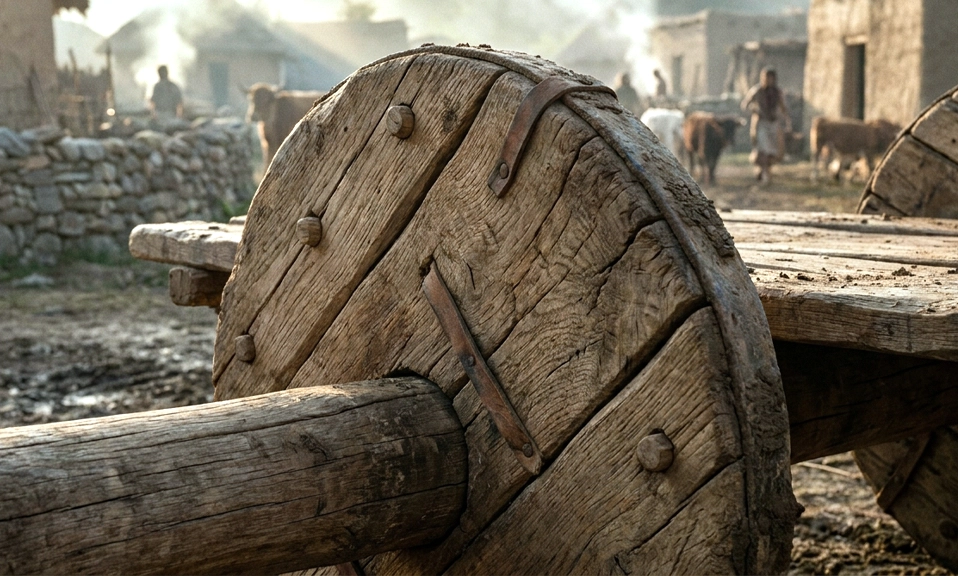
It’s hard to overstate the genius of the wheel. Interestingly, it wasn’t invented for transport first; it was used for pottery. It took another 300 years for someone to have the stroke of genius to turn it on its side and attach it to an axle.
This simple mechanical pairing created the first true land transport system. Suddenly, a single person (or a domesticated ox) could move hundreds of pounds of grain, stone, or goods. It birthed the first roads, the first trade routes, and the very concept of logistics.
⛵ 2. The Sail and the Maritime Network (c. 3000 BCE)
The Inventors: Ancient Egyptians and Phoenicians
The System: Wind-powered vessels + Navigational stars
The System: Wind-powered vessels + Navigational stars
While the wheel conquered land, the sail conquered water. The Egyptians were the first to harness the wind using square sails on the Nile, but it was the Phoenicians who turned it into a global system. By inventing the keel and the bireme (a ship with two rows of oars and a sail), they created the first reliable maritime trade network, connecting the Mediterranean, Africa, and Europe.
This system proved that humans could stop fighting nature (rowing against currents) and start collaborating with it (harnessing the wind).
🚂 3. The Steam Railway Network (1804 – 1830s)
The Inventors: Richard Trevithick, George Stephenson, and Isambard Kingdom Brunel
The System: Steam locomotives + Iron rails + Scheduled timetables
The System: Steam locomotives + Iron rails + Scheduled timetables
Before the 19th century, a journey from London to Edinburgh took over a week by horse-drawn coach. The steam railway changed the fundamental human perception of time and space.
George Stephenson’s Rocket (1829) proved that steam-powered trains could be fast, reliable, and commercially viable. But the true genius was the system: standardized track gauges, scheduled timetables, telegraph communication for signaling, and centralized stations. The railway network didn’t just move people; it created the modern concept of “commuting” and standardized time zones.
🚗 4. The Automobile and the Highway System (1886 – 1950s)
The Inventors: Karl Benz (the car), Henry Ford (the system of production), Dwight D. Eisenhower (the US Interstate Highway System)
The System: Internal combustion engine + Paved roads + Gas stations
The System: Internal combustion engine + Paved roads + Gas stations
Karl Benz patented the first true automobile in 1886, but a car is useless without roads. The real transport revolution happened when Henry Ford perfected the moving assembly line, making cars affordable for the masses.
This triggered a domino effect: governments poured concrete to build vast highway networks, entrepreneurs built gas stations and motels, and suburbanization was born. The automobile granted individuals an unprecedented level of personal freedom and mobility, fundamentally redesigning the layout of human cities.
✈️ 5. Commercial Aviation (1903 – 1950s)
The Inventors: The Wright Brothers (flight), Juan Trippe (commercial airline systems)
The System: Fixed-wing aircraft + Airport hubs + Air traffic control
The System: Fixed-wing aircraft + Airport hubs + Air traffic control
On a windy beach in Kitty Hawk in 1903, the Wright brothers proved that heavier-than-air flight was possible. But turning a fragile biplane into a global transport system took decades of engineering.
The real breakthrough was the creation of the hub-and-spoke airline model, pioneered by innovators like Juan Trippe (founder of Pan Am). Combined with the invention of radar, air traffic control towers, and the jet engine in the 1950s, this system shrank the planet. A journey that once took months by ship could now be completed in hours.
📦 6. The Intermodal Shipping Container (1956)
The Inventor: Malcom McLean
The System: Standardized steel boxes + Container ships + Gantry cranes + Truck chassis
The System: Standardized steel boxes + Container ships + Gantry cranes + Truck chassis
This is the most important transport invention you’ve probably never thought about. Before 1956, loading a ship was a slow, chaotic, and expensive process called “break bulk” shipping. Dockworkers manually carried barrels, sacks, and wooden crates on and off ships. It took weeks to load a single vessel, and theft was rampant.
Truck entrepreneur Malcom McLean had a radical idea: what if the cargo stayed in the same box from the factory, to the truck, to the ship, to the final destination? He invented the standardized steel shipping container.
This single innovation dropped the cost of freight by over 90%. It made it cheaper to manufacture a shirt in Bangladesh and ship it to New York than to make it in New York. The modern globalized economy, and everything in your house right now, exists entirely because of this transport system.
🔮 The Future: What’s the Next Great System?
We are currently standing on the precipice of the next great transport revolution. The systems being built today aim to solve the flaws of the past: congestion, pollution, and inefficiency.
- High-Speed Rail & Maglev: Systems like Japan’s SCMaglev or China’s expanding high-speed network use magnetic levitation to eliminate friction, pushing land travel past 370 mph (600 km/h).
- Autonomous Mobility Networks: The future isn’t just self-driving cars; it’s a synchronized, AI-managed grid of vehicles that communicate with each other and traffic infrastructure, theoretically eliminating traffic jams and accidents.
- The Hyperloop Concept: Though still in development, the idea of propelling passenger pods through near-vacuum tubes at airline speeds represents the next logical leap in overland transport systems.
We Shape Our Tools, and Then They Shape Us
The great philosopher Marshall McLuhan once said, “We shape our tools, and thereafter our tools shape us.”
This is never more true than with transport systems. The wheel gave us cities. The sail gave us global trade. The railway gave us the industrial revolution. The automobile gave us suburbia. The shipping container gave us globalization.
Every time we invent a new way to move, we don’t just change our speed. We change our economy, our culture, and the very fabric of human society.
The next time you step onto a train, buckle into a car, or track a package on your phone, take a moment to appreciate the invisible, centuries-old web of genius that made that simple movement possible.