New archaeological discoveries in Mexico are giving researchers a more detailed view of Maya life before, during and after the period traditionally described as the civilization’s “collapse.” From an untouched city hidden in the Calakmul jungle to a possible stronghold of Maya resistance against Spanish rule, the findings suggest that large parts of the past remain under forest, soil and modern infrastructure.
The discoveries are also changing the language used to describe Maya history. Archaeologists are not uncovering a civilization that simply vanished. They are documenting cities, political networks, agricultural landscapes and communities whose descendants remain part of Mexico’s living Indigenous world.
Recent work has highlighted several sites in particular: Minanbé in Campeche, El Jefeciño in Quintana Roo, the Campo Viejo site in Veracruz and Sol y Paraíso in Chiapas, which may be the long-lost Maya settlement of Sac Balam. Each discovery belongs to a different period and raises different questions about how Maya communities organized power, managed land and survived political upheaval.
Minanbé: a city with no road
The most dramatic recent discovery is Minanbé, a Maya city hidden in the Calakmul Biosphere Reserve in Campeche. Archaeologists reached the site only after driving through remote forest and cutting a path more than three miles through dense vegetation. The location was so difficult to access that researchers named it Minanbé, drawing on Yucatec Maya words meaning roughly “there is no road.”
The city covers approximately 40 acres identified through aerial lidar scans. Lidar, short for light detection and ranging, uses laser pulses to map the ground beneath vegetation. It can reveal raised platforms, roads, terraces and building outlines that are almost impossible to see from ground level in a tropical forest.
Ground surveys found urban plazas surrounded by palaces, religious buildings and terraces. Water channels and other landscape modifications suggest that the settlement was connected to organized agriculture rather than isolated from its surroundings.
The tallest structure is a temple pyramid more than 40 feet high. Researchers say it reflects the Río Bec architectural tradition, known for fine masonry, decorative moldings and monumental buildings in the Maya lowlands.
The site is especially valuable because it appears to have escaped modern looting. Many Maya archaeological sites have been damaged when monuments were removed from their original locations or tombs were disturbed. At Minanbé, researchers found a series of stelae and altars that remained in place, allowing them to study the relationship between the monuments and the city around them.
Fourteen monuments and a violent historical moment
Archaeologists have documented 14 stelae and altars at Minanbé. That number is significant because carved monuments were often connected to political authority, royal ceremonies and the public recording of history. A settlement with so many monuments was probably important within the regional network, even if it was smaller than the largest Maya capitals.
One stela appears to show a figure decapitating another person with a knife or ax. It carries a date corresponding to 849 CE, close to the period when many major Maya lowland centers experienced political disruption and population decline.
Another altar depicts a ruler wearing a feathered headdress, jewelry and other signs of elite status. A calendrical element suggests that it may date to the late seventh century, making it older than some of the other known monuments at the site.
The carvings do not provide a simple explanation for the so-called Maya collapse. They do, however, place Minanbé within a turbulent period of competition between city-states and dynasties. Some monuments appear to have been broken or rearranged, which may indicate conflict or an effort by later groups to erase the political memory of earlier rulers.
That possibility shows why context matters. A carved stone is not just an isolated work of art. Its position, date, imagery and relationship to other structures can reveal how power was claimed, contested and remembered.
The Maya “collapse” was not one event
The phrase “Maya collapse” can create the false impression that an entire civilization disappeared at one moment. In reality, the decline of major cities in the southern lowlands unfolded over centuries and varied by region.
Some large centers lost population or political influence during the eighth and ninth centuries. Other Maya communities continued to thrive in different locations. Northern cities such as Chichén Itzá remained important after many southern centers had declined, and Maya peoples continued to live, trade, farm and govern across the region.
Minanbé is useful because it may capture the period just before or during major changes in the lowlands. Its monuments, agricultural modifications and signs of possible conflict can help researchers ask more precise questions:
•How were smaller cities connected to powerful regional capitals?
•How did rulers respond to drought, warfare or pressure on farmland?
•Did political systems fail everywhere at the same time?
•How did communities adapt when a dynasty or city lost power?
Those questions are more useful than asking why “the Maya disappeared.” The Maya did not disappear. Political systems changed, cities were abandoned or reorganized and communities continued in new forms.
El Jefeciño: a large city found through local knowledge
Another important discovery came from southern Quintana Roo, where archaeologists registered a Maya settlement called El Jefeciño. The site was identified after local residents flagged archaeological remains during work connected to the Maya Train project.
The name roughly means “the Little Boss,” a reference to the monumental scale of the ruins. Survey work has documented about 80 structures across at least 100 hectares, although the settlement may extend beyond the area mapped so far.
El Jefeciño contains buildings associated with Petén-style architecture, a tradition linked to the lowland region centered in northern Guatemala and extending into parts of Mexico and Belize. Researchers recorded large vaulted buildings, rounded and recessed corners and apron moldings.
At the center of the site is a group of five large structures arranged around a C-shaped plaza. Some buildings reach between 11 and 14 meters high. Archaeologists also recorded fragments of stucco murals painted in white and orange with red stripes, three well-preserved Maya vaults and pieces of a human skeleton that may be connected to a burial.
The evidence suggests that El Jefeciño was occupied across the Early and Late Classic periods, between approximately 250 and 900 CE. Further excavation is needed before researchers can say more about its political role, population or relationship to nearby settlements.
The discovery also highlights the importance of local residents. Archaeological knowledge does not come only from remote sensing and university expeditions. People who live and work near a site may notice mounds, stones or architectural remains long before they appear in an official survey.
A different Maya story in Veracruz
In the eastern state of Veracruz, archaeologists are investigating the Campo Viejo site near Coatepec. The ruins include features that researchers say have not previously been documented in that part of Mexico.
The site contains a circular stone platform, a flagstone and limestone platform marked with unusual geometric forms, and a 1.88-meter stone monolith. The monolith shows figures participating in a symbolic scene that may involve a bowl and the transfer of liquid.
Researchers have suggested that the imagery could relate to water or a period of drought, but that interpretation remains provisional. Archaeologists are still working to understand the figures, the ritual context and the relationship between the site’s local architectural traditions and broader Maya cultural features.
Officials described the discovery as unusual because the circular structure and other attributes have not been recorded in the region before. The finding may help researchers understand how ideas, people and artistic traditions moved across Mesoamerica.
It is also a reminder that the Maya world was not confined to the famous cities most often associated with tourism. Political and cultural interaction extended across a large area, and sites outside the traditional centers may reveal connections that have been overlooked.
Could Sol y Paraíso be Sac Balam?
In Chiapas, archaeologists are examining evidence that a jungle-covered location called Sol y Paraíso may be the lost Maya city of Sac Balam.
Sac Balam was founded in 1586 by the Lacandon Ch’ol as a refuge after Spanish forces attacked their earlier capital, Lakam Tun. The settlement survived as a center of Maya resistance until it was conquered in 1695. Spanish accounts describe more than 100 houses and three larger communal buildings, but the location of the city was later lost.
A 2019 expedition failed to find it. Researchers returned to the question after archaeologists visited Sol y Paraíso in 2023 and found features that matched parts of the historical descriptions. These included numerous small mounds, period-appropriate ceramics and two natural springs.
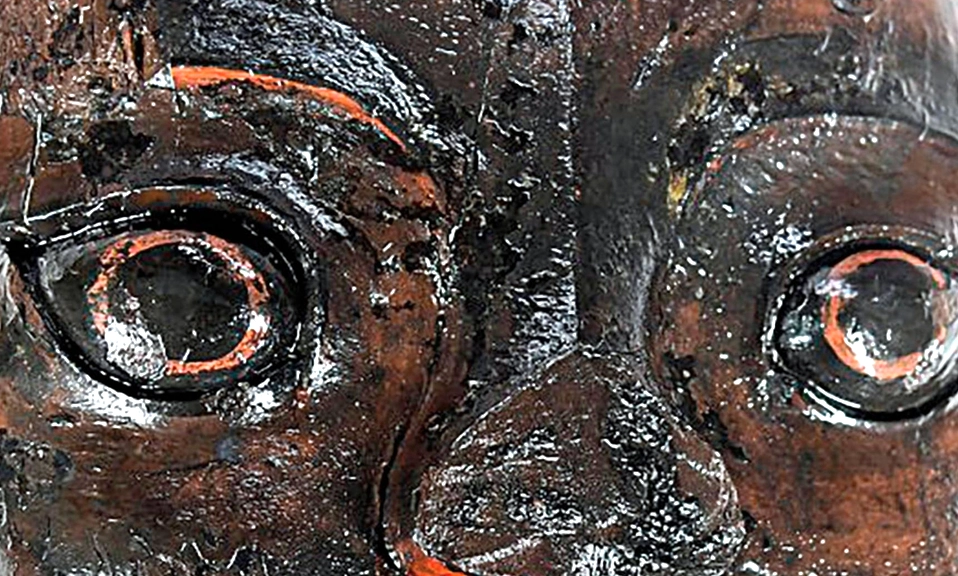
In 2025, a team dug 11 test pits. The excavations produced ceramic fragments, a monkey figurine that appears to date to the relevant period and a stone wall 16 meters long and about one meter high. The wall could correspond to one of the substantial communal buildings described in Spanish records.
The evidence is promising but not conclusive. Some archaeologists say the site is a strong possibility, while others want to see the bases of all three communal buildings and evidence of the Spanish colonial occupation before identifying it as Sac Balam.
That caution is important. Finding a site that resembles a historical description is not the same as proving its identity. Archaeologists must compare architecture, ceramics, dates, geography and documentary evidence. They may also search for traces of the reported Spanish attack, such as a charcoal and ash layer, or the remains of a colonial church.
Technology is opening the forest
Lidar has become one of the most important tools in Maya archaeology. Dense vegetation once made it difficult to identify the full shape of ancient settlements. Aerial laser scans can reveal the modified landscape beneath the canopy without requiring researchers to clear every tree.
The technology does not replace fieldwork. At Minanbé, lidar showed researchers where structures might be located, but archaeologists still had to travel through the forest, record the remains and document the monuments from the ground.
Lidar also changes the scale of the questions researchers can ask. Instead of studying only the visible pyramid or plaza, archaeologists can examine settlement patterns across entire regions. They can identify terraces, reservoirs, causeways, roads and agricultural zones that show how communities used the landscape.
This evidence challenges the old image of the Maya rainforest as an untouched wilderness. Ancient people cleared, planted, terraced, drained and managed large areas of land. The forest concealed those modifications for centuries, but it did not erase them completely.
Why intact sites matter
An undisturbed archaeological site is valuable because information is preserved in relationships.
A stela in its original position may be associated with a plaza, temple or burial. Ceramics can help establish dates and trade links. A damaged monument can show later conflict or intentional destruction. A mural fragment can provide evidence of ritual or political symbolism.
When looters remove objects, those relationships are lost even if the objects later appear in a museum or private collection. That is why researchers described Minanbé’s apparent lack of looting as exceptional. The condition of the site may allow future work to reconstruct parts of its history that would otherwise be impossible to recover.
Conservation is therefore as important as discovery. Archaeologists must document the ruins, protect them from looting and decide how much excavation is appropriate. Much of Minanbé remains buried, and El Jefeciño has not yet undergone extensive excavation. Further research will require funding, field teams, conservation planning and cooperation with local communities.
Mexico’s past is not actually lost
The phrase “Mexico’s lost history” is effective as a headline, but it needs qualification.
The Maya are not a vanished people. Maya languages are spoken today, Maya communities maintain traditions and Indigenous organizations continue to shape public life in Mexico and Central America. What has been lost or obscured is often the location of a particular city, the meaning of a monument or the history of a political community.
Using the word “lost” can also make archaeological sites sound like treasure waiting to be claimed. The discoveries are better understood as cultural heritage that requires careful study and protection. They belong to a history that is both ancient and connected to living communities.
Local residents have played an important role in identifying sites such as El Jefeciño. Archaeologists rely on Indigenous and local knowledge, access agreements and community support. The future of Maya archaeology depends not only on finding more buildings but on deciding how those places should be preserved, interpreted and shared.
What the discoveries could change
Together, these discoveries expand the Maya historical record in several directions.
Minanbé offers a rare look at a politically significant settlement near the period of major lowland upheaval. El Jefeciño shows that monumental urban centers may still lie near modern infrastructure and that southern Quintana Roo was more densely connected than incomplete maps suggested. Campo Viejo raises questions about cultural interaction and distinctive regional architecture. Sol y Paraíso may eventually connect archaeological evidence with the written history of Maya resistance in the colonial period.
None of these findings solves every mystery. They do something more valuable: they provide new evidence that can be tested against other sites, inscriptions, environmental data and historical documents.
The most important lesson is that the Maya world was larger, more connected and more politically varied than a short list of famous ruins can show. It included cities, towns, agricultural landscapes, rival dynasties, migrant communities and resistance settlements that survived long after the decline of some Classic-period capitals.
Ancient Maya discoveries
in Mexico are renewing public interest because they make the past visible in new ways. A hidden city with intact monuments, a large settlement found through local reporting, unusual architecture in Veracruz and a possible lost stronghold in Chiapas each add a different piece to the story.
The findings also challenge the idea that Maya civilization simply collapsed and disappeared. Maya communities adapted across centuries, and their descendants remain part of Mexico’s present.
The next stage will be slower than the headlines. Archaeologists must excavate carefully, decipher inscriptions, date the remains, protect the sites and work with the communities connected to them. That process may not produce a dramatic answer overnight, but it can create something more reliable: a fuller history built from evidence rather than legend.