Could This Change the Global AI Race?
On a Friday morning in Beijing, the world’s second-largest AI power quietly drew a new line in the sand.
On October 16, 2026, China’s Ministry of Commerce and Ministry of Science and Technology jointly published a draft revision to the country’s catalog of technologies subject to export bans or restrictions. The proposal covers 40 technologies across three sectors—artificial intelligence, biomedicine, and photovoltaics—with a staggering 23 of them in the AI sector alone. The public consultation period runs through November 15, 2026.
The move marks a significant escalation in the global AI race—and, perhaps more strikingly, a philosophical shift that mirrors the very playbook the United States has been running for years.
What Exactly Is Being Restricted?
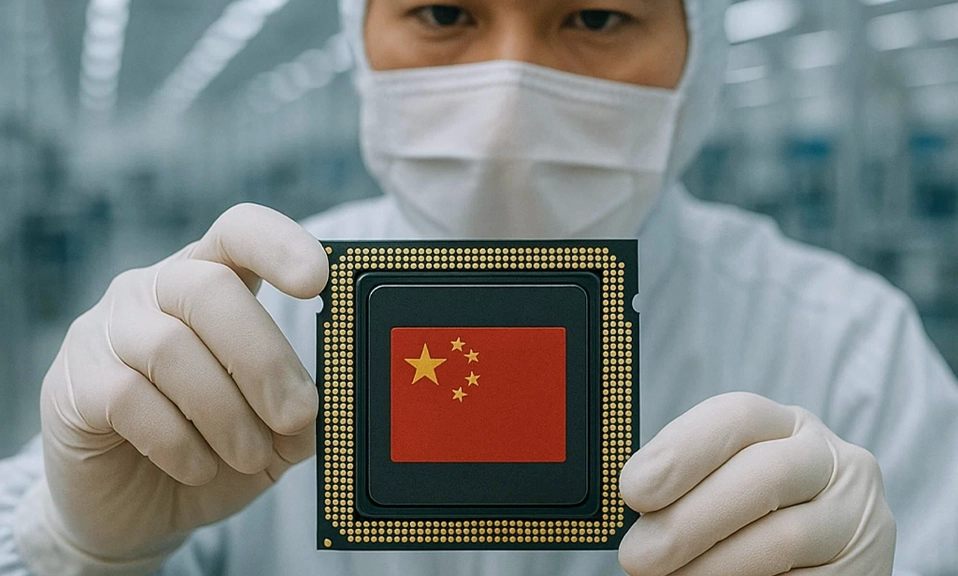
The 23 AI technologies on the list span the full spectrum of cutting-edge AI development: large language models, AI agents, computing clusters, chip designs, and information processing technologies. But the restrictions aren’t blanket bans. They’re targeted.
According to the draft, exports of AI models with parameter counts of 2 trillion or above—or those with “certain world-leading capabilities”—could be restricted. For context, Chinese AI models like Moonshot’s Kimi K3 and Alibaba’s Qwen 3.8-Max already exceed that threshold. The proposal doesn’t name specific models, but the parameter count serves as a clear proxy for frontier capability.
More significantly, model weights and source code for products exceeding certain performance thresholds would be included in the restrictions. Model weights are the mathematical backbone of an AI system—the trained parameters that allow a model to generate responses, solve problems, and perform tasks. In the open-source AI world, sharing weights is how developers build on top of existing models. Restricting their export is essentially drawing a firewall around China’s most advanced AI capabilities.
Exports of core technologies for AI large models trained using sensitive national data would be prohibited outright. AI agents designed for use in highly sensitive environments—national defense, critical information infrastructure, core government operations—would also face bans. Several chip design technologies, including those for AI processing chips and memory chips, are included in the proposed restrictions.
The Open-Source Exception—and the API Loophole
But here’s where China’s approach diverges from a simple protectionist playbook. The draft includes several carve-outs designed to keep the door open for the open-source ecosystem that has made Chinese AI models globally competitive.
AI technologies that have already entered the public domain through open-source releases or published academic papers would be exempt from the export control measures. The Commerce Ministry spokesperson emphasized that China will facilitate technology exports through automatic licensing in cases involving open-source AI development, computing centers built and operated overseas by Chinese companies, chip tape-outs and fabrication abroad, and joint research and development using overseas resources.
Perhaps most crucially, the restrictions target the overseas deployment of restricted AI models but exclude access through APIs, websites, apps, and software-as-a-service platforms. This distinction is enormous. It means that Chinese AI developers like DeepSeek and Alibaba can continue expanding internationally—foreign users can still access their models through cloud services—while Beijing maintains tighter control over the physical transfer of sensitive technology.
Why Now? The Official Reasoning
The Commerce Ministry framed the move as both routine and necessary. A spokesperson said the revision is “a routine part of technology trade management” and “does not target any specific country, region or entity”. But the statement also cited national security concerns explicitly, noting that AI technologies capable of autonomously generating and modifying malicious code could be used to attack sensitive systems, bypass national security defenses, and threaten critical infrastructure.
“The Chinese government is implementing such necessary measures with the aims of reinforcing the security bottom line, preventing misuse and abuse, and ensuring that AI remains under human control,” the Commerce Ministry said.
The proposal came as China and the U.S. made progress in dialogues over AI safety and governance—including the establishment of a notification mechanism between the two superpowers for AI incidents that could threaten national security. The timing suggests Beijing is positioning itself as a responsible steward of AI safety even as it tightens its grip on its most valuable technological assets.
The Geopolitical Context: A Response to U.S. Restrictions
For years, the United States has restricted China’s access to advanced AI chips and the chipmaking machines needed to produce them. The U.S. has banned exports of cutting-edge semiconductors, pressured allies to follow suit, and closed loopholes that allowed Chinese companies to buy advanced U.S. chips through overseas subsidiaries.
China’s new export controls can be seen as a direct response. As Lian Jye Su, chief analyst at technology research group Omdia, put it, the move “can be seen as a response to Western countries posting sovereignty requirements on AI, robotics, telecommunications, and other key technologies”.
Ryan Etzcorn, a senior director at Ankura China Advisors, offered a sharper assessment: “This is more than routine maintenance. By targeting AI, solar and biotech—industries where China holds a growing edge—Beijing is signalling that steadier relations with the West do not mean it will stand still”.
The shift is philosophical as much as strategic. For years, frontier AI labs in both countries competed primarily by giving models away as widely as possible to build market share and developer ecosystems. Now, both governments are drawing lines around their most advanced systems, deciding model by model who outside their borders gets access—and on what terms.
What It Means for the Global AI Race
The implications are complex, and they cut in multiple directions.
For China’s AI industry, the restrictions could slow down international collaboration and make it harder for Chinese companies to attract global developers to build on their models. The proposal is already “likely to stoke uncertainty in an AI industry already grappling with strict content controls, a licensing regime and potential US sanctions”. Some Chinese tech companies have reportedly warned regulators that tighter measures would slow their AI development and hurt China’s ability to win the technology race.
For global AI users, particularly in markets like Australia that develop little frontier AI of their own and depend almost entirely on foreign model providers, the new controls add another layer of uncertainty. Every enterprise, hospital network, or government agency that has wired its workflows around a foreign-frontier model is “one export-control decision away from losing access to it”.
For the open-source ecosystem, China’s carve-out for publicly released technologies could actually reinforce its position as a global leader in open-source AI. Chinese models like DeepSeek and Qwen have gained significant ground abroad on the back of lower prices and improving capabilities. By keeping open-source releases outside the scope of export controls, China is signaling that it wants to maintain that competitive advantage.
For the U.S.-China AI rivalry, the move represents a new phase. Both countries are now actively managing the outflow of their most sensitive AI technologies while simultaneously engaging in dialogue on AI safety. It’s a delicate balancing act—competing fiercely on capability while cooperating on existential risk.
China’s proposed
export controls on 23 AI technologies are not a blanket ban, nor are they purely protectionist. They represent a calculated effort to control the transfer of frontier AI capabilities while preserving the open-source ecosystem that has made Chinese AI globally competitive. The 2-trillion-parameter threshold, the open-source exemption, and the API access carve-out all reflect a nuanced approach that seeks to balance security with influence.
But the broader message is unmistakable: in the global AI race, both superpowers now treat their leading models as strategic assets rather than ordinary commercial products. The era of unrestricted AI globalization is ending. What comes next will be defined by who controls the technology—and who gets to use it.
The public consultation period runs until November 15, 2026. After that, the final rules will take effect—and the global AI landscape may never look the same.