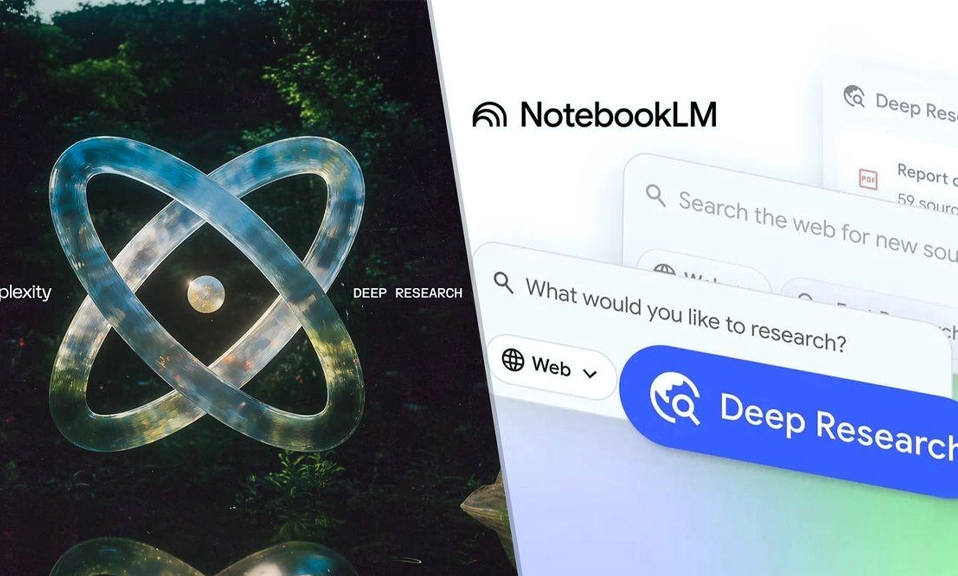
The AI research tool market has split into two distinct camps, and the choice between them has never mattered more. On one side are the general-purpose giants—ChatGPT, Gemini, Claude—that can do a little of everything. On the other are the specialists—Elicit, SciSpace, Consensus, NotebookLM—that do one thing exceptionally well. The mistake most people make is choosing a generalist for a specialist’s job, or paying for a specialist when a generalist would have been enough. The right tool depends entirely on who you are and what kind of research you actually do.
To find the tools that deliver, we evaluated them against a simple standard: does it remove a specific, recurring research task from your plate—or does it just make that task slightly faster? The following 10 tools passed that test. They are the ones that consistently turn hours of literature review, source synthesis, and data analysis into minutes of focused work, and they are the ones worth building your research workflow around in 2026.
🎓 The Best AI Research Tools for Students
Students need tools that help them understand complex material, manage citations, and produce well-sourced work without paying enterprise prices. The best tools in this category combine depth with affordability.
1. NotebookLM (Gemini Notebook): The Document-Grounded Study Partner
What it is: NotebookLM, now called Gemini Notebook, is Google’s AI research tool that works exclusively from the sources you upload—PDFs, Google Docs, websites, YouTube videos, even lecture recordings.
Why it saves time: The killer feature is grounding. Because every answer is strictly limited to your uploaded documents, it almost never hallucinates, and every response cites the exact source. It can generate summaries, answer questions across multiple documents, and even turn your sources into a podcast-style audio overview—a genuinely useful way to review material while commuting or exercising. It handles up to 50 documents and has a free tier.
Best for: Students who need to deeply understand a set of readings—exam revision, literature reviews, or research projects with a defined source base.
2. SciSpace: The All-in-One Academic Workflow
What it is: SciSpace is an AI research platform that combines literature review, “chat with PDF,” paraphrasing, data extraction, and citation tools in a single workspace.
Why it saves time: SciSpace is designed for the messy middle of academic research—the part where you have a pile of PDFs and need to extract findings, compare methodologies, and build an argument. Its specialized agents cover PRISMA systematic reviews and biomedical research, and it offers a free tier with Premium at $12 per month (billed annually), making it accessible for students and individual researchers.
The caveat: Premium includes 1,200 monthly credits that heavy users can exhaust mid-month, and the next tier jumps to $70 per month.
Best for: Students and early-career researchers who need a full literature-review workflow at an affordable price.
3. Semantic Scholar: The Free Discovery Engine
What it is: Semantic Scholar is a free AI-powered academic search engine from the Allen Institute for AI, covering over 200 million papers.
Why it saves time: It provides AI paper summaries, influential-citation signals, and a free API and MCP server—all at no cost. It is the best starting point for literature discovery, and it pairs well with a note-taking tool like Obsidian for a privacy-first research stack where nothing leaves your machine.
Best for: Any student who wants a powerful, free search engine for academic literature.
💼 The Best AI Research Tools for Professionals
Professionals need tools that handle large volumes of information, produce polished outputs, and integrate into existing workflows. The best tools in this category prioritize speed, citation accuracy, and actionable synthesis.
4. Perplexity: The Real-Time Research Engine
What it is: Perplexity is an AI answer engine that dominates real-time web research with precise inline citations, conversational memory, and no ads or sponsored links.
Why it saves time: For professionals who need to stay current—market research, competitive intelligence, regulatory updates—Perplexity’s ability to synthesize the live web with verifiable sources is unmatched. Its Comet browser adds a sidebar assistant that can answer questions about the page you are reading (even behind paywalls) and an agent mode that can execute multi-step browsing tasks on your behalf.
The caveat: Perplexity is a synthesis engine, not a document-grounded tool. It is best for exploration and current awareness, not for deep analysis of a fixed corpus. For that, pair it with NotebookLM or SciSpace.
Best for: Professionals who need fast, cited answers from the live web.
5. Elicit: The Systematic Review Specialist
What it is: Elicit is an AI research assistant built for systematic reviews, research reports, and evidence synthesis, searching over 138 million papers and 545,000 clinical trials.
Why it saves time: Elicit’s core strength is structured extraction. It builds comparison tables that extract sample sizes, methodologies, and outcomes across dozens of papers, making it particularly useful for systematic reviews. It supports PRISMA 2020 workflows and its Research Agent produces reports, tables, figures, and slides. It also publishes an MCP server and API on Pro and above, so its search and review workflows can run inside Claude, ChatGPT, and other MCP clients.
The caveat: Elicit’s Pro plan starts at $49 per user per month (billed annually), and its usage is a single monthly pool that does not roll over. It is a premium tool for serious research, not casual use.
Best for: Professionals conducting systematic reviews, evidence synthesis, or regulatory-grade research.
6. Consensus: The Evidence Aggregator
What it is: Consensus is an academic search engine over 400 million+ peer-reviewed papers, with a Consensus Meter, Deep Search, and a Research Agent.
Why it saves time: Consensus is designed to answer the question: “What does the research say?” Its Consensus Meter aggregates findings across studies to show whether the evidence supports, contrasts, or is mixed on a given claim. It is the fastest way to get a snapshot of the scientific consensus on a topic, and it has a free tier with Pro starting at $12 per month.
Best for: Professionals who need to quickly assess the weight of evidence on a specific question.
✍️ The Best AI Research Tools for Content Creators
Content creators need tools that help them find credible sources, understand complex material quickly, and turn research into compelling narratives. The best tools in this category balance depth with speed and integrate into creative workflows.
7. ChatGPT Deep Research: The Report Generator
What it is: ChatGPT’s Deep Research mode performs automated web searches and generates a fully cited report in 5 to 30 minutes, with minimal hallucination.
Why it saves time: For content creators who need to go from a blank page to a structured, sourced draft quickly, Deep Research is the most capable tool available. It is consistently rated as the best Deep Research implementation among ChatGPT, Perplexity, and Gemini, and it is recommended for anyone writing reports or conducting university-level research.
The caveat: Always verify citations. Independent testers have found incorrect citations and fabricated sources in Deep Research outputs. Treat the report as a starting point, not a final source.
Best for: Content creators who need a comprehensive, cited draft on a new topic in under an hour.
8. Claude (Research Mode): The Writing-First Researcher
What it is: Claude’s Research Mode is a major improvement in Anthropic’s research capabilities, with strong writing quality and thoughtful research assistance.
Why it saves time: Claude is the best of the general-purpose models for deep writing and research—the kind of work where you need to synthesize complex material into a coherent, well-argued narrative. For content creators who write long-form pieces, Claude’s ability to maintain tone, structure, and nuance across a large document is a significant advantage.
Best for: Content creators who prioritize writing quality and need a research partner that can help shape an argument, not just collect facts.
9. Julius AI: The Data Analyst for Non-Analysts
What it is: Julius AI is a computational AI for data analysis, strong for statistics and intuitive to use.
Why it saves time: Content creators who work with data—survey results, performance metrics, public datasets—often lack the statistical background to analyze them properly. Julius AI bridges that gap. It has been personally compared to SPSS analysis results and found accurate, making it a credible tool for creators who need to turn raw data into insights without learning a statistics package.
Best for: Content creators who need to analyze data for a story, report, or investigation but are not trained statisticians.
10. Gamma: From Research to Presentation in Minutes
What it is: Gamma is an AI-powered presentation builder that automates design and generates professional pitch decks and reports from a prompt or an outline.
Why it saves time: Research is only useful if it can be communicated. Gamma turns a research brief into a polished, designed presentation in seconds, and it is rated as having unmatched speed-to-output for professional decks. For content creators who present research findings—to clients, collaborators, or audiences—it eliminates the formatting grind.
Best for: Content creators who need to turn research into a shareable, professional deliverable quickly.
💎 Build a Stack, Not a Collection
The mistake most people make is choosing one tool and expecting it to do everything. The better approach is to build a small stack where each tool does one job well.
For students, the core stack is Semantic Scholar (discovery), NotebookLM (deep understanding of sources), and SciSpace (literature review and writing). This combination covers the full academic workflow at a low cost, with free tiers for every stage.
For professionals, the core stack is Perplexity (real-time web research), Elicit or Consensus (evidence synthesis and systematic review), and ChatGPT Deep Research (report generation). This is a premium stack for premium research needs—but each tool earns its place by removing a specific, high-value task.
For content creators, the core stack is Perplexity (fast, cited research), Claude (writing and narrative synthesis), and Gamma (presentation design). This stack prioritizes speed and output quality, turning research into publishable work in hours rather than days.
The most important lesson from the 2026 landscape is that specialization beats generalization. The tools that save the most time are not the ones that try to do everything—they are the ones that do one thing so well that you never have to do it manually again. Start with the tool that solves your most persistent research bottleneck, build the stack from there, and let each tool earn its place in your workflow.