Amazon just made its boldest play yet in the AI hardware race—and this time, it’s not a smart speaker for your kitchen. The company’s Bee division has launched two new always-on AI devices designed to listen, transcribe, and remember your conversations. One goes on your wrist. The other snaps to the back of your phone. And that second one raises an uncomfortable question: if an AI gadget can do the listening, the note-taking, and the remembering, what exactly is your smartphone still for?
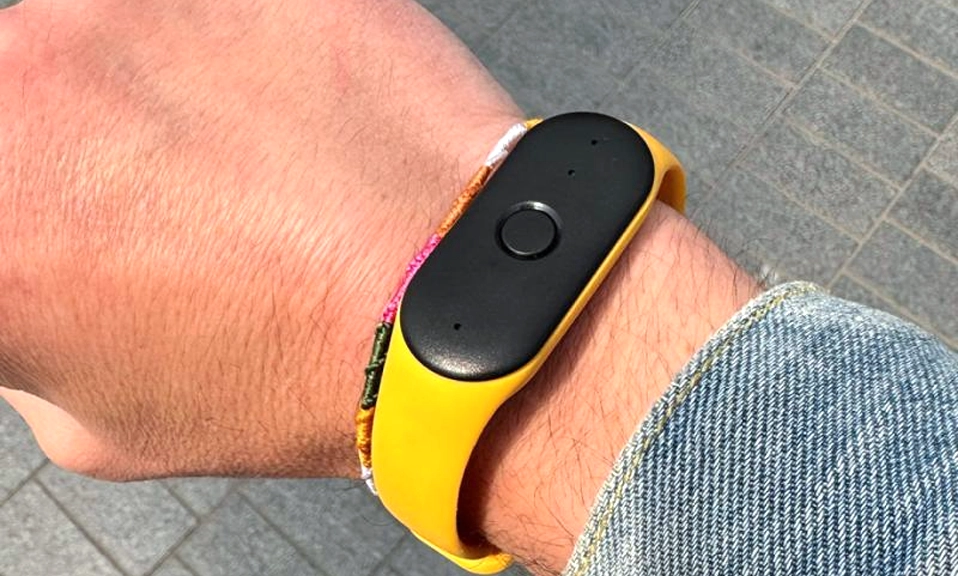
Amazon announced the Bee Frontier and Bee Eclipse on October 15, 2026—the first new products since the retail giant acquired the startup Bee in July 2025. The Frontier is a wearable that can be strapped to your wrist or clipped to your clothing. The Eclipse is a credit-card-sized device that attaches magnetically to the back of a smartphone. Together, they represent Amazon’s most direct challenge yet to both the emerging AI recorder market and the smartphone’s role as the default capture device for modern life.
What the Bee Devices Actually Do
The premise behind both devices is simple: you forget things, and AI can remember them for you. The Bee Frontier and Eclipse listen continuously while turned on, transcribing conversations and using AI to extract summaries, to-dos, reminders, and recurring themes. If you discuss plans with friends, the Bee remembers the date and time and can create a calendar invite. If you’re in a lecture, it takes notes. If you’re talking to a doctor, it jots down the care plan.
The Frontier is the more personal option. It has dual microphones with advanced noise-cancelling, IP67 water resistance, and a claimed seven-day battery life. It comes in lavender, sage, and onyx. The Eclipse is the professional option. It’s larger, which allows for a bigger battery—more than 21 days on a single charge—and it attaches to your phone magnetically, meaning you don’t have to wear anything at all.
Both devices use a private computing architecture that processes audio in real time and then deletes the raw recording. Transcripts are encrypted with device-controlled keys, and Amazon says no one, including its own employees, can access them unless you intentionally share them.
The Subscription Trap
The devices themselves are relatively affordable: $74.99 for the Frontier and $99.99 for the Eclipse. But the real business model is the subscription. The free tier gives you conversation summaries, recaps, and 14 days of memory. **Bee Pro costs $11.99 per month** (or $99.99 annually) and unlocks unlimited summaries, suggested to-dos, daily memories, a personal chat assistant, desktop access, and integrations with Gmail, Google Calendar, Outlook, Apple HealthKit, and—crucially—Amazon.com and Alexa+.
That last integration is the tell. With Bee Pro, your conversations can surface shopping suggestions on Amazon. If your spouse asks you to buy cat litter, you might see a product card reminding you of that on your Amazon homepage or a button linking to the product in the Bee app. The device that listens to your life is also a funnel into Amazon’s commerce engine. That’s not a bug. It’s the strategy.
The Smartphone Is Still the Toughest Rival
Here’s the uncomfortable truth for Amazon: your smartphone already does much of what the Bee Eclipse promises to do.
Compatible iPhones can record and transcribe calls, with Apple Intelligence summaries on supported models. Google’s Pixel Call Notes uses on-device Gemini processing. Samsung offers Galaxy AI transcription features on compatible handsets. The smartphone is already in your pocket, already has a microphone, already has a screen for reviewing transcripts, and already has the apps where your notes and calendar live.
The Bee’s strongest possible advantage is physical convenience: a visible, dedicated device with a microphone positioned closer to a conversation than a phone buried in a bag. The Frontier’s wrist-worn form factor means you can tap a button and start capturing without pulling out your phone. The Eclipse’s magnetic attachment means it’s always with your phone, but with a dedicated microphone and a battery that lasts three weeks.
But whether that convenience is enough to justify a separate device—and a separate subscription—is unproven. As one analysis put it, “A convenient summary is not necessarily a reliable record”. The Bee’s value depends on accuracy, privacy, and whether it does more than the phone you already own.
The Accuracy Problem
Transcription and understanding are not the same thing. Speech recognition can capture the words “we might deliver on Friday” accurately while a language model converts that tentative statement into a confirmed delivery commitment. Those errors become consequential when summaries inform emails, calendar events, or business decisions.
Amazon’s privacy architecture—processing audio in real time and discarding it—reduces exposure from stored recordings, but it also leaves users without the original audio needed to resolve a disputed transcript. A summary is a convenience. It is not evidence.
The Real Fight: Trust, Not Hardware
The Bee devices are not a hardware breakthrough. They are a bet that people will trust an AI system with a continuous record of their conversations—and that Amazon can turn that trust into a subscription business and a commerce channel.
That bet is not yet won. A September 2026 security assessment of Bee’s architecture identified 21 security issues, according to PCQuest. And the broader question of consent—what happens when the person you’re talking to doesn’t know they’re being recorded—remains unresolved.
Are smartphones about
to get a new rival? Not yet. The Bee Frontier and Eclipse are not phone replacements. They are phone accessories—dedicated microphones with AI attached, designed to do one thing (capture and summarize conversations) better than a general-purpose device.
But they are a signal of where the industry is heading. Amazon, Apple, Meta, and a wave of startups are all betting that the next great computing interface isn’t a screen you tap, but an ambient assistant that listens, remembers, and acts on your behalf. The smartphone will remain the center of that ecosystem for years to come. But the Bee devices suggest a future where the phone is no longer the only device doing the listening—and where the company that controls the microphone controls the relationship.
Amazon’s new gadgets won’t kill your smartphone. But they might change what you expect your smartphone to do—and who you trust to do it.