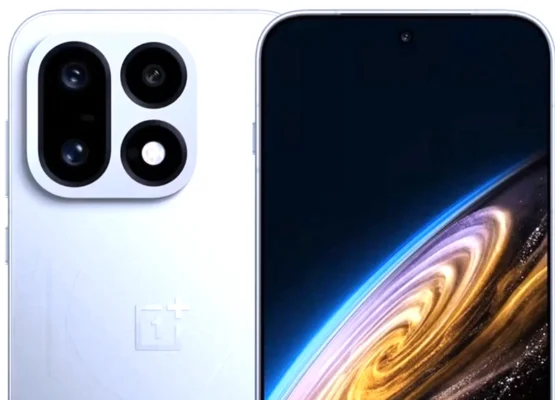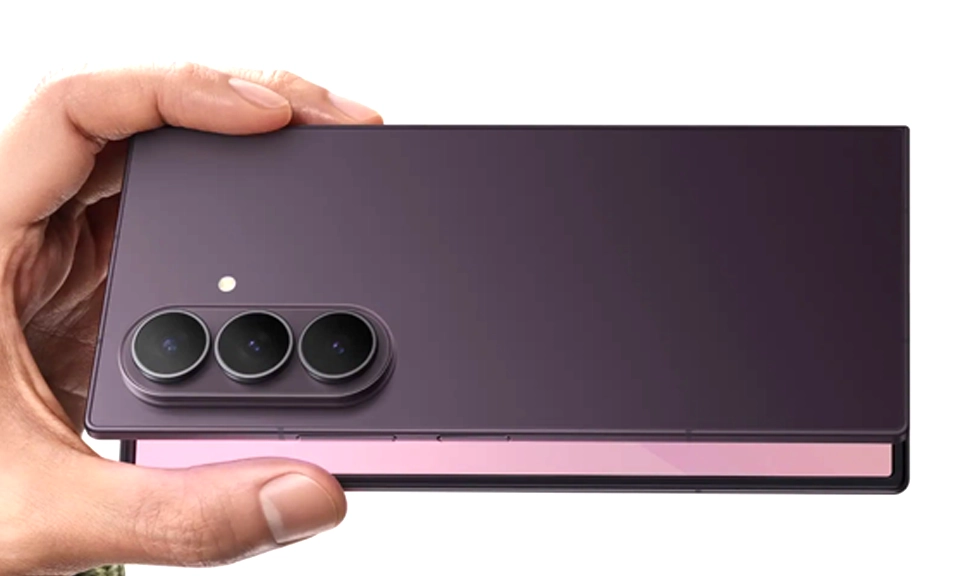
For years, Samsung has had the foldable smartphone market all to itself. The Galaxy Z Fold series has been the gold standard—the device that every other foldable is measured against. But on September 9, 2026, that changes.
Apple is finally entering the arena. And it’s not tiptoeing in—it’s arriving with a $2,000+ device designed to go head-to-head with Samsung’s best. The question isn’t whether Apple can compete. The question is: can Samsung survive?
The Contenders
| Specification | iPhone Fold (Rumored) | Galaxy Z Fold 8 |
|---|---|---|
| Inner Display | ~7.8 inches | 7.6 inches |
| Cover Display | ~5.5 inches | 5.5 inches |
| Aspect Ratio (Inner) | ~4:3 | 4:3 |
| Weight | ~215g (rumored) | 201g |
| Processor | A20-series chip | Snapdragon 8 Elite Gen 5 |
| RAM | 12GB (rumored) | 12GB / 16GB |
| Rear Cameras | Dual 48MP (rumored) | 50MP wide + 50MP ultra-wide |
| Battery | ~5,000mAh | 4,800mAh |
| Charging | Unknown | 45W wired, 20W wireless |
| Starting Price | $2,000 – $2,500 | $1,899 |
| Software | iOS 19 | Android 17, One UI 9 |
Design: The Wide-Fold Era Has Arrived
Here’s the twist: both phones are chasing the same design philosophy.
Samsung’s Galaxy Z Fold 8, launched in July 2026, abandoned the tall, narrow “candybar” design of previous generations. Instead, it adopted a shorter, wider, passport-like form factor with a 4:3 inner display. It’s compact, pocket-friendly, and weighs just 201g—making it Samsung’s lightest Fold yet.
Apple, according to leaks, is taking the exact same approach. The iPhone Fold is expected to feature a 5.5-inch cover display and a 7.8-inch inner display with a 4:3 aspect ratio. It’s a wider, squat design that prioritizes usability over spectacle—a form factor that makes the phone feel more like a small tablet when open and a compact device when closed.
The takeaway: Samsung got there first, but Apple is arriving with a nearly identical vision. The design battle will come down to execution—and Apple has reportedly spent years perfecting its hinge and display to minimize the crease.
The Display: The Crease War
Samsung’s foldable displays are already excellent. The Z Fold 8 features a 7.6-inch Dynamic AMOLED 2X inner display with a 120Hz refresh rate and up to 3,000 nits of brightness. The cover display is equally impressive at 5.5 inches with 120Hz support.
But Apple is gunning for one specific weakness: the crease.
Reports suggest Apple has been working on a dual-ultra-thin glass (UTG) structure, with one layer above the display and another underneath, to distribute mechanical stress more evenly. The company is said to have held back its first foldable until it could achieve a “nearly invisible crease”.
If Apple succeeds where Samsung has only partially succeeded, it could be a significant differentiator. A foldable that doesn’t look like a foldable is the holy grail—and Apple is betting it can deliver.
Performance: The Chip Wars
Samsung’s Z Fold 8 is powered by the Snapdragon 8 Elite Gen 5 for Galaxy—a custom chip built specifically for Samsung’s foldables. Paired with up to 16GB of RAM, it’s a performance beast.
Apple’s foldable is expected to feature the A20-series chip—potentially the A20 Pro. Built on a 2nm process, it could deliver significant performance and efficiency gains. Paired with 12GB of RAM, it will likely compete favorably with the Snapdragon.
The real battle here isn’t raw power—both phones will be blisteringly fast. It’s about software optimization. Apple’s tight integration between hardware and software has always been its secret weapon. If iOS 19 is truly optimized for foldables, it could give Apple an edge that Samsung’s Android implementation can’t match.
Cameras: Fewer Lenses, Better Quality?
Here’s where the strategies diverge.
Samsung packed the Z Fold 8 with a 50MP wide camera and a 50MP ultra-wide camera. The trade-off? No telephoto lens. Samsung is betting that the high-resolution sensors can handle zoom through cropping—a compromise that some reviewers have noted.
Apple, according to leaks, is taking a similar but different approach: three 48MP sensors instead of two. That would give Apple a dedicated ultra-wide, wide, and potentially telephoto lens—all at high resolution.
The camera battle will be fascinating. Samsung has seven generations of experience, but Apple’s computational photography is legendary. If Apple can deliver superior image processing on a foldable, it could steal a march on Samsung.
Battery and Charging: Samsung Has the Edge
Samsung’s Z Fold 8 packs a 4,800mAh battery with 45W wired charging and 20W wireless charging. Reviewers have praised its “solid battery life” and “fast charging”.
Apple’s foldable is rumored to feature a ~5,000mAh battery with 45W charging. That would put it on par with Samsung, but Apple has historically been conservative with battery capacity and charging speeds.
Samsung wins this round—for now. Apple’s battery optimization is excellent, but 45W charging on an Apple device would be a welcome—and overdue—upgrade.
Price: Apple Enters the Premium Tier
The Galaxy Z Fold 8 starts at $1,899** for the 256GB model. The 512GB version costs **$2,099, and the 1TB model with 16GB RAM costs $2,499.
Apple’s foldable is expected to start between $2,000 and $2,500. Some reports point to $2,300 to $2,500 for the base model.
That means Apple’s foldable could be $400 to $600 more expensive than Samsung’s base model. Apple is positioning its foldable as a new tier above the Pro lineup—a super-premium device for the most dedicated Apple fans.
Samsung wins on price, but Apple has never competed on price. The question is whether Apple’s ecosystem and brand loyalty can justify the premium.
The Market Impact: Can Samsung Survive?
Here’s where things get interesting.
According to Counterpoint Research, Apple is expected to capture 46% of the North American foldable market in its first year. Samsung’s share is projected to decline from 51% in 2025 to 29% in 2026.
Smart Analytics Global paints a slightly less dramatic picture: Samsung is expected to retain the top spot globally with 28% market share, followed by Huawei at 27%, and Apple at 25%. Combined, the three companies could account for 80% of global foldable shipments in 2027.
The numbers tell a clear story: Apple is coming, and Samsung’s dominance is ending.
But “survive” is the wrong word. Samsung isn’t going anywhere. It has seven generations of experience, a loyal Android user base, and a $1,899 starting price that undercuts Apple’s offering. It also has the Z Fold 8 Ultra—an even more premium device for those who want the absolute best.
What Samsung will lose is its monopoly. For years, if you wanted a premium foldable, you bought a Samsung. That era ends on September 9.
A New Era Begins
The iPhone Fold vs. Galaxy Z Fold 8 showdown is shaping up to be one of the most consequential smartphone battles in years.
Samsung has the experience, the lower price, and the broader ecosystem.
Apple has the brand loyalty, the software optimization, and the potential for a nearly crease-free display.
Neither company will “win” in the traditional sense. Instead, the foldable market is about to enter a new phase—one where competition drives innovation, prices eventually come down, and consumers have real choices.
Samsung will survive. But it will never be the only option again.
And for anyone who loves technology, that’s something to celebrate.
What do you think? Will you be buying the iPhone Fold or sticking with Samsung’s Galaxy Z Fold 8?