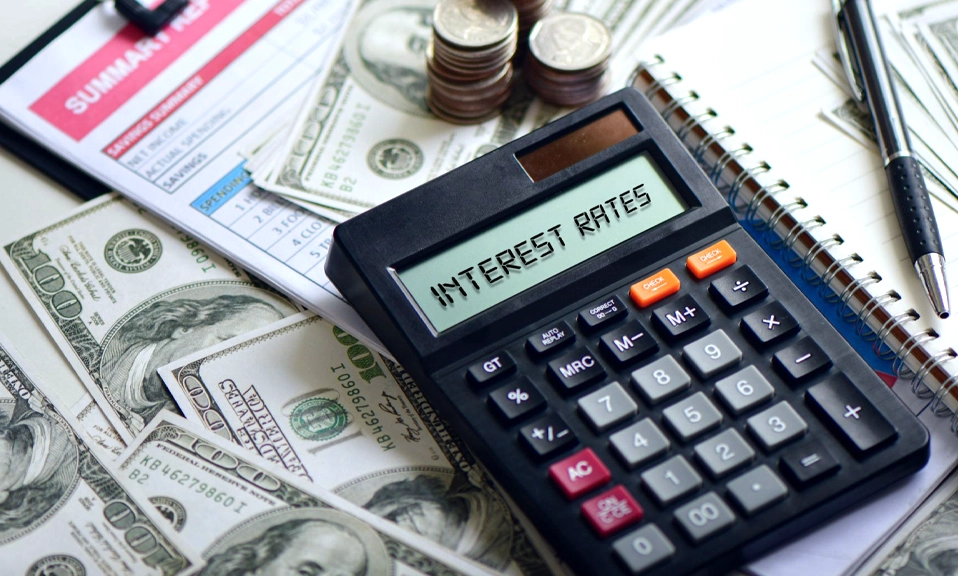
The question is no longer whether interest rates are going up again, but how soon and how high. And the answer matters more than any financial headline you will read this month—because it directly determines what your savings earn and what your debts cost.
As of early November 2026, the signals are unambiguous. San Francisco Fed President Mary Daly said the central bank is “likely going to need to raise interest rates again”, citing underlying inflation that is “just more stubborn than I would like it to be” . Richmond Fed President Thomas Barkin echoed the sentiment, calling inflation “the most important risk right now” and describing a “gradual” pace of further hikes as the sensible path . Markets are pricing in a better than 80% chance of a hike in December, followed by one more move in 2027 . Fidelity International expects hikes in both December 2026 and March 2027, with the possibility of an additional increase if global supply constraints persist .
Why Rates Are Rising Again
The Fed is not hiking because the economy is overheating. It is hiking because inflation is proving resistant to the tightening already delivered. The Fed’s benchmark rate was cut to a range of 3.75% to 4% at the October meeting, but policymakers have since concluded that policy is “a little bit accommodative” rather than restrictive . In other words, the current rate is not high enough to bring inflation back to the 2% target on the timeline the Fed wants.
The September 2026 hike—the first in more than three years—was a quarter-point increase, and 16 of the 18 FOMC officials forecast another hike before the end of the year . That forecast is now being realised. The Fed’s September dot plot showed that 14 of 18 officials expect the policy rate to be no lower than 4% by the end of 2027, up from just three officials in June—a dramatic hawkish shift that signals rates may stay higher for longer .
What It Means for Your Savings
For savers, the rate environment is finally working in your favour—but only if your money is in the right place.
The average FDIC-insured savings account pays around 0.59% APY . The top high-yield savings accounts are paying between 4.25% and 5.00% APY . That gap is not a rounding error. It is the difference between your money losing value to inflation and your money keeping pace with it.
When the Fed hikes, online banks and community banks tend to respond faster and more generously than the big legacy banks . If you are holding cash in a big-bank savings account paying next to nothing, the December hike is your cue to move. The same applies to certificates of deposit: locking in a rate now, before the next hike is fully priced in, can be a smart move if you have money you will not need for six to twelve months.
One important nuance: fixed-rate savings products do not benefit from future hikes. If you are already in a CD, your rate is locked. The gains from rising rates accrue to new deposits and variable-rate accounts .
What It Means for Your Loans
For borrowers, the direction of travel is less friendly.
Credit cards are the most exposed. The average credit card APR is already over 22% . Because credit card rates are tied to the prime rate, which moves with the Fed’s benchmark, a hike feeds through to your statement within one or two billing cycles . If you carry a balance, the cost of that balance is going up.
Variable-rate debt—including HELOCs and some private student loans and business loans—will also reprice higher . Fixed-rate loans are unaffected: your mortgage payment and auto loan payment stay the same . But new fixed-rate loans will be priced at higher rates, which matters if you are planning to buy a home or refinance.
The mortgage market is its own puzzle. The 30-year fixed rate has stayed above 7% for more than a month, and Freddie Mac data showed it at 7.18% in early November . But mortgage rates do not always move in lockstep with the Fed. As one industry expert put it: “In 2025, when the Fed was cutting rates, mortgage rates went up. So, who’s to say that in 2026, if the Fed raises rates, mortgage rates can’t come down?” . The 10-year Treasury yield, global demand for U.S. debt, and the Fed’s balance sheet policy all influence mortgage pricing alongside the policy rate.
Auto loans are sitting around 7% for new cars and above 10% for used cars . Personal loans average around 11.8% . These are already elevated, and further hikes will keep them there.
The 2027 Picture: Higher for Longer
The most important thing to understand about this rate cycle is that it is not a short-term blip. The Fed’s own projections suggest the policy rate will remain at or above 4% through the end of 2027 . TD Economics’ forecast shows the fed funds target rate staying in the 4.00%–4.25% range through 2027 before any meaningful decline . Prudential expects the Fed to “remain on hold for a long time” in 2027 after the current hiking cycle ends .
There is disagreement among the banks. Goldman Sachs has pushed its forecast for the final rate cuts of this cycle to June and December 2027 . HSBC expects a December hike to 4.00%–4.25% and then a pause through 2027 . But the consensus is clear: the era of ultra-low rates is not returning anytime soon. The new normal is a higher-for-longer environment, and your financial decisions should be built around that assumption.
What You Should Do Now
The practical implications are straightforward, even if the macroeconomic picture is complex.
If you have cash savings, move it to a high-yield account before the December hike is fully absorbed. The top rates are already above 4.25%, and they may edge higher. Do not wait for the “perfect” rate—the difference between 4.25% and 4.50% is small compared to the difference between 0.59% and 4.25%.
If you have variable-rate debt, prioritise paying it down. Credit card balances are the most urgent. A balance transfer to a lower-rate card can provide temporary relief, but only if you can clear the balance before the promotional period ends.
If you are planning a major purchase—a home, a car, a renovation—factor higher rates into your budget. The Fed’s hikes may not move mortgage rates in a straight line, but the direction of travel for borrowing costs is upward. Locking in a fixed rate where possible, rather than floating, is the prudent choice.
If you are an investor, remember that higher rates are not universally bad. They reward savers, punish borrowers, and create opportunities in sectors that benefit from a steeper yield curve. But the most important thing is not to make abrupt changes based on a single headline. The Fed’s path is gradual, and your financial plan should be too.
Interest rates are going up again.
The Fed has signalled it, the markets have priced it, and the economists expect it. For savers, this is an opportunity that did not exist two years ago—but only if you are holding your cash in an account that actually pays. For borrowers, it is a reminder that the cost of carrying variable-rate debt is rising, and that the era of cheap money is over.
The December meeting is the next milestone. The decisions you make before then—where your savings sit, how much high-interest debt you carry, whether you lock in a rate—will determine whether the next hike works for you or against you. The rate is going up. The question is whether your money is positioned to benefit.