Every culture on Earth has its monsters. The Scots have the Loch Ness Monster. The Himalayas have the Yeti. The Pacific Northwest has Bigfoot. The forests of Europe have werewolves. These creatures appear in folklore, in eyewitness accounts, and in blurry photographs. They are the subject of documentaries, books, and late-night radio shows. And they share one thing in common: despite decades of searching, not a single one has been proven to exist.
So why do we keep looking? Why do we keep telling these stories? And what does the persistent belief in cryptids tell us about ourselves?
Here is what we know about some of the world’s most famous strange creatures—and why the line between legend and reality is more complicated than it seems.
Bigfoot: North America’s Most Famous Cryptid
The legend: Bigfoot, also known as Sasquatch, is a large, hairy, bipedal humanoid said to inhabit the forests of the Pacific Northwest. Descriptions vary, but the creature is typically described as 7 to 10 feet tall, covered in dark fur, with large feet and a distinctive gait. The legend is deeply rooted in Indigenous traditions, with many Native American tribes having their own names and stories for similar creatures.
The evidence: Thousands of eyewitness reports, footprints, and blurry photographs—most famously the Patterson-Gimson film from 1967, which purportedly shows a female Bigfoot walking through a clearing in Northern California.
The scientific verdict: There is no conclusive physical evidence of Bigfoot. No body has ever been found. No DNA sample has been confirmed as belonging to an unknown primate. The Patterson-Gimson film has been the subject of decades of analysis, and while it has never been definitively debunked, it has also never been definitively authenticated. The footprints are often attributed to hoaxes or misidentified animal tracks.
The cultural context: Bigfoot is a pop culture icon. It has appeared in films, television shows, commercials, and countless pieces of merchandise. It is also a genuine subject of interest for cryptozoologists—researchers who study animals that may exist but have not been scientifically documented. For many people, the possibility of Bigfoot is more appealing than the certainty that it doesn’t exist.
The Loch Ness Monster: Scotland’s Deepest Mystery
The legend: The Loch Ness Monster, affectionately known as “Nessie,” is a large, long-necked creature said to inhabit Loch Ness in the Scottish Highlands. The legend dates back centuries, but the modern fascination began in 1933, when a hotel manager reported seeing a “water beast” in the loch. The following year, the “surgeon’s photograph”—later revealed to be a hoax—showed a creature with a long neck rising from the water.
The evidence: Sonar surveys, underwater cameras, and DNA sampling have all been deployed to find Nessie. In 2018, a team led by Professor Neil Gemmell of the University of Otago conducted an extensive environmental DNA survey of the loch. They found DNA from various species—but no evidence of any large, unknown creature. The most likely explanation for the sightings, Gemmell concluded, was large fish, seals, or birds, not a prehistoric reptile.
The scientific verdict: There is no credible evidence that a large, unknown creature lives in Loch Ness. The loch is large and deep, but it was formed relatively recently in geological terms and was covered by ice during the last Ice Age, meaning it would have been inaccessible to any surviving prehistoric populations.
The cultural context: Nessie is worth millions of pounds to the Scottish tourism industry. The legend has been kept alive by a combination of genuine belief, healthy skepticism, and a collective willingness to entertain the possibility. The Scottish government has even considered a plan to investigate the monster as part of a tourism campaign—a sign that the line between belief and marketing is often blurred.
The Yeti: The Abominable Snowman
The legend: The Yeti is a large, hairy, ape-like creature said to inhabit the Himalayas. The legend is deeply embedded in the folklore of Nepal and Tibet, where it is known by various names, including “metoh-kangmi”—which translates to “man-bear snowman.”
The evidence: Eyewitness reports, footprints, and a famous photograph of a “Yeti scalp” kept in a monastery—which was later analyzed and determined to be from a goat or serow. In 2017, a team of researchers analyzed nine alleged Yeti specimens, including bone, hair, and skin samples. DNA analysis found that the samples belonged to brown bears, black bears, and Tibetan blue bears—not a mysterious hominid.
The scientific verdict: There is no evidence of a large, unclassified primate in the Himalayas. The most likely explanation is that the legend is based on sightings of bears, particularly the Tibetan brown bear, which can stand upright and walk on two legs. The researchers concluded that the Yeti myth is “based on real bears.”
The cultural context: The Yeti is a pop culture staple, appearing in films, cartoons, and even the 2019 animated film Abominable. It is also a symbol of the Himalayas’ mystique and a draw for tourists and adventurers. Like Bigfoot, the Yeti’s appeal lies in the possibility of the unknown—the idea that there are still unexplored corners of the world where ancient creatures might survive.
Werewolves: The Human Monster
The legend: A werewolf is a human who transforms into a wolf—either voluntarily or involuntarily—usually at night or during a full moon. The legend is widespread across Europe and has roots in medieval folklore, trials, and superstitions.
The evidence: There is no scientific evidence that any human has ever transformed into a wolf or any other animal. The idea is biologically impossible.
The scientific verdict: Lycanthropy—the delusion that one has become a wolf—is a documented psychiatric condition, but it is not a physical transformation. In rare cases, individuals with specific medical conditions may exhibit symptoms that resemble “werewolf-like” behavior, including hypertrichosis (excessive hair growth) and porphyria (a rare blood disorder that can cause sensitivity to sunlight and receding gums). These conditions do not involve any actual transformation.
The cultural context: Werewolves are a metaphor. They represent the beast within—the idea that beneath the civilized surface, there is something primal and violent. They have been used to explore themes of identity, transformation, and the duality of human nature. In medieval Europe, werewolf trials often served as a way to persecute outsiders and marginalized individuals. In modern fiction, werewolves are romanticized, feared, and endlessly reinvented.
Other Famous Cryptids
Beyond the big names, there are countless other cryptids that have captured the public imagination:
The Mothman — A winged, humanoid creature said to have appeared in Point Pleasant, West Virginia, in the 1960s, often associated with the collapse of the Silver Bridge. There is no physical evidence.
The Chupacabra — A blood-sucking creature from Latin American folklore, said to prey on livestock. Sightings have been widely reported, but most have been attributed to mangy dogs, coyotes, or raccoons.
The Jersey Devil — A legendary creature said to inhabit the Pine Barrens of New Jersey, described as a kangaroo-like animal with wings and a forked tail. It has been part of the state’s folklore for centuries, but no evidence exists.
The Kraken — A giant sea monster from Scandinavian folklore, said to dwell off the coasts of Norway and Greenland. It is likely based on sightings of giant squid, which can grow up to 43 feet long. The creature is real. The monster is a legend.
Why Do We Believe?
If the scientific evidence is so clear, why do millions of people believe in cryptids?
The desire for mystery. We live in a world that has been mapped, measured, and explained. Cryptids offer a promise that not everything has been discovered—that there are still wild, unknown places and creatures. They are the last frontier of the imagination.
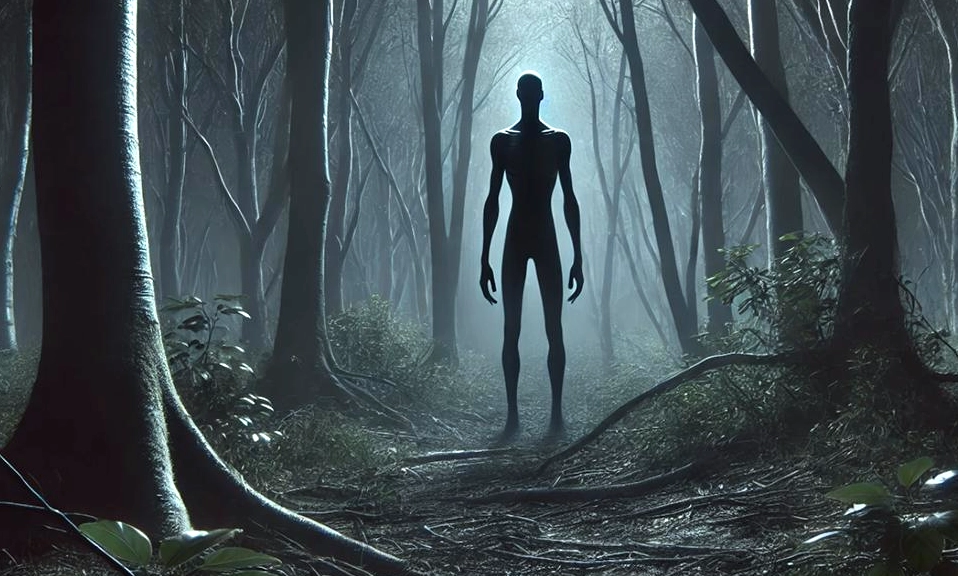
Pattern recognition and confirmation bias. We are wired to see patterns, even where none exist. A shadow in the woods becomes a Bigfoot. A wave in the loch becomes a monster. Once we believe something, we look for evidence that confirms it and ignore evidence that contradicts it.
The power of stories. Cryptids are not just creatures. They are stories. They give us heroes to chase, mysteries to solve, and communities to join. The search for Bigfoot is a way to spend time outdoors with friends. The belief in Nessie is a way to connect with the history of a place.
The possibility of being wrong. The scientific consensus is not always correct. The coelacanth, a fish thought to have been extinct for 65 million years, was discovered alive in 1938. The giant squid, once a myth, was filmed alive in 2012. The world is full of surprises. Cryptid believers are, in some sense, holding space for the possibility that the world is still full of surprises.
Bigfoot, werewolves,
the Yeti, and the Loch Ness Monster are not real—at least not in the sense that the evidence supports their existence as described. There is no body, no DNA, no definitive photograph, and no scientific consensus that any of them exist.
But that is not the same as saying they are not meaningful. Cryptids are real in a different sense. They are real as stories, as cultural touchstones, as symbols of the unknown. They are real because they matter to people—because they give us a reason to look at a forest and wonder what might be out there.
The scientist says: show me the evidence. The believer says: show me the evidence that there’s nothing there. Both are asking the same question, in different ways. And that question—what if? —is one of the most human questions there is.
So look. Search. Tell your stories. But bring a camera, and a notebook, and a healthy respect for the possibility that the world is stranger than you think—and simpler than you fear.
Have you ever had a cryptid encounter? What’s the strangest thing you’ve ever seen in the woods?