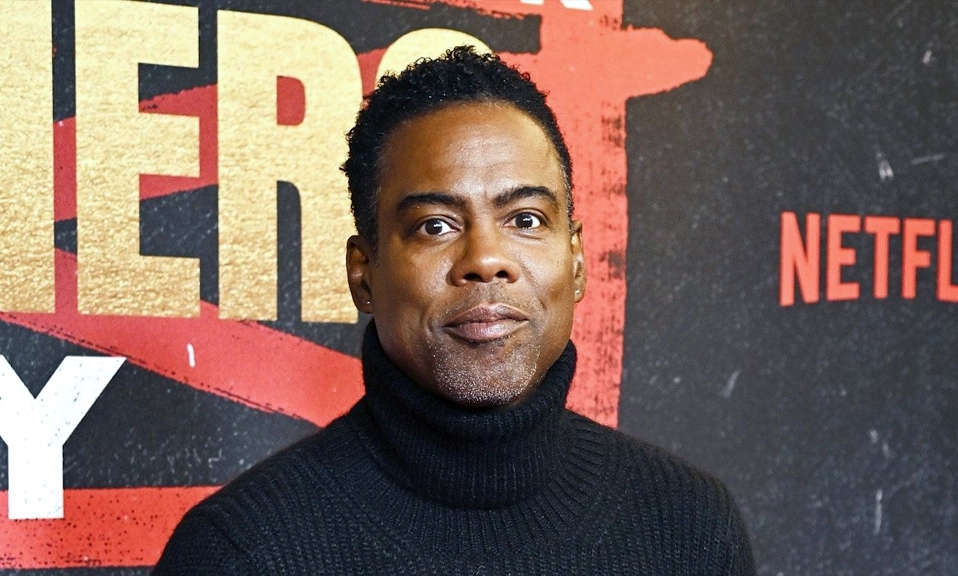
Chris Rock hasn’t directed a feature film in twelve years. Not since Top Five in 2014 has he sat in the director’s chair for a narrative project, and in the intervening decade, he has been far more visible as a stand-up comedian, an awards show host, and an actor than as a filmmaker. That is what makes Misty Green—his fourth feature as writer-director, released in theaters on October 9, 2026, and arriving on Netflix on November 9—such a significant moment. It is not just a new movie. It is a deliberate, personal return to the craft that Rock has said he wants to be known for.
But is it his biggest directorial comeback? The answer depends on how you measure it. In terms of scale, it is his smallest film. In terms of ambition, it may be his most personal. And in terms of the platform it lands on, it is arguably his most strategically important.
The Film: A Character Study, Not a Comedy
Misty Green is not the Chris Rock comedy that audiences might expect. It is a Hollywood character study—a dramedy about a talented but self-sabotaging actress named Misty Green, played by Rosalind Eleazar, whose once-bright career has faded into a daily grind of rejection and survival. She is an Emmy-winning former actress who has spent three years living rent-free in a Santa Monica apartment, supported by a wealthy married man. When he dies, she has seven days to leave, and she must scramble to revive her career while dealing with a troubled brother, a sleazy former colleague, and a filmmaker from her past who could offer her the comeback role she needs.
Rock plays Jordan, the filmmaker who approaches Misty with an opportunity, though their complicated history threatens to derail her second chance. The supporting cast is stacked: Adam Driver, Daniel Kaluuya, Anna Kendrick, Topher Grace, Alexandra Shipp, and Anthony Anderson. It is a serious, actor-driven ensemble piece, and Rock has deliberately stepped back from the lead role to give Eleazar the space to carry the film.
The Reception: A Star-Making Performance, A Mixed Film
The critical response to Misty Green has been split, but the one point of consensus is Rosalind Eleazar’s performance. The Hollywood Reporter called it “a star-making performance” and “a revelatory turn,” praising her “grit, tenacity and zero-fucks-given scrappiness”. The Associated Press review, quoted by the Journal Courier, called the film “one of Rock’s best projects, boosted by the ferocious abilities of Rosalind Eleazar as Misty”. Vulture described her as “magnetic,” and ScreenRant acknowledged that the film “fails a superb Rosalind Eleazar”.
The film itself has been received more cautiously. It holds a 61% critics’ score on Rotten Tomatoes based on 79 reviews. Some critics have praised Rock’s maturation as a filmmaker—The Hollywood Reporter noted that Misty Green is “significantly more mellow and thoughtful” than Top Five, “the work of a mature director who knows what he wants to say”. Others have been less kind. ScreenRant called it “aimless in its storytelling, unremarkable in the issues it speaks to, and flat in its attempts at humor”. Metro Weekly argued that the satire “feels oddly dated, as though Rock wrote it right after Top Five and then shelved it for a decade”.
The film is not a triumph. But it is not a failure either. It is a filmmaker stretching himself, and the stretch is visible.
The Scale: A $5 Million “Tiny” Movie
One of the most revealing details about Misty Green is its budget. Rock has described it as a **$5 million production**—his smallest film to date, and by a significant margin. To put that in perspective, *Top Five* had a reported budget of around $12 million, and Head of State cost roughly $35 million. Misty Green is a fraction of those figures.
The modest budget shaped the production. Rock has said he had to “beg” Daniel Kaluuya—who was “kind of retired”—to join the cast, and that actors were working for near-scale compensation because the film simply could not afford their usual fees. The fact that he was able to assemble a cast of this calibre on a $5 million budget is a testament to Rock’s relationships and the respect he commands in the industry. It also suggests that Misty Green was not made for commercial reasons. It was made because Rock wanted to make it.
The Platform: Netflix, Not HBO Max
The other significant dimension of Misty Green‘s release is where it lands. A24, the studio behind the film, has a pay-one output deal with HBO Max. But Misty Green is skipping HBO Max and going straight to Netflix on November 9, 2026.
The reason is Rock’s long-running relationship with Netflix. He has produced multiple stand-up specials for the streamer, including Tamborine, Total Blackout, and Selective Outrage, and Netflix was willing to pay for the streaming rights to Misty Green in a way that HBO Max was not. As Deadline put it, the film “lands at Netflix given his long-running relationship with the streamer on its comedy specials”. It is a strategic win for Netflix, which has been aggressively acquiring prestige films, and a signal that Rock’s relationship with the platform extends beyond comedy.
For Rock, it means his most personal film in a decade will be seen by a global audience far larger than the theatrical release could have reached. Misty Green opened in limited release on October 9, but its Netflix debut on November 9 is the moment it will truly be discovered.
The “Director Guy”: Rock’s Reinvention
What makes Misty Green a “comeback” is not that Rock has been absent from Hollywood. He has been everywhere—hosting the Oscars, touring his stand-up, appearing in films like Amsterdam and Rustin. The comeback is about identity. Rock has said he now considers himself a “director guy,” and that he has become “increasingly interested in writing and directing as he gets older”. The creative process appeals to him, he said, because it allows him to focus on making a project rather than constantly seeking acting work.
This is a significant shift. Rock’s previous directorial efforts—Head of State (2003), I Think I Love My Wife (2007), and Top Five (2014)—were all comedies, and all starred Rock in the lead role. Misty Green is the first film he has directed in which he is not the star. He has stepped back, handed the lead to Eleazar, and focused on the craft of directing. That is the act of a filmmaker who wants to be taken seriously, not just a comedian who occasionally directs.
Rock has also said that he would only return to the Oscars “if I’m nominated”—a statement that reveals how much he wants Misty Green and his work as a director to be recognised on their own merits. He is not interested in being the host. He is interested in being the filmmaker.
Is This His Biggest Comeback?
Yes—but not in the way you might expect.
Misty Green is not Rock’s biggest film. It is his smallest. It is not his most commercially ambitious project. It is his most personal. It is not a triumphant return to the blockbuster stage. It is a quiet, deliberate step into a new phase of his career—one where he is a director first, a star second, and a comedian only when he chooses to be.
Whether the film succeeds on its own terms is still being decided. The reviews are mixed, the box office is limited, and the Netflix audience is yet to weigh in. But the significance of Misty Green is not measured in its Rotten Tomatoes score or its opening weekend. It is measured in the fact that Chris Rock, after twelve years away from the director’s chair, chose to come back with a film that challenged him, that showcased someone else’s talent, and that announced—clearly and deliberately—that he is not done growing as an artist.
That is a comeback worth paying attention to.