7 New EVs That Could Finally End Range Anxiety
For years, the 400-mile range has been the holy grail for electric vehicles — a psychological threshold that would finally convince mainstream buyers that EVs were ready for prime time. That barrier isn’t just being approached anymore. It’s being shattered.
The era of the 400-mile EV has officially arrived. A fresh wave of electric vehicles, led by European manufacturers, is hitting the market with range figures that would have seemed impossible just a few years ago — and they’re doing it with smaller, more efficient batteries than the gargantuan packs that previously made such range possible.
The stakes are enormous. While Europe and China have embraced EVs amid high fuel costs, American drivers have lagged, held back by range anxiety, high prices, and limited charging infrastructure. Automakers’ response has been simple: make EVs go farther.
Here are seven new electric vehicles that are breaking the 400-mile barrier — and what they mean for the future of driving.
1. BMW iX3: The New Benchmark
Range: Up to 434 miles (EPA) / 500 miles (WLTP)
Battery: 109 kWh
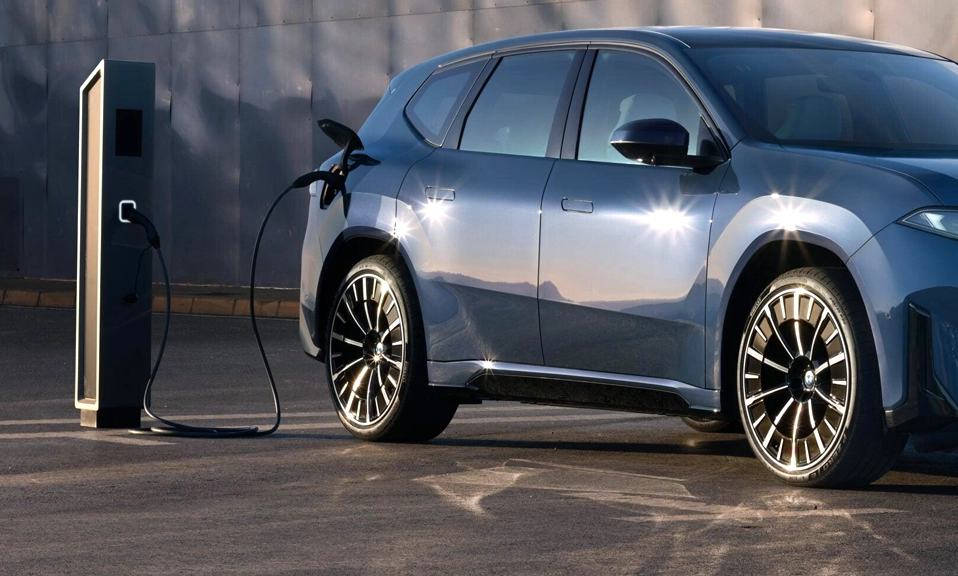
BMW’s Neue Klasse platform has arrived, and the iX3 is its first mainstream flagship. With an official EPA rating of up to 434 miles and a WLTP figure that tops 500 miles in the UK, the iX3 has set a new standard for electric crossovers.
What makes the iX3 remarkable isn’t just its range — it’s the efficiency. The iX3 achieves its range with a 109 kWh battery, roughly half the size of the 205 kWh packs used by GM’s longest-range electric trucks. This is a direct result of BMW’s focus on aerodynamic efficiency, weight reduction, and energy density. The iX3 also supports 400 kW charging, meaning you won’t be waiting around long when you do need to plug in.
Why it matters: The iX3 proves that massive range doesn’t require a massive battery. It’s a blueprint for how the rest of the industry can follow.
2. BMW i3: The Sedan That Goes the Distance
Range: Up to 468 miles (EPA) / 559 miles (WLTP)
Battery: 108.7 kWh
The new i3 — not to be confused with the quirky electric hatchback of the same name from a decade ago — is BMW’s Neue Klasse sedan, and it’s even more impressive than the iX3.
Early estimates place its EPA range at 468 miles, with WLTP figures reaching a staggering 559 miles for the 50 xDrive version. Like the iX3, it uses a 108.7 kWh battery, paired with dual electric motors producing 469 horsepower and all-wheel drive.
Why it matters: The i3 demonstrates that sedans can achieve even greater efficiency than SUVs. If these numbers hold, it will be one of the longest-range electric sedans on the market — and a direct challenge to the Tesla Model S.
3. Mercedes-Benz CLA Electric: The 474-Mile Surprise
Range: Up to 474 miles (WLTP)
Battery: 85 kWh (estimated)
Mercedes-Benz has been quietly working on a new generation of electric vehicles, and the CLA Electric is the most compelling example yet. With a range of up to 474 miles under Europe’s WLTP testing system, the CLA Electric delivers almost 500 miles of range from a battery that’s significantly smaller than its competitors’.
The CLA Electric is part of Mercedes’ push to make electric vehicles more efficient, not just bigger. It features advanced aerodynamics and a new generation of battery chemistry that maximizes energy density.
Why it matters: The CLA Electric is one of the most efficient EVs on the market, proving that Mercedes can compete with BMW on range without relying on enormous battery packs.
4. Lucid Cosmos: The $50,000 Range King
Range: 400+ miles
Battery: 69 kWh (base)
Lucid has built its reputation on range. The Lucid Air Grand Touring holds the record for the longest-range EV in the U.S. at 512 miles, and the Gravity SUV delivers up to 450 miles. But both are six-figure vehicles.
The Lucid Cosmos changes that. Set to arrive in the U.S. next year with a starting price of around $50,000, the Cosmos will deliver over 400 miles of range on a single charge — according to CEO Silvio Napoli himself.
Even more impressive: Lucid engineers say the midsize platform can deliver more than 300 miles of range with just a 69 kWh battery pack.
Why it matters: The Cosmos could be the vehicle that brings 400-mile range to the mass market. At $50,000, it undercuts the BMW iX3 and Mercedes-Benz CLA Electric while matching them on range.
5. Volvo EX60: The Swedish Contender
Range: Up to 400 miles
Battery: TBA
Volvo’s next electric SUV, the EX60, is set to arrive next year with a trim that delivers 400 miles of range. The EX60 is built on Volvo’s next-generation electric platform and is expected to be one of the most efficient vehicles in its class.
Volvo has been steadily expanding its electric lineup, and the EX60 represents the brand’s most ambitious range target yet. It will slot below the EX90 in Volvo’s lineup and compete directly with the BMW iX3 and Mercedes-Benz GLC Electric.
Why it matters: Volvo’s commitment to safety, sustainability, and Scandinavian design is well-established. If the EX60 delivers on its range promise, it will be a compelling alternative to the German competition.
6. Chevrolet Silverado EV: The Truck That Goes the Distance
Range: Up to 493 miles (with max battery)
Battery: 205 kWh
The Chevrolet Silverado EV is proof that electric trucks can compete on range. With the largest battery option, the Silverado EV delivers up to 493 miles of range — the longest of any electric pickup on the market. It was also the only EV tested by Consumer Reports to exceed 400 miles on a single charge.
The Silverado EV is built on GM’s Ultium platform and is available in multiple configurations, including fleet, work truck, and consumer trims. Its massive 205 kWh battery is the key to its range, but it also makes it one of the heaviest EVs on the road.
Why it matters: For truck buyers who need maximum range and towing capability, the Silverado EV is currently the benchmark. It proves that electrification doesn’t have to mean compromise for pickup owners.
7. Rivian R1T: The Adventure Truck
Range: Up to 420 miles
Battery: 135 kWh (Max pack)
The Rivian R1T was one of the first electric trucks to market, and it remains one of the best. With the Max battery pack, the R1T delivers up to 420 miles of range — plenty for both daily driving and weekend adventures.
What sets the R1T apart is its combination of range, capability, and refinement. It’s a genuine off-road vehicle that can tow, haul, and explore without range anxiety. The R1T’s quad-motor setup delivers incredible performance, and its interior is one of the nicest in any vehicle, electric or otherwise.
Why it matters: The R1T proves that electric trucks can be both practical and desirable. It’s the adventure vehicle that happens to be electric, not the other way around.
The 400-mile barrier isn’t
just a number. It’s a psychological threshold that has kept millions of drivers from making the switch to electric. With these seven vehicles — and the many more that will follow — that barrier is being dismantled.
The most encouraging trend isn’t just the range figures themselves, but how they’re being achieved. European manufacturers like BMW, Mercedes-Benz, and Volvo are proving that range can come from efficiency, not just brute-force battery size. The BMW iX3 achieves over 400 miles with a 109 kWh battery. The Lucid Cosmos can do it with a 69 kWh pack. This is the future of electric vehicles: lighter, more efficient, and more affordable.
That said, the $60,000 price point of many of these vehicles is still out of reach for many buyers. The Lucid Cosmos, at $50,000, is the most accessible — but even that is a significant investment. The real test will come when this technology filters down to the $30,000–$40,000 range.
But the trajectory is clear. Range anxiety is becoming a problem of the past. The 400-mile EV is here. And it’s only going to get better from here.