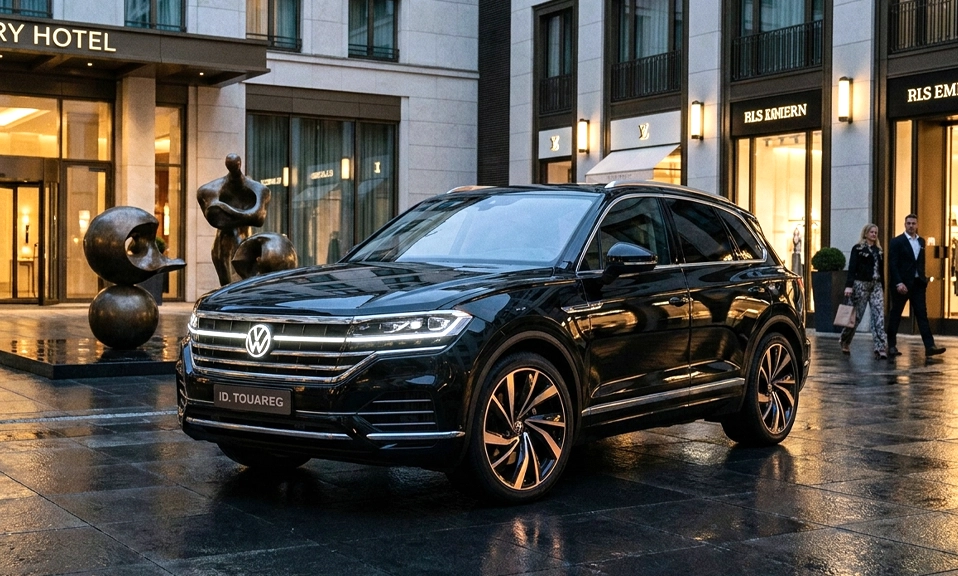
Volkswagen led Britain’s new-car market in September 2026, but the bigger surprise was the brand immediately behind it. BYD, the fast-growing Chinese electric-car maker, registered 20,140 cars in the month and finished ahead of Kia, MG, Audi, Tesla and BMW.
The result captures the two forces shaping the UK market at once. Established brands still benefit from scale, dealer networks, fleet contracts and familiar models. Newer brands are gaining ground with electric cars, competitive pricing and a broader choice of SUVs.
September is also a special month in Britain. The registration plate changes from 26 to 76, encouraging buyers and fleets to register vehicles at the start of a new plate cycle. That makes the month unusually large, so it is better read as a snapshot of momentum than as a complete annual league table.
The UK’s September 2026 brand rankings
The Society of Motor Manufacturers and Traders recorded 350,536 new-car registrations in September, 12.0% more than in the same month a year earlier. It was the strongest September since 2017.
The leading brands were:
Rank | Brand | September 2026 registrations |
1 | Volkswagen | 25,972 |
2 | BYD | 20,140 |
3 | Kia | 18,399 |
4 | MG | 18,026 |
5 | Audi | 16,721 |
6 | Tesla | 15,875 |
7 | BMW | 15,617 |
8 | Mercedes-Benz | 15,571 |
9 | Jaecoo | 15,055 |
10 | Toyota | 13,947 |
11 | Skoda | 13,371 |
12 | Volvo | 12,235 |
The figures show a market that is no longer divided neatly between old European, Japanese and Korean manufacturers. Volkswagen remains the largest single brand, while BYD, MG and Jaecoo demonstrate how quickly Chinese manufacturers can move from niche status into the mainstream.
Volkswagen: scale, familiarity and a car for almost everyone
Volkswagen’s advantage is not one spectacular model. It is the depth of its range.
The brand sells small hatchbacks, family cars, SUVs, estates and electric vehicles. Its Golf remains one of Britain’s best-known nameplates, while the T-Roc, Tiguan and other SUVs cover the categories that have taken sales from traditional hatchbacks. In September, the Golf was among the ten best-selling models, with 5,496 registrations.
Volkswagen also benefits from a large UK dealer network, strong residual recognition and a long-established presence in company-car and fleet purchasing. Those factors reduce the perceived risk for businesses that need to choose thousands of vehicles, and for private buyers who want a familiar badge and accessible servicing.
That combination explains why Volkswagen can remain dominant even while the market changes around it. It does not need to win every category. It only needs to be competitive in most of them.
BYD: the new challenger with an unusually broad EV range
BYD’s second-place finish is the clearest sign that the UK market is opening to Chinese brands.
The company registered 20,140 cars in September, up almost 80% year on year, according to The Independent’s report of SMMT data. Its range now reaches beyond one type of buyer, with small cars, saloons, SUVs and plug-in hybrid models alongside battery-electric vehicles.
The brand also arrived at a useful moment. Battery-electric registrations rose 36.3% year on year in September to 99,199 units, equal to 28.3% of the market. Petrol registrations fell 6.7%, while plug-in hybrid registrations rose sharply.
BYD’s success is not just about being Chinese or electric. It is about offering equipment, long warranties and competitive prices in segments where British buyers are already shopping. The Sealion 7 and Seal were among the leading electric models in September, while the company is expanding into smaller and larger vehicle categories.
Its challenge is to turn a powerful sales surge into long-term trust. That requires dependable dealers, strong after-sales support, competitive finance and confidence that parts will remain available years after purchase.
Kia: the SUV specialist that made electrification mainstream
Kia has built one of the most effective product strategies in the UK: focus on practical SUVs and crossovers, then add attractive electric options rather than treating EVs as a separate experiment.
The Sportage remains one of Britain’s most popular new cars. It ranked fourth overall in September with 6,521 registrations. Kia’s electric EV3 was also among the top battery-electric models, with 3,026 registrations.
That gives Kia a valuable bridge between the familiar and the new. A buyer can choose a petrol, hybrid or electric vehicle from a brand with an established dealer network and a mainstream reputation.
Kia has also benefited from a design-led turnaround. Its cars no longer compete only on price. They offer distinctive styling, long equipment lists and a warranty proposition that helps reduce ownership anxiety. The result is a brand that can compete for private buyers, company fleets and family SUV shoppers at the same time.
MG: the budget-friendly brand that no longer looks niche
MG’s British heritage is now attached to a modern, Chinese-owned manufacturer. In September it registered 18,026 cars, placing fourth behind Kia.
MG’s appeal is straightforward. It sells relatively affordable hatchbacks, SUVs and electric vehicles, often with generous standard equipment. That matters in a market where new-car prices have risen and buyers are comparing monthly finance payments as closely as headline prices.
The brand also has a practical distribution advantage. MG cars are sold through an established network of UK retailers, making them easier to see, test-drive and service than many new entrants.
MG’s long-term test will be whether low purchase prices continue to translate into strong customer satisfaction and residual values. But its presence near the top of the monthly ranking shows that “value” has become a major competitive weapon.
Audi, BMW and Mercedes-Benz: premium brands powered by fleets
Audi, BMW and Mercedes-Benz occupied fifth, seventh and eighth place respectively in September. Together, they illustrate why premium brands remain important even when household budgets are under pressure.
Their sales are supported by company-car schemes, salary-sacrifice programmes and business fleets. In the UK, a large share of new vehicles goes to fleets rather than directly to private buyers. SMMT-based figures compiled by AM show fleet registrations represented 58.29% of the market year to date through August 2026, compared with 39.38% for private buyers.
That structure rewards brands with strong leasing relationships, predictable residual values and wide model ranges. Premium manufacturers also have an advantage in electric vehicles, where company-car tax treatment can make a higher-priced vehicle more attractive to an employee than its private cash price suggests.
Tesla’s sixth-place September result adds another dimension. With only the Model 3 and Model Y in the UK range at the time of the report, Tesla still placed two models near the top of the overall sales chart. The Model 3 registered 9,929 units and the Model Y 5,946.
Jaecoo: the SUV formula is changing quickly
Jaecoo finished ninth by brand, but its individual model made an even bigger statement. The Jaecoo 7 was September’s best-selling car with 10,814 registrations. It also rose to second place in the 2026 year-to-date model ranking, behind the Ford Puma.
The Jaecoo 7 illustrates why new Chinese manufacturers are gaining attention. It combines the high seating position and visual presence British buyers want with a price and equipment strategy designed to undercut established rivals.
Jaecoo is part of the Chery group, which has introduced several brands and powertrains into the UK. Its growth also shows that the market entry route is no longer limited to launching one small electric car. New manufacturers can arrive with SUVs, plug-in hybrids and battery-electric vehicles aimed at several segments at once.
Why the leaders keep winning
The top brands do not all use the same strategy, but the leaders share several advantages.
First, they offer a broad range. A brand that sells only one body style is vulnerable when buyers shift from hatchbacks to SUVs or from petrol to electric. Volkswagen, Kia, BMW, Mercedes-Benz and Toyota can spread demand across several categories.
Second, they have distribution. A national dealer and service network makes a brand visible and lowers the practical cost of ownership. This remains important even as more people research and order cars online.
Third, they understand fleet sales. Company cars, rental fleets and leasing providers can deliver large registration volumes, often on predictable replacement cycles. The UK’s fleet-heavy market rewards manufacturers that can offer attractive finance and keep vehicles available.
Fourth, they are adapting to electrification. Battery EVs made up 28.3% of September’s registrations, and the UK’s 2026 zero-emission vehicle target is 33% of new-car sales under the current mandate. Manufacturers therefore need credible electric products, even if petrol and hybrid models remain essential for many customers.
Finally, price and equipment are becoming harder to separate. A car with a lower list price may not be the cheapest monthly lease, while a more expensive model may include features that buyers would otherwise add as options. Brands that give customers a clear value proposition are more likely to win attention.
The old order is changing, but not disappearing
Volkswagen’s lead shows that established brands still have enormous structural advantages. BYD’s second place and Jaecoo’s model victory show that those advantages are no longer decisive on their own.
The British market is becoming more competitive because buyers have more choices. Chinese brands are bringing aggressive pricing and fast product launches. Korean manufacturers remain strong in practical SUVs and EVs. German brands continue to benefit from fleets and premium demand. Japanese brands retain deep reputations for reliability, even when their monthly rankings vary.
The next stage of the market will be decided by more than badge recognition. It will depend on who can combine dependable service, competitive finance, attractive electric cars, useful technology and prices that make sense in a monthly budget.
For now, Volkswagen still sells the most in Britain’s biggest registration month. But the most important fact in the rankings may be that BYD is already close behind. British roads are not being dominated by one type of carmaker anymore. They are becoming a contest between scale and speed—and the new challengers are no longer waiting at the back of the queue.