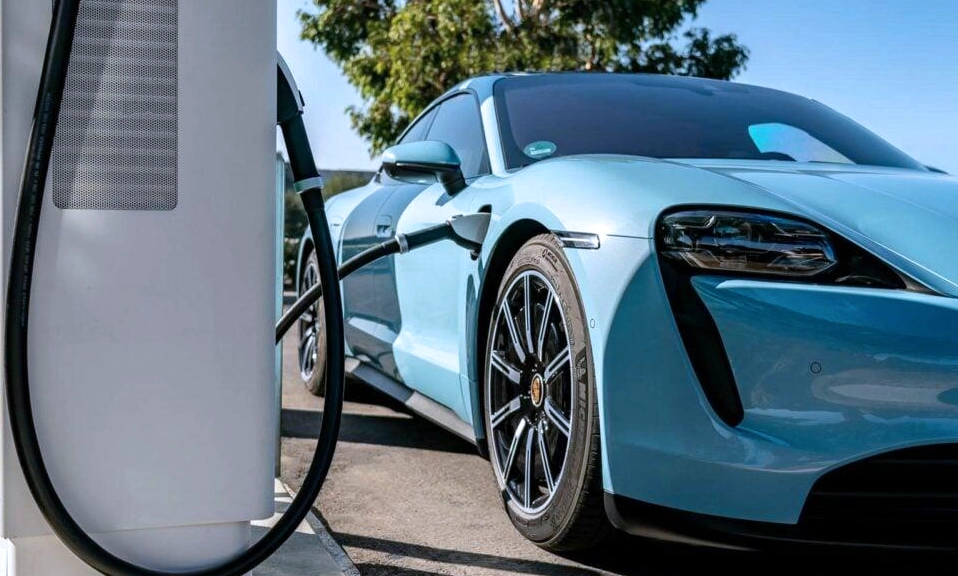
Is This the End of Long Charging Stops?
For a decade, the knock on electric cars was simple: they take too long to charge. You could refuel a petrol car in five minutes, but an EV could take half an hour or more. That gap — the “maths that never worked” — is the single biggest reason people hesitate to go electric.
In 2026, that gap is closing fast. Three major Chinese companies have now demonstrated charging times that rival a petrol stop. BYD says its FLASH system can charge a compatible EV from 10% to 70% in five minutes. Geely claims it can do the same in 4.5 minutes. And CATL’s Shenxing III battery can go from 10% to 80% in 3 minutes and 44 seconds.
The technology exists. It works. The question is whether the infrastructure — and the batteries — can handle it at scale.
The Claims: What “Five-Minute Charging” Actually Means
The first thing to understand is that these companies are not all claiming the same thing.
BYD’s FLASH Charging system pairs a 1,500kW charger with its second-generation Blade Battery. At 10% to 70% state of charge, the recharge takes five minutes. At 10% to 97%, it takes nine minutes. In extreme cold (-30°C), a 10% to 97% charge takes around 12 minutes.
In practical terms, that five-minute charge adds 223 miles of range based on the Denza Z9 GT’s WLTP range of 372 miles. That’s the equivalent of a full tank of petrol in a mid-size car.
Geely’s system uses a 2.2-megawatt charger and achieved 10% to 70% in 4 minutes and 30 seconds on both a Zeekr 001 sedan and a Lynk & Co 10 hybrid, with 10% to 97% taking just under nine minutes.
CATL’s Shenxing III claims 10% to 80% in 3 minutes and 44 seconds, and 10% to 98% in 6 minutes and 27 seconds.
Sunwoda’s 15C battery is designed for 10% to 70% in five minutes at room temperature, with 10% to 97% in nine minutes. At -20°C, that extends to 15 minutes — still faster than most current EVs charge at room temperature.
How It Works: The Battery Technology Behind the Speed
The headline numbers are impressive. The engineering behind them is even more so.
Silicon-carbon anodes are the key enabler. Traditional lithium-ion batteries use graphite anodes. Silicon can store far more lithium, but it swells dramatically during charging — cracking the anode and degrading the battery. Silicon-carbon composites solve this by embedding silicon nanoparticles in a carbon matrix, allowing the anode to absorb lithium ions at high rates without structural failure.
800-volt to 1,000-volt architectures are the other pillar. Higher voltage means less current is required to deliver the same power, which reduces heat generation. BYD’s FLASH chargers operate at 1,500kW. Geely’s at 2.2MW. These are not modified versions of existing chargers — they are a fundamentally different class of infrastructure.
Liquid-cooled cables and connectors are essential. Huawei’s platform uses an enclosed liquid-cooling system across power units, dispensers, and cables, keeping wet dust and salt fog away from sensitive electronics and extending hardware life to ten years. BYD’s T-shaped charging gantry hangs cables vertically on a rail, making connection easier and preventing cables from dragging on the ground.
On-site battery storage is the final piece. A single 1,500kW charger would demand the same instantaneous power as roughly 450–500 homes. To avoid requiring industrial-grade grid connections at every site, both BYD and Huawei buffer the load through on-site batteries. BYD’s Flash chargers carry 370kWh of storage, allowing a site to draw as little as 100kW from the local grid while releasing up to 1,500kW in short bursts. Huawei’s direct-current architecture connects its storage system directly to a DC bus, removing an entire power conversion stage and achieving 92.1% efficiency.
The Grid Problem: The Real Bottleneck
Here’s the uncomfortable truth: the batteries can charge fast. The grid cannot always deliver the power.
A single 1MW charger consumes roughly the same power as 450–500 homes. If multiple vehicles plug in simultaneously, the local grid can be destabilised without advanced management systems. Upgrading the nearest substation is costly and can take years.
This is why the on-site battery storage approach matters so much. It decouples the charging speed from the grid connection. A site can run on an ordinary grid connection and still deliver megawatt-level bursts, because the batteries absorb demand at a steady rate and discharge it in short, high-power pulses.
Huawei’s system goes further: it can run on a grid connection of just 50 kilowatts, eliminating the need for grid capacity expansion permits and cutting construction schedules from months to weeks.
But the scale of deployment required is enormous. BYD has installed 10,000 Flash Charging stations in China and is targeting 20,000 by the end of 2026. It has begun rolling out in Europe, with 3,000 stations planned across the continent by 2027. Geely has deployed 2.2MW chargers in China. Sunwoda plans 10,000 megawatt charging stations by the end of 2027.
The U.S. is not on the same trajectory. Fast-charging sessions there typically take 20 to 40 minutes, and the rollout of higher-power chargers has been delayed.
The Battery Life Question
Fast charging stresses batteries. The faster you push energy in, the more heat you generate, and the more the anode swells and contracts. The question is whether these batteries will last.
The early data is encouraging. BYD says a Yangwang U7 completed more than 30,000 kilometres and over 350 flash-charging sessions in nine days, retaining 98.7% of its original capacity. Sunwoda states its Xingchi Supercharge Battery 2.0 has a lifespan of 1,500 cycles and meets the requirements for a ten-year or 300,000-kilometre warranty.
But these are early tests, often conducted by the manufacturers themselves. Independent verification of long-term durability under repeated extreme fast charging is still limited.
Solid-State: The Next Frontier
While the Chinese manufacturers are pushing lithium-ion to its limits, another technology is emerging that could change the equation entirely: solid-state batteries.
ProLogium has begun mass production of its Gen 3.5 Lithium Ceramic Battery, with 381 Wh/kg energy density and a fast charge from 5% to 80% in 6.4 minutes. QuantumScape’s QSE-5 cell charges from 10% to 80% in 12.2 minutes and has demonstrated safety performance equivalent to or better than lithium-ion. Factorial Energy’s solid-state cells, being road-tested in a Stellantis Dodge Charger Daytona, charge from 15% to 90% in 18 minutes.
Solid-state batteries promise higher energy density, better safety, and longer life. But they are also more expensive and harder to manufacture at scale. ProLogium’s mass production is a milestone, but its Dunkirk gigafactory won’t ramp up until 2028–2029.
The near-term future belongs to advanced lithium-ion with silicon-carbon anodes. Solid-state is the long game.
What This Means for Drivers
If five-minute charging becomes widely available, it changes the EV ownership experience fundamentally.
The “charging anxiety” that keeps people from buying EVs is not really about range. It’s about time. A 300-mile EV that takes 30 minutes to charge is inconvenient. A 300-mile EV that takes five minutes to charge is indistinguishable from a petrol car in terms of practical usability.
PwC’s 2025 survey found that half of people considering an EV saw charging time as the biggest deterrent, and 52% said they would accept a range of 300–400 kilometres if they could charge in under 30 minutes. Five-minute charging doesn’t just meet that expectation. It obliterates it.
The catch is availability. Five-minute charging requires a compatible vehicle and a compatible charger. BYD’s FLASH stations can charge non-BYD vehicles, but at whatever rate their own batteries and onboard chargers permit — not the full 1,500kW. The technology is not universal.
Five-minute EV
charging is no longer a laboratory curiosity. It is a commercial reality in China, and it is coming to Europe. The batteries exist. The chargers exist. The on-site storage systems that make it grid-compatible exist.
The challenges are scale, cost, and standardisation. Building a megawatt charging network requires billions in investment. Upgrading grids takes years. And not every EV on the road can accept the power these chargers deliver.
But the direction of travel is unmistakable. The gap between filling a petrol tank and charging an EV is closing. Within a few years, the five-minute charge may be the new normal — not for every car, and not everywhere, but for the drivers who need it most.
The long charging stop is not dead yet. But its days are numbered.