Rise and shine, Mr. Freeman.
For millions of gamers, those three words triggered one of the most iconic opening sequences in video game history: the unskippable, mundane, yet deeply atmospheric tram ride into the Black Mesa Research Facility.
When Valve released Half-Life in 1998, it didn’t just win Game of the Year; it fundamentally changed how narrative was delivered in video games. But as the years rolled on, the game began to show its age. The GoldSrc engine was clunky, the textures were muddy, and the infamous final act in the alien world of “Xen” was a frustrating, platforming nightmare.
By the late 2000s, Valve had moved on to Portal, Team Fortress 2, and Dota 2. There was no official remake of Half-Life in sight. The gaming community was left with a choice: let the masterpiece fade into retro obscurity, or take matters into their own hands.
A small, fiercely dedicated team of modders chose the latter. They called themselves Crowbar Collective. And their project, Black Mesa, would become one of the most remarkable success stories in PC gaming history.
Here is the story of how a passionate fan project evolved into a decade-long grind, earned the blessing of its creators, and ultimately resurrected a legend.
🛠️ The Audacity of the Remake
In 2004, a group of fans started messing around with Valve’s new Source engine (the tech behind Half-Life 2). Their initial goal was modest: just remake a few levels of the original Half-Life to see what the new engine could do.
But as they looked at the results, the ambition grew. Why just a few levels? Why not the whole game?
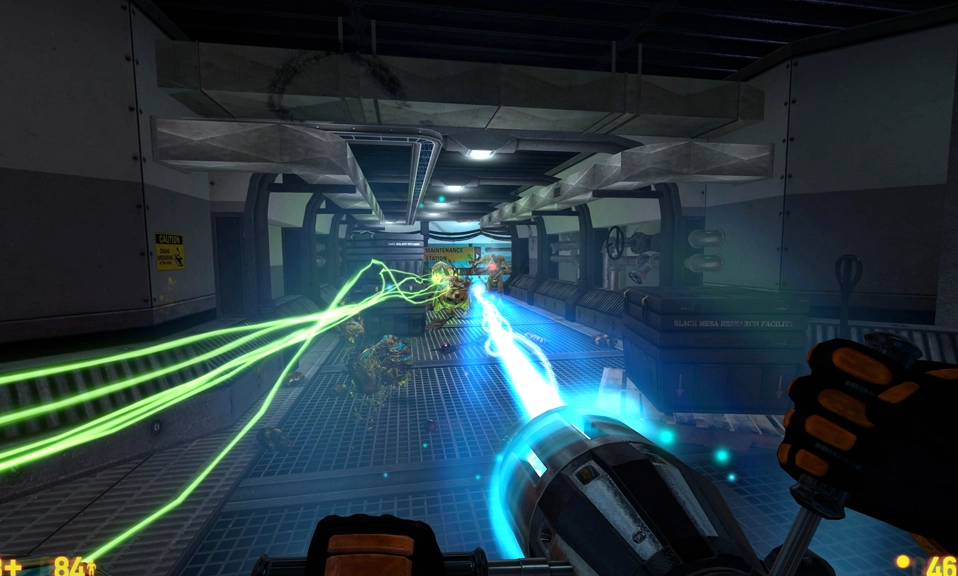
They weren’t just going to slap a high-definition texture pack on the old code. They were going to rebuild Half-Life from the ground up. They redesigned the environments, reworked the lighting, updated the physics, and completely re-scored the game.
In 2012, they released the first standalone, free version of Black Mesa. It was a revelation. Playing the Office and Lambda Complex levels in Source felt like coming home to a house that had been beautifully renovated. It was a massive hit in the modding community, but it was only half-finished. The grueling marathon had just begun.
🤝 The Ultimate Validation: Valve Gives the Green Light
Usually, when a fan project gets this big, the original IP holder gets nervous. We’ve seen countless fan remakes shut down by cease-and-desist letters from publishers who want to protect their trademarks.
But in 2015, Valve did something unprecedented. They didn’t shut Crowbar Collective down. Instead, they offered them a commercial license.
Valve essentially said: “This is amazing. Finish it, and you can sell it on Steam.”
This was a massive turning point. It meant the team could finally get paid for their years of work, hire more talent, and access better resources. But it also meant the stakes were raised to the stratosphere. They were no longer just making a free mod for the community; they were making a commercial product that had to stand shoulder-to-shoulder with modern AAA games.
🌌 The Elephant in the Room: Fixing “Xen”
If you played the original Half-Life, you know the dark secret of the game: the last 15% of it takes place in Xen, an alien dimension. It is notoriously clunky, poorly paced, and features some of the most frustrating low-gravity platforming ever put to disk. Many players just gave up and looked up a walkthrough to get through it.
Crowbar Collective knew that to make Black Mesa a true masterpiece, they couldn’t just polish Xen. They had to completely reimagine it.
This became the project’s infamous development bottleneck. For years, the team struggled to figure out how to make an alien world that felt vast, terrifying, and fun to traverse without losing the essence of the original.
When Black Mesa finally reached its 1.0 release in May 2020, the new Xen was the crown jewel. It was transformed from a clunky afterthought into a breathtaking, atmospheric, and genuinely terrifying sci-fi epic. The low-gravity mechanics were completely overhauled to feel fluid and responsive. It was the ultimate “apology” from the original game to its players, and it completely changed the legacy of Half-Life’s ending.
🏆 Why Black Mesa is the Gold Standard for Remakes
Today, the gaming industry is obsessed with “remasters” and “remakes.” But Black Mesa stands as a masterclass in how to treat a classic IP. Here’s why it succeeded where others fail:
1. It Respected the Original Design: Crowbar Collective didn’t try to turn Half-Life into a modern, cover-shooter. They kept the linear, environmental storytelling, the puzzle-solving, and the relentless pacing intact. They just made it feel better.
2. The Sound Design is Phenomenal: The original Half-Life had great audio, but Black Mesa’s soundscape is a masterpiece. The heavy, mechanical clunk of the HEV suit, the terrifying screech of the Headcrabs, and the booming, orchestral reimagining of Kelly Bailey’s original soundtrack make the game feel incredibly weighty and immersive.
3. It Fixed the Friction, Not the Fun: The team removed the “fake” loading screens that broke up the original game’s seamless flow, modernized the inventory system, and smoothed out the combat. They removed the friction of 1998’s technical limitations so the fun could shine through.
🧬 Keeping the Flame Alive
We are still living in the era where Half-Life 3 remains the biggest joke in gaming. Valve has largely stepped away from traditional, linear, single-player shooters to focus on VR (Half-Life: Alyx) and live-service games.
But because of Black Mesa, the legacy of Gordon Freeman isn’t dead.
Crowbar Collective proved that a team of passionate fans, armed with nothing but love for the source material and an unreasonable amount of perseverance, could achieve AAA quality. They kept the Half-Life community alive, thriving, and modding for over a decade.
Black Mesa is more than just a remake. It is a love letter to the game that started it all, written by the fans who refused to let it fade away. It proved that some stories are so good, they deserve to be told again, even if the original creators have moved on.
So, if you haven’t taken the tram ride into Black Mesa recently, do yourself a favor. Grab a crowbar, put on the HEV suit, and experience the game that saved a masterpiece.