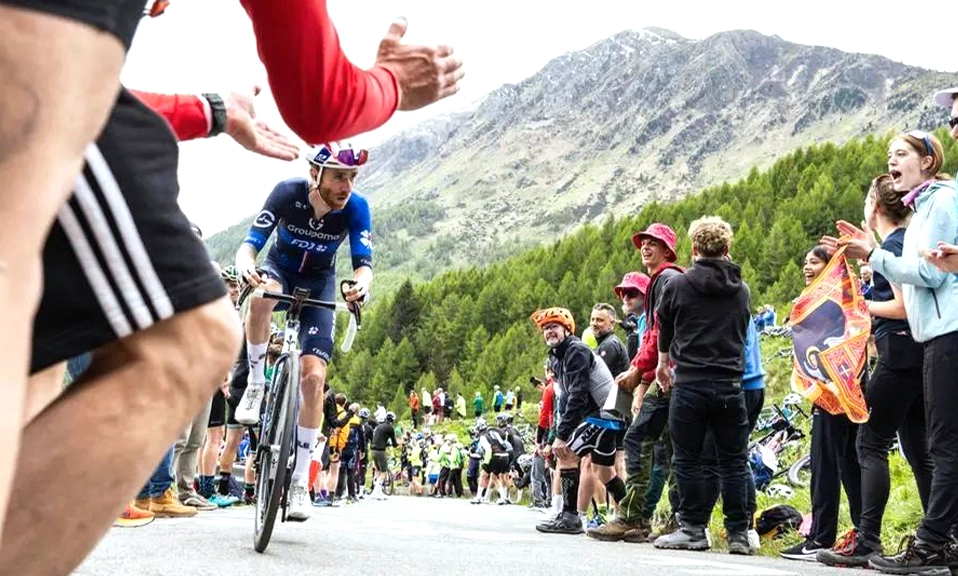
The Giro d’Italia has always been the Grand Tour that punishes the brave and rewards the resilient. But the route for the 2027 edition, unveiled in Rome on November 3, 2026, is not just another hard race. It is a deliberate, almost provocation-level test of climbing endurance—a 3,418-kilometre journey with 50,250 metres of elevation gain, seven summit finishes, and a final week that one cycling publication has already described as “seriously ugly”. The question is not whether the 2027 Giro will be difficult. It is whether it will be the toughest Grand Tour ever staged.
The Numbers: A Race Built for Climbers
The raw statistics tell the story before a single pedal is turned. The 110th edition of the Corsa Rosa begins in Trieste on May 8, 2027, and finishes in Rome on May 30, covering 21 stages with two rest days. The total elevation gain of 50,250 metres is marginally less than the 2027 Tour de France’s 53,450 metres, but the distribution of that climbing is what makes the Giro so punishing.
There are seven mountaintop finishes, ranging across the Apennines and the Alps. There are two individual time trials—one uphill, one flat—totalling 56.9 kilometres against the clock. And there is a final week that stacks three of Italy’s most feared ascents into six days, ensuring that the maglia rosa will not be decided until the penultimate afternoon on Monte Zoncolan.
The Queen Stage: A Double Dose of Mortirolo
If there is one day that defines the 2027 Giro, it is Stage 16 on Tuesday, May 25. The 192-kilometre route from Sondrio to Aprica packs in nearly 6,000 metres of climbing—the highest single-day elevation gain of the entire race. And at its heart is a sequence that borders on sadistic: the Passo del Mortirolo, climbed twice, with the Passo Gavia sandwiched between them.
The Mortirolo is not merely a hard climb. It is the climb that cycling lore has christened “pro cycling’s most brutal”. The ascent from Mazzo di Valtellina, which will be used for the first of the two passages, averages 10.1% over 12.8 kilometres, with pitches that touch 18%. The Gavia, returning to the Giro for the first time since 2014, adds 16.5 kilometres at 8% and reaches an altitude of 2,618 metres—the highest point of the race. The stage finishes in Aprica, five years after Jan Hirt’s victory there in 2022.
The combination is unprecedented in recent Grand Tour history. A double Mortirolo with the Gavia in between, at the end of nearly 200 kilometres and almost 6,000 metres of climbing, is the kind of stage that can shatter a rider’s entire season. As Marca put it, the stage “invites attacks from afar and movements between teams aspiring to control the general classification”. It is a day designed not just to test legs, but to break wills.
The Penultimate Showdown: Zoncolan’s Return
If Stage 16 does not decide the race, Stage 20 will. The penultimate day, from Pordenone to Monte Zoncolan, features 180 kilometres and 3,600 metres of climbing before the final ascent—a 10.5-kilometre monster with gradients that exceed 20% in places. The Zoncolan has not featured in the Giro since 2021, and its return is a deliberate statement: the race organisers want the winner to be decided on the steepest, most unforgiving climb in Italy.
The Zoncolan is not a climb that rewards tactical nuance. It is a pure, brutal survival test. The average gradient of 12% masks the reality that some sections are so steep that riders are forced to zigzag just to keep moving forward. Placing it on the penultimate stage, with only the processional finale in Rome to follow, ensures that the GC battle will go to the wire—and that the final mountain day will be a spectacle of suffering and defiance.
The Supporting Cast: A Final Week That Doesn’t Let Up
The brutality of the 2027 Giro is not confined to Stage 16 and Stage 20. The final week is a cumulative assault on the peloton’s resources. After the second rest day, Stage 16 delivers the double Mortirolo. Stage 17 finishes at Madonna di Campiglio, another summit finish that offers no respite. Stage 18 and 19 provide brief respites before Stage 20’s Zoncolan showdown.
Even the time trials are designed to hurt. The first, on Stage 7, is a 19.6-kilometre uphill test from Sulmona to Campo di Giove—a “very nasty uphill finish” that will favour pure climbers over rouleurs. The second, a 37.3-kilometre flat test from Monza to Milan, gives time trial specialists a chance to reclaim time, but it comes too late to offset the damage done in the mountains.
Is This the Toughest Giro Ever?
The question of “toughest ever” is inherently subjective. Cycling history is filled with races that pushed riders to the edge of human endurance—the 1988 Giro with its snowstorm on the Gavia, the 2018 edition with Chris Froome’s 80-kilometre solo attack, the brutal Dolomite stages of the 1990s. What makes the 2027 route stand out is not any single innovation, but the concentration of difficulty.
The 2027 Giro has more summit finishes (seven) than any recent edition, and it places three of Italy’s most iconic and difficult climbs—Mortirolo, Gavia, and Zoncolan—within the final six stages. It has an uphill time trial that will punish pure time trialists and reward climbers. And it has a total elevation gain that, while slightly lower than the Tour’s, is distributed in a way that offers almost no flat roads for recovery in the decisive week.
Comparisons to the Tour de France are inevitable, and instructive. The 2027 Tour will feature the tough Montmartre climb on its final stage, but it also includes more time trial kilometres (56.9km for the Giro versus a larger total for the Tour) and a more balanced distribution of mountain stages. The Giro’s route is “more mountainous than the Tour’s” in terms of summit finishes and concentrated climbing, even if the raw elevation figure is marginally lower.
The 2027 Giro is not necessarily the hardest race in absolute terms—the Tour’s longer time trials and the Vuelta’s steep finishes are different kinds of challenges. But it may be the most climber-centric Grand Tour of the modern era, a race that offers almost no hiding places for riders who cannot survive in the high mountains.
The Rider Question: Who Will Dare to Race It?
A route this brutal raises an uncomfortable question: will the sport’s biggest stars want to ride it? Defending champion Jonas Vingegaard is expected to prioritise the Tour de France, and Tadej Pogačar is likely to opt for the Tour and Vuelta. Remco Evenepoel, a four-time time trial world champion, might be tempted by the 56.9 kilometres against the clock, but the mountains could deter him. The route’s difficulty may paradoxically make it harder to attract the very riders who would make it a spectacle.
The organisers are clearly aware of this tension. The inclusion of two time trials and a mix of sprint stages suggests an attempt to create a balanced race that appeals to multiple types of riders, not just pure climbers. But the final week is unambiguously designed for mountain goats. Whether the stars respond to that challenge is a question that will not be answered until May 2027.
The 2027 Giro d’Italia
is not just a hard race. It is a statement of intent. By stacking the Mortirolo, the Gavia, and the Zoncolan into the final week, and by adding an uphill time trial and seven summit finishes, the organisers have created a route that demands a complete champion—a rider who can climb, time trial, and recover better than anyone else in the peloton.
Will it be the toughest race ever? That title is contested, and history may ultimately decide. But what is certain is that the 2027 Giro will be one of the most punishing, dramatic, and pure tests of climbing endurance in the modern history of the sport. The mountains are waiting. The question is who will be brave enough to answer.