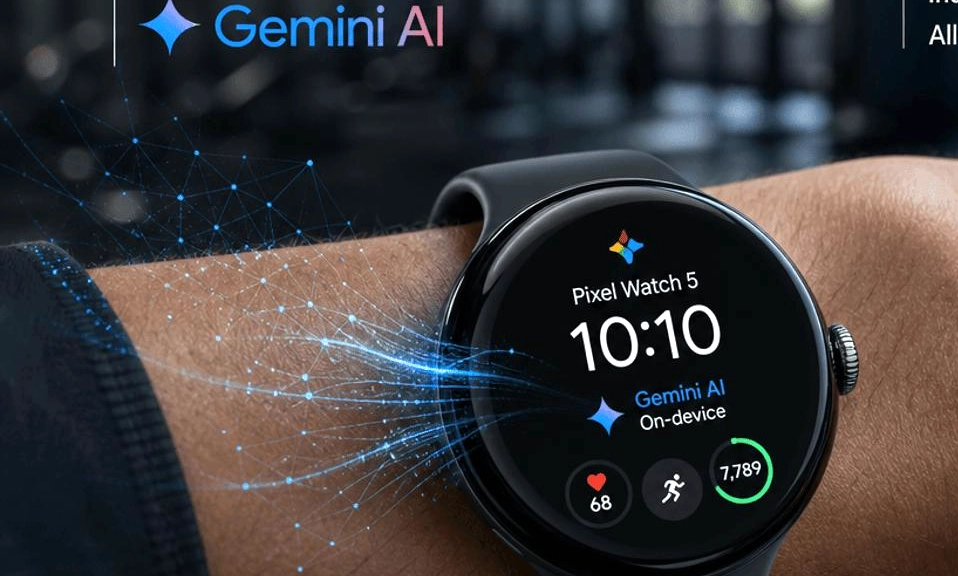
Google has just published research that could fundamentally change what we expect from the device on our wrist. A new AI system, validated in a peer-reviewed study in Nature, can detect signs of high blood pressure using the standard sensors already found in consumer smartwatches—no cuff, no calibration, no extra hardware required. The question that follows is no longer whether the technology works. It is whether a smartwatch that can flag hypertension is still a wellness gadget, or whether it has quietly become something closer to a medical device.
The answer, according to regulators, clinicians, and the companies building these features, is more complicated than a simple label. It sits at the intersection of a genuinely useful screening tool and a regulatory framework that is still struggling to keep pace with what wearables can do.
The Research: Hypertension Detection Without a Cuff
The study, led by Paolo Di Achille and Ming-Zher Poh at Google Research, describes a system called AI-PPG-ACC-HTN. It uses two sensors that are already active on most modern smartwatches: photoplethysmography (PPG) , which tracks changes in blood volume at the wrist, and accelerometry (ACC) , which identifies periods of stillness and captures the subtle mechanical vibrations caused by the heart ejecting blood into the aorta.
Crucially, the system does not try to estimate a point-in-time systolic or diastolic blood pressure number. That approach is highly susceptible to noise and has been the downfall of previous cuffless efforts. Instead, it reframes the problem: it aggregates passive physiological signatures over multiple days to identify an individual’s underlying, persistent hypertensive state.
The model was trained on nearly 500,000 hours of sensor data from over 2,100 participants, using a two-stage machine learning approach that first learns rich physiological features from raw waveforms and then aggregates them at the person level. In the validation study, 196 US adults wore a Pixel Watch 3 for about seven days alongside a 24-hour ambulatory blood pressure monitor—the clinical gold standard.
The results were striking. The smartwatch detected 65.8% of hypertension cases confirmed by ambulatory monitoring, compared with 55.3% detected by an initial office reading. The difference was not statistically significant, meaning the watch performed roughly as well as a standard clinic check. Both methods held specificity at 90%, meaning about one in ten people without hypertension still screened positive.
Performance improved with wear time and began to level off at around five days with at least one hour of data collected daily. The authors also found that classifier errors showed no statistical link to skin tone, a critical consideration for optical sensors.
From Research to Product: Health Guardian
The research did not stay in the lab. It directly informed Blood Pressure Trends, a feature within Google’s Health Guardian suite, which rolled out to Pixel Watch 3, 4, and 5 in late September 2026 and is now arriving for Fitbit Air users. The feature uses Google’s WavesFM foundation model to analyze the speed and shape of the pulse beneath the skin and estimate blood pressure trends without a cuff or manual calibration.
It requires at least five consecutive days of data within a week to generate a trend, and it delivers a monthly report on the first day of the following month. Google is careful with its language: the feature is described as tracking trends, not diagnosing hypertension, and the insulin resistance feature that accompanies it is explicitly labeled as “not intended for medical purposes” and “not a pre-screener for diabetes”.
The Regulatory Question: Wellness or Medical Device?
This is where the story becomes genuinely thorny. The FDA’s position on wearable blood pressure features has shifted markedly in the past eighteen months, and the current landscape is defined by a deliberate loosening of the rules—with caveats.
In July 2025, the FDA told fitness tracker company Whoop that its blood pressure feature made the device a medical device. The agency argued that a product intended to estimate or measure blood pressure is “inherently associated” with the diagnosis of clinical conditions such as hypertension, and pointed to Whoop’s own “medical-grade” marketing language as evidence of intended medical use.
Eleven months later, the FDA closed the file. Nothing about the underlying technology had changed. What changed was the agency’s interpretation. In January 2026, the FDA issued revised guidance on general wellness products, clarifying that certain non-invasive sensing products used to estimate blood pressure may qualify as low-risk general wellness products—provided they are used solely for wellness and meet specific conditions, such as not raising safety concerns that would warrant device-specific regulatory controls.
On June 17, 2026, the FDA formally closed out the Whoop warning letter, stating it did not intend to enforce device requirements against the modified Blood Pressure Insights product. The new guidance explicitly permits noninvasive wearables to output estimated physiological parameters—including blood pressure—as long as they do not prompt clinical intervention or claim medical-device status.
This is a significant deregulatory shift. It means that a feature like Google’s Blood Pressure Trends can exist in a regulatory gray zone: it is not a medical device, it is not cleared for diagnosis, and it does not require the same clinical validation as a cuff-based monitor—yet it is performing a function that is medically meaningful and could prompt a user to seek care.
The contrast with Apple is instructive. Apple’s Hypertension Notification Feature received FDA clearance through the 510(k) pathway, which is a formal medical-device authorization. But even Apple’s feature does not measure blood pressure in mm Hg. It analyzes PPG signals over 30 days and provides a probabilistic notification that a user may have hypertension, without cuff calibration. Its sensitivity in detecting hypertension was 41%, with a specificity of 92%—a different performance profile from Google’s system, and one that reflects the trade-offs inherent in cuffless screening.
The key distinction is not technological. It is regulatory. Apple sought and received clearance as a medical device. Google has positioned its feature as a wellness tool, operating under the FDA’s general wellness guidance. Both are legitimate paths. But they lead to different levels of scrutiny, different marketing claims, and different expectations from clinicians and consumers.
The Clinical Caveat: A Signal, Not a Diagnosis
The researchers themselves are careful to frame their work as a screening tool, not a replacement for cuff-based measurement. The study’s authors say the system “would not replace traditional cuff-based blood pressure monitoring but could act as a tool to identify individuals with signs of hypertension, which could facilitate earlier diagnosis and intervention”.
That framing is essential. Hypertension is often called the “silent killer” because it rarely presents with obvious symptoms. More than half of adults with the condition are unaware they have it, and the gap is particularly severe among younger adults aged 18 to 44. A smartwatch that can flag a persistent hypertensive state—even imperfectly—could prompt millions of people to seek a formal diagnosis who might otherwise have gone years without one.
But the limitations are real. The study excluded people with known cardiovascular disease and those already on antihypertensive medication, so the system’s performance in those populations is untested. The next step, the authors say, is randomized trials to determine whether the system actually finds patients who would otherwise go undiagnosed, and whether that earlier detection improves outcomes.
Smartwatches Are Becoming Medical Devices—Whether We Call Them That or Not
The Google research is a genuine milestone. It demonstrates that a standard consumer smartwatch, using sensors that are already on millions of wrists, can detect signs of hypertension with accuracy comparable to an office blood pressure check. The technology works. The study is peer-reviewed. The feature is already rolling out to consumers.
But the question of whether smartwatches are becoming medical devices is not answered by the technology alone. It is answered by regulation, by marketing, and by how clinicians and consumers interpret the data. The FDA’s 2026 guidance has created a pathway for companies to offer medically meaningful features without seeking medical-device clearance—a pathway that Google has taken and Apple has not. That divergence will shape how these features are used, trusted, and regulated in the years ahead.
For now, the most honest description is this: smartwatches are becoming medical screening devices, even if they are not yet medical diagnostic devices. They can flag a problem. They cannot confirm it. They can prompt a conversation with a doctor. They cannot replace the cuff. And as the technology improves and the regulatory lines continue to shift, the distinction between “wellness” and “medical device” will become harder to maintain—not because the technology has changed, but because the questions it raises have.
Google’s AI has shown that the wrist can be a front door to cardiovascular awareness. Whether that door leads to a doctor’s office or to a false sense of security depends less on the algorithm than on the system around it.