Welcome to 2026. If you’ve been paying attention to the gaming industry lately, you’ve probably noticed a fascinating, almost surreal phenomenon.
We aren’t just looking forward to the next big thing. We are looking backward.
The masterpieces of the 2016–2026 decade—the “Golden Decade” of gaming—are no longer just resting on their laurels. Thanks to a massive wave of definitive editions, next-gen remasters, and spiritual successors, the titans of the last ten years are being dragged back into the arena. They are going head-to-head with each other, and with the new generation of games desperately trying to fill their shoes.
It’s the ultimate clash of the titans. And as gamers, we are the ones holding the controllers.
Let’s break down the greatest head-to-head matchups of the modern era, and why this “Renaissance of the Classics” is the best thing to happen to gaming in years.
🗡️ Matchup 1: The Open-World Crown
The Contenders: The Legend of Zelda: Tears of the Kingdom (2023) vs. Elden Ring (2022)
For years, the debate was Breath of the Wild versus everything else. But with the release of Tears of the Kingdom and the cultural juggernaut that is Elden Ring (especially post-Shadow of the Erdtree), the open-world genre has split into two distinct, opposing philosophies.
- The Zelda Argument: Pure, systemic freedom. TotK is a physics and chemistry sandbox where the joy comes from experimentation. If you can imagine it, you can probably build it with Ultrahook. It’s a world that says, “Here are the rules, now go break them creatively.”
- The Elden Ring Argument: Curated, deliberate discovery. FromSoftware’s masterpiece doesn’t hold your hand; it hides its secrets behind brutal combat and cryptic lore. The joy isn’t in breaking the rules, but in mastering them and being rewarded with a hidden graveyard, a devastating boss, or a legendary weapon.
The Verdict: They aren’t competing for the same player at the same time. Zelda is the ultimate playground; Elden Ring is the ultimate mountain to climb. Together, they represent the absolute pinnacle of open-world design.
📜 Matchup 2: The RPG Throne
The Contenders: The Witcher 3: Wild Hunt (2015 / 2022 Next-Gen Update) vs. Baldur’s Gate 3 (2023)
When Baldur’s Gate 3 swept the Game Awards, the inevitable comparisons to The Witcher 3 began. Both are sprawling, narrative-heavy, choice-driven RPGs that set new standards for the genre. But their approaches to storytelling are fundamentally different.
- The Witcher 3: The cinematic epic. You play as a defined character (Geralt) with a rich history, and the game’s brilliance lies in how your choices ripple through a deeply realized, morally gray world. The side quests are better than most games’ main stories.
- Baldur’s Gate 3: The ultimate player agency. You are a blank slate (or a custom Origin character), and the game’s brilliance lies in its sheer reactivity. The D&D 5e ruleset allows for a level of emergent, “wait, I can do that?” creativity that The Witcher’s scripted engine simply cannot match.
The Verdict: The Witcher 3 is the greatest story ever told in a game. Baldur’s Gate 3 is the greatest interactive system ever built. If you want to watch a masterpiece unfold, play Geralt. If you want to write your own masterpiece, roll for initiative.
🪓 Matchup 3: The Action-Adventure Heavyweights
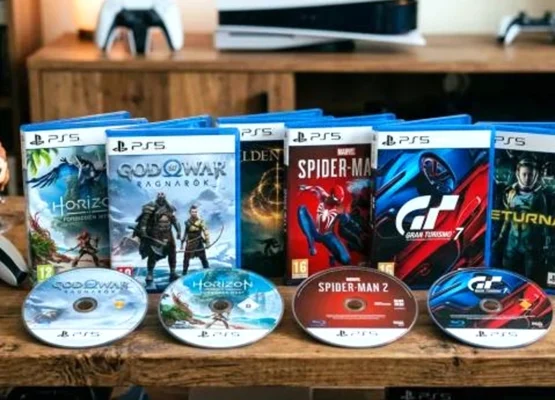
The Contenders: God of War Ragnarök (2022) vs. Ghost of Tsushima (2020)
If you want to talk about sheer, unadulterated combat satisfaction and cinematic presentation, this is the heavyweight bout of the decade.
- God of War: A masterclass in the “one-shot” cinematic camera, emotional weight, and crunchy, impactful combat. Kratos and Atreus’s journey is a technical marvel, blending puzzle-solving, brutal axe-throwing, and genuine character development.
- Ghost of Tsushima: A love letter to Kurosawa films and the fantasy of the samurai. The combat is a deadly, flowing dance of parries, dodges, and stances. It doesn’t rely on a cluttered UI; it relies on the wind, the rustling grass, and the tension of a standoff.
The Verdict: God of War wins on narrative ambition and technical spectacle. Ghost of Tsushima wins on pure, unadulterated atmospheric elegance and combat flow. (And let’s be honest, Jin Sakai’s standoff mechanic is still the coolest thing in gaming).
🤠 Matchup 4: The Unmatched Detail
The Contender: Red Dead Redemption 2 (2018) vs. The Entire Industry
It feels unfair to put RDR2 in a matchup, because in 2026, it’s still not fighting a fair fight. Nearly a decade after its release, no other game has matched its level of obsessive, living-world detail.
Horses’ testicles shrink in the cold. NPCs have daily routines that make sense. The mud dries dynamically on your coat. While newer games chase massive, empty maps or live-service monetization, RDR2 remains a singular, deeply authored, single-player experience that feels more “alive” than games released eight years later.
The Verdict: Red Dead Redemption 2 isn’t just a game; it’s a benchmark. Until a studio is willing to spend 8 years and $500 million+ on a purely single-player, narrative-driven world, Arthur Morgan’s story remains the untouchable king of immersion.
🔄 Why Is This Happening Now? The “Remaster Renaissance”
You might be wondering: Why are we talking about 2016-2023 games in 2026?
Two reasons:
- The 10-Year Anniversary Wave: 2026 marks the 10-year anniversary of absolute classics like Uncharted 4: A Thief’s End, DOOM (2016), and Overwatch. Publishers are wisely capitalizing on nostalgia, releasing definitive editions, remasters, and anniversary content that introduce these masterpieces to a whole new generation of players on modern hardware.
- The Risk-Averse AAA Landscape: Developing a brand-new, groundbreaking AAA IP is incredibly expensive and risky. Instead of swinging for the fences with unproven concepts, many studios are opting to polish the diamonds they already own. We’re getting Ghost of Tsushima Director’s Cuts on new platforms, Elden Ring expanded editions, and rumors of Witcher and God of War universe expansions.
We Are Living in the Golden Age of Replayability
Some critics argue that the industry is “running out of ideas” by looking backward. I completely disagree.
When a game is truly great, it doesn’t age; it matures. Revisiting The Witcher 3 with ray tracing, or experiencing Elden Ring at a locked 60fps on modern hardware, isn’t just nostalgia bait. It’s a chance to experience these games the way their creators originally envisioned them, free from the technical limitations of their launch windows.
Furthermore, this head-to-head era forces new developers to study the masters. You can’t make a good open-world game in 2026 without studying Zelda and Elden Ring. You can’t make a good RPG without bowing to Baldur’s Gate 3.
The greatest games of the last 10 years aren’t fading into obscurity. They are being enshrined. And the best part? We get to play them all over again.