The foldable phone market in 2026 is no longer a two-horse race. Samsung has spent years refining its Galaxy Z Fold formula, but Huawei has been quietly building a reputation for hardware innovation that pushes the category forward. The Huawei Mate X8, launched on November 24, 2026, is the company’s latest attempt to prove that it doesn’t just compete with Samsung—it leapfrogs it.
But is it actually the better foldable? The answer, as with most things in this segment, depends entirely on what you value.
Design: Thinner, Lighter, Flatter
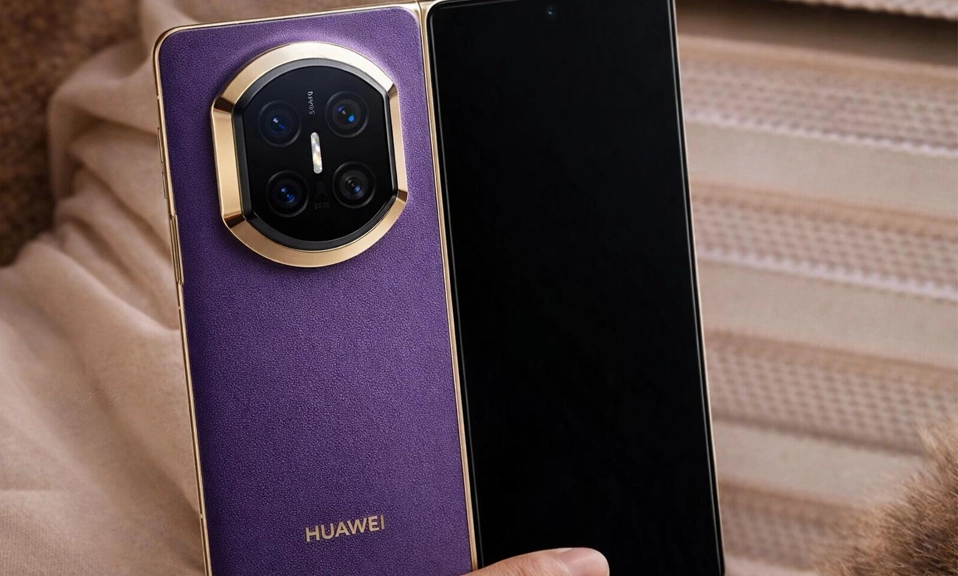
On pure hardware, the Mate X8 makes a compelling argument. It is thinner than the Galaxy Z Fold 8, measuring just 4.2mm unfolded and 8.95mm folded—compared to Samsung’s 4.5mm and 8.9mm respectively. It is a meaningful difference in the hand, and Huawei has achieved it without sacrificing battery capacity.
The headline design innovation is the magnetic flattening hinge. Huawei uses a thin magnetic layer and aerospace-grade steel to pull the flexible screen flatter when the phone opens, reducing the visible crease that has long been the aesthetic compromise of foldables. Huawei’s own 3D scan measured the crease at just 15 microns between its highest and lowest points, down from 142 microns on the Mate X7. Independent testing will determine whether that improvement holds up over months of use, but the engineering is genuinely impressive.
Samsung’s approach with the Z Fold 8 is different. The standard model has adopted a “passport” shape—shorter and wider than the tall-and-skinny Z Fold 8 Ultra—which Samsung says is better for video consumption and one-handed use. It is a divisive design choice, but it addresses a real complaint about traditional foldables being awkward to use when closed. The Z Fold 8 Ultra, meanwhile, sticks with the classic book-style form factor and refines it with a reduced crease and a lighter build.
Verdict on design: The Mate X8 wins on thinness and crease reduction. The Z Fold 8 wins on form-factor choice—Samsung offers both a passport-style and a traditional book-style foldable, while Huawei offers only the latter.
Displays: Size vs. Brightness
The Mate X8 has the larger canvas. Its inner display is 8.2 inches, a slight increase over the Mate X7’s 8 inches and larger than the Z Fold 8’s 7.6-inch panel. Both use LTPO OLED technology with adaptive 1-120Hz refresh rates, and both offer excellent brightness.
Huawei claims some staggering peak brightness figures: 12,000 nits on the outer screen and 8,000 nits on the inner display. Those numbers should be treated with the usual skepticism—peak brightness in marketing materials rarely reflects real-world usable brightness across the whole panel—but the Mate X8 is undeniably bright. Samsung’s Z Fold 8 is no slouch either, with a new anti-reflective coating on the Ultra model that makes it easier to see in direct sunlight.
Verdict on displays: A draw. The Mate X8 offers more screen real estate; the Z Fold 8 offers a more refined viewing experience for video content thanks to its 4:3 aspect ratio.
Performance: Snapdragon vs. Kirin
This is where the comparison becomes more nuanced. The Galaxy Z Fold 8 is powered by Qualcomm’s Snapdragon 8 Elite Gen 5, a chip that is widely regarded as the benchmark for Android performance in 2026. It handles heavy AI tasks, multi-window productivity, and gaming without breaking a sweat.
The Mate X8 uses Huawei’s in-house Kirin 9050 Pro, which the company claims delivers 31% better overall performance than the Mate X7. Android Authority notes that the Kirin chip is “still thought to be a step or two behind the best Snapdragon and Dimensity processors,” though it should be “competitive with the likes of the Google Tensor G6”. For everyday tasks and AI features, that is likely sufficient. For demanding gaming or heavy multitasking, the Snapdragon has the edge.
Verdict on performance: Samsung wins. The Snapdragon 8 Elite Gen 5 is the faster, more efficient platform, and it comes with the broader compatibility that comes from using a widely adopted chipset.
Battery and Charging: A Clear Huawei Victory
The Mate X8’s 6,200mAh silicon-carbon battery is significantly larger than the Z Fold 8’s 4,800mAh cell. That is a 29% capacity advantage, and it should translate to meaningfully longer endurance, especially when driving an 8.2-inch display. Huawei pairs it with 66W wired and 50W wireless charging, both of which are faster than what Samsung offers on the Z Fold 8.
Samsung has improved battery life on the Z Fold 8—PCMag measured nearly 17 hours of use—but the Ultra model’s battery life has “barely improved” despite new tech, according to CNET. The Mate X8’s larger cell gives it a clear hardware advantage for heavy users.
Verdict on battery: Huawei wins, decisively.
Camera: The Modular Wildcard
The Mate X8’s camera system is unconventional. It features a 50MP main sensor with a variable aperture (f/1.4 to f/4.0) and LOFIC technology for improved dynamic range, a 50MP 3.5x periscope telephoto, and a 40MP ultrawide. On paper, that is a versatile and capable setup that addresses one of the Z Fold 8’s most glaring weaknesses: the lack of a dedicated telephoto lens.
But the real headline is the Ruiying Z10 modular camera. This is a 24-240mm, 1-inch, 50MP standalone camera with optical image stabilization that attaches to the phone. It is a genuinely novel approach to mobile photography, turning the foldable into a modular system that can compete with dedicated cameras in a way that no integrated smartphone lens can.
The Z Fold 8’s camera system is competent but unambitious: dual 50MP sensors and a ProVisual Engine that produces sharp, low-noise photos. The Z Fold 8 Ultra adds a 200MP main sensor and 3x optical zoom, which is a significant upgrade. But even the Ultra cannot match the versatility of a 1-inch sensor with a 10x optical zoom range.
Verdict on camera: Huawei wins on ambition and versatility. Samsung wins on simplicity and consistency.
Software and Ecosystem: The Decisive Factor
This is where the comparison becomes less about hardware and more about practicality. The Mate X8 runs HarmonyOS 7.0, Huawei’s in-house operating system. The Z Fold 8 runs Android 17 with Samsung’s One UI 9.
The difference is not just cosmetic. The Mate X8 does not have Google Mobile Services—no Play Store, no Gmail, no Google Maps, no YouTube app. For users in China, where Huawei has built a comprehensive alternative ecosystem, this is less of an issue. For users anywhere else, it is a dealbreaker. Android Authority notes that while the Mate X8 has “hardware to duke it out with the best of them,” the lack of Google support is a fundamental limitation. PhoneArena is even more direct: the Mate X8 is a phone that “users from NY to LA won’t be able to get as easily as a Galaxy phone”.
Samsung’s One UI, by contrast, is mature, feature-rich, and backed by the full Android app ecosystem. The Z Fold 8 also comes with seven years of software updates, a commitment that Huawei does not match.
Verdict on software: Samsung wins, and it is not close. For anyone outside China who relies on Google services or the broader Android app ecosystem, the Z Fold 8 is the only realistic option.
Pricing and Availability
The Mate X8 starts at CNY 12,999 (about $1,950)** for the 12GB/256GB model, rising to **CNY 20,999 (about $2,950) for the top-tier 16GB/2TB Collector’s Edition. It is China-only at launch, with no confirmed timeline for a global release.
The Galaxy Z Fold 8 starts at $1,899.99**, and the Z Fold 8 Ultra at **$2,099.99. Both are widely available across the globe, with carrier partnerships, trade-in programs, and retail presence that Huawei simply cannot match in most markets.
Verdict on pricing and availability: Samsung wins by default. The Mate X8 is more expensive and far less accessible.
Better Hardware, Better Phone?
So, is the Huawei Mate X8 better than the Samsung Galaxy Z Fold?
On pure hardware, the answer is often yes. The Mate X8 is thinner, has a larger battery, charges faster, offers a more versatile camera system, and introduces a modular camera concept that no competitor has matched. It is a showcase of engineering ambition, and it proves that Huawei—despite years of sanctions—can still build foldables that push the category forward.
On the things that matter for most people, the answer is no. The Z Fold 8 runs Android with full Google services, has a more mature software experience, is backed by years of updates, and is available in every major market. It is the foldable you can actually buy, use, and rely on as your daily driver.
The Mate X8 is a hardware triumph and a practical compromise. It is the foldable for someone who prioritizes battery life, camera versatility, and thinness above all else—and who lives in a market where Huawei’s ecosystem is viable. For everyone else, the Z Fold 8 remains the safer, smarter choice.
The gap between Huawei and Samsung is no longer about who can build the more impressive piece of hardware. It is about who can deliver the more complete package. On that measure, Samsung still holds the crown—but Huawei is closer than it has ever been.