The supercar world was supposed to be the first to fall. When the electric revolution arrived, the assumption was that these loud, thirsty, emotional machines would be the quickest to be retired—replaced by silent, seamless, battery-powered rockets. In 2026, the opposite has happened. The supercar is not dying. It is being reborn as a hybrid, and the petrol engine is not just surviving the transition—it is the very thing the transition is being built around.
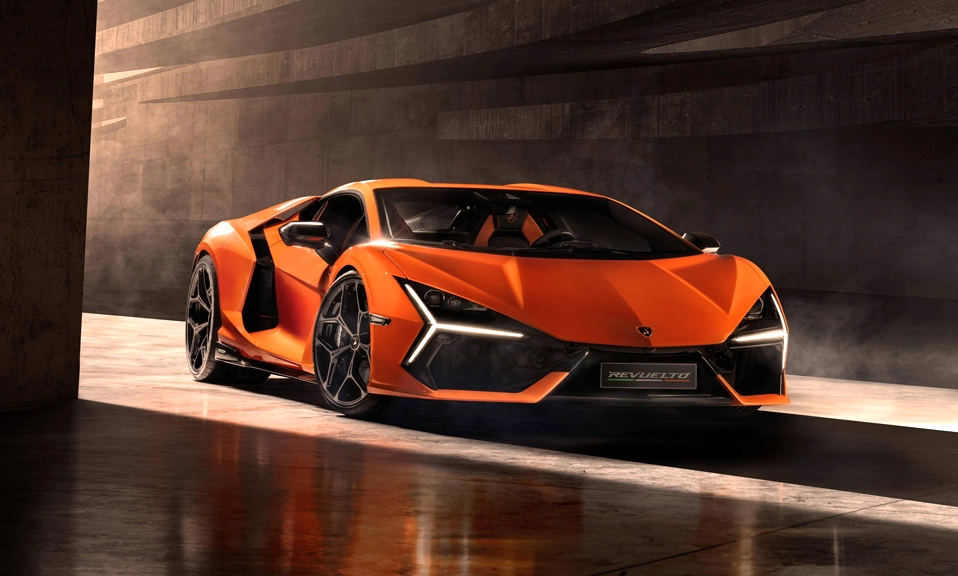
The evidence is everywhere. Lamborghini’s Temerario pairs a 4.0-litre twin-turbo V8 with three electric motors for a combined 677kW, and revs to over 10,000rpm—a first for a mass-produced supercar. McLaren’s Artura uses a 2,993cc twin-turbo V6 and a compact e-motor for 680PS, with a 30km pure-electric range. Audi’s $700,000 Nuvolari packs a 4.0-litre twin-turbo V8 and three electric motors for 987 horsepower. Ferrari’s F80 is a twin-turbo hybrid V6, and the Lamborghini Revuelto is a 6.5-litre naturally aspirated V12 with three electric motors. Bugatti’s Tourbillon—all 250 units sold out before it was even unveiled—is an 8.3-litre naturally aspirated V16 paired with electric motors for 1,800 horsepower.
This is not a stopgap. It is a philosophy.
The Heart of the Matter: Emotion Cannot Be Engineered Away
The single most important reason supercar manufacturers are not giving up on petrol is the one that cannot be measured in a wind tunnel or a lap time: emotion.
Lamborghini’s model line director, Paolo Racchetti, put it more precisely than any marketing brochure could. “Speed is still an important part of performance, but it’s clear that it’s necessary, not sufficient, for a car to be called a super-sports car,” he said. “What a super-sports car must provide is not only acceleration and speed, but also emotion. That’s why we went for a hybrid architecture, because at the end of the day you still have the turbocharged internal combustion engine able to rev to 10,000rpm, giving you the strong emotionality that only mechanics can provide“.
Audi CEO Gernot Döllner framed it in market terms: “The higher the segment is, the more the enthusiast still loves the combustion engine. The lower the segment is, the more battery electric is accepted”. Bugatti CEO Mate Rimac—a man who built his reputation on electric hypercars—has become one of the most articulate defenders of combustion at the top end. He compares supercars to Swiss mechanical watches: smartwatches offer superior functionality, but consumers still pay fortunes for traditional timepieces because they represent craftsmanship, theatre, and tactile emotion.
The electric supercar, for all its accelerative superiority, cannot replicate the crescendo of a V12, the mechanical vibration through the chassis, the sense of a machine operating at the edge of its physical limits. Speed has been democratised by electric motors. Emotion has not.
The Performance Case: Hybridisation Makes the Petrol Engine Better
The second reason is more pragmatic: hybridisation is not a concession to emissions regulations. It is a performance multiplier.
The electric motors in a modern hybrid supercar are not there to save fuel. They are there to eliminate turbo lag, fill torque gaps, and torque-vector the front axle in ways that were previously impossible. In the Lamborghini Temerario, the two front e-motors can vary torque independently between the wheels, actively influencing yaw and cornering behaviour rather than simply adding straight-line shove. The system contributes to 13 possible drive configurations, including a Drift mode with three levels.
McLaren’s Artura uses its e-motor to provide “instant torque and improved throttle response,” resulting in a class-leading power-to-weight ratio of 488PS per tonne. The Audi Nuvolari’s three electric motors deliver a combined system output of 736kW, with the combustion engine alone producing 588kW and 730Nm—figures that would have been considered hypercar territory a decade ago.
This is the quiet truth of the hybrid supercar era: the petrol engine is not being kept despite the electric motors. It is being kept because of them. The two systems are complementary, each covering the other’s weaknesses, and the result is a machine that is faster, more controllable, and more emotionally engaging than either could be alone.
The Business Reality: Customers Are Rejecting the All-Electric Supercar
The third reason is commercial. The people who buy supercars—the ultra-wealthy, the collectors, the enthusiasts—are not asking for electric replacements. They are asking for hybrids.
Lamborghini has postponed its first electric vehicle indefinitely, with CEO Stephan Winkelmann confirming the decision to replace the planned Lanzador EV with a plug-in hybrid GT car instead. The reason, as one Italian report put it, is that Lamborghini customers “have no interest in a 100% electric vehicle” and are looking for “thermal engines of 8 or 12 cylinders (and the related sound)”. Ferrari, which once targeted 40% pure electric sales by 2030, has halved that target to 20% and doubled its forecast for combustion vehicles from 20% to 40%, while also slowing the development of its first EV, the Luce. McLaren, according to industry reports, “is in no hurry to develop an electric vehicle” and believes the internal combustion engine “will remain a major player for a long time to come”.
Bugatti’s Tourbillon, at around $4.5 million, sold out its entire 250-unit run immediately, with buyers spending an average of **$600,000 to $700,000 on bespoke customisation**—much of it on mechanical features that would be meaningless in an EV. The market has spoken, and it is not asking for silence.
The Regulatory Escape Hatch: Synthetic Fuels and Small Volumes
The fourth reason is that the regulatory environment is not as hostile to combustion supercars as it once appeared.
Italy has previously sought special treatment for low-volume supercar makers under emissions regulations, arguing that brands like Lamborghini have a relatively small environmental footprint given their tiny production volumes. More importantly, synthetic fuels (e-fuels) are emerging as a credible pathway to keeping combustion engines alive in a carbon-constrained world. Koenigsegg has confirmed that its hybrid hypercars can run on synthetic fuels, and the company has “no immediate plans for pure EVs,” citing the “irreplaceable nature of the internal combustion engine” for its performance goals. Bentley has demonstrated a Continental GT Speed running on a blend of 75% eFuel and 25% conventional petrol. Ferrari has confirmed plans to power future hypercars with e-fuels. Denmark’s Zenvo Aurora runs an 1,850hp hybrid V12 that can burn synthetic fuel.
The combination of low production volumes and e-fuel compatibility gives supercar manufacturers a plausible route to maintaining combustion engines well into the 2030s—and perhaps beyond.
The Petrol Engine Is Not Being Phased Out. It Is Being Elevated
The supercar industry’s embrace of hybridisation is not a retreat from electrification. It is a redefinition of what electrification is for.
In the mass market, electric motors are a tool for efficiency, cost reduction, and emissions compliance. In the supercar market, they are a tool for performance, control, and emotional enhancement—a way to make the petrol engine better rather than a way to replace it. The result is a generation of cars that are faster, more capable, and more emotionally engaging than anything that came before, precisely because they combine the instant response of electric power with the mechanical drama of combustion.
This is not a permanent solution. At some point, the regulatory pressure, the cost of developing increasingly complex hybrid systems, and the shifting tastes of a new generation of buyers may tilt the balance toward pure electric. But for now, the supercar is proving something important: that the transition to electric mobility does not have to be a binary choice. The petrol engine is not being phased out. It is being elevated—paired with electric power in a way that makes it more relevant, more exciting, and more desirable than it has been in decades.
The supercar manufacturers are not giving up on petrol. They are giving it a new reason to exist.