Sleep has become a project. A performance metric. A status symbol. And for a growing number of people, a source of profound anxiety.
In 2026, the internet has a new obsession, and it’s not another diet or workout routine. It’s sleepmaxxing—the practice of optimizing every variable in pursuit of the perfect night’s rest. TikTok is flooded with videos of elaborate bedtime rituals, from mouth taping and magnesium cocktails to blackout curtains and AI-powered cooling mattresses. The hashtag has amassed nearly 100 million posts. Sleep trackers have become everyday accessories, and the sleep economy is booming.
But as the pursuit of perfect sleep intensifies, a paradoxical question emerges: is the obsession with sleeping well actually making us sleep worse?
What Is Sleepmaxxing?
Merriam-Webster defines sleepmaxxing as “the use of practices and devices purported to help increase the quality and quantity of sleep”. It’s a term born from internet culture—the “-maxxing” suffix that gave us looksmaxxing and fitnessmaxxing—and it describes the act of treating sleep as something to be optimized, measured, and perfected.
The practices range from the scientifically sound to the deeply questionable.
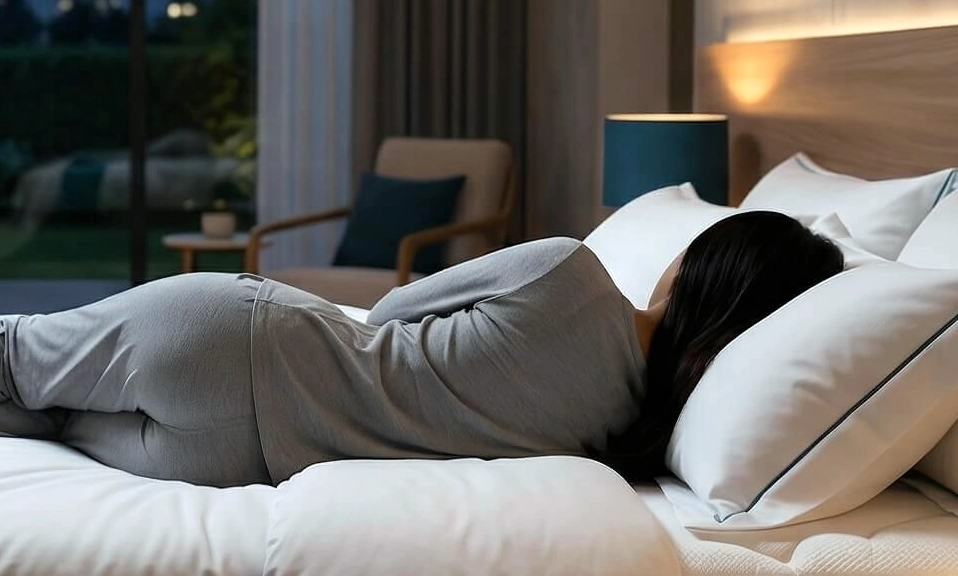
The basics—the stuff your doctor would tell you—are free. A consistent wake-up time. A cool, dark, quiet bedroom. Limiting screens before bed. Avoiding caffeine and alcohol in the hours before sleep. These are the fundamentals of sleep hygiene, and they have decades of research behind them.
The extras—the stuff that’s being sold to you—are where things get complicated. Magnesium supplements. Tart cherry juice “sleepy girl mocktails.” White noise machines. Weighted blankets. Mouth taping. Smart rings that score your sleep. AI-powered mattress covers that adjust temperature throughout the night. Blue-light-blocking glasses. Steam eye masks. Aromatherapy diffusers. The list is endless, and the products are expensive.
The wellness industry has noticed. Forbes called sleepmaxxing “the latest status symbol,” noting that a well-rested face and a strong sleep score now signal “self-command, discernment, and the ability to impose order on an overloaded life” . The Oura Ring, the Eight Sleep Pod, and the Therabody SmartGoggles have become cultural markers—proof that you are someone who takes their rest seriously.
The Paradox: When Optimizing Sleep Creates Anxiety
The most important finding in the sleepmaxxing conversation is not about which supplement works or which tracker is most accurate. It’s about what happens when sleep becomes another thing to fail at.
The American Academy of Sleep Medicine (AASM) reports that 81% of Americans lose sleep due to worries about sleep problems . That’s a vicious cycle: the more you worry about not sleeping well, the harder it becomes to sleep well.
Experts have a name for this: orthosomnia—an unhealthy obsession with achieving “perfect” sleep that actually worsens sleep quality. “Concerns about getting enough high-quality sleep can create a vicious cycle of stress and sleeplessness for some people,” says Dr. Anita Shelgikar, president-elect of the AASM. “Prioritizing sleep is great for overall health and wellbeing. For some, however, a heavy focus on optimizing sleep can actually lead to a decrease in sleep quality and sleep quantity”.
The sleep-tracking industry has made this worse. Smartwatches and rings give users a numerical score every morning—a judgment on how well they performed the basic biological function of resting. “Highly detailed sleep tracking and optimization can cause some individuals to become overly critical of their sleep patterns, leading to heightened stress and potentially worsened sleep over time,” Shelgikar warns.
Psychologist Dr. Liora Kempler puts it even more directly: “Sleepmaxxing takes traditional sleep hygiene to an extreme. Instead of focusing on consistent, healthy routines, it pushes individuals towards strict, sometimes unrealistic, behaviours designed to ‘optimise’ sleep to the max without considering personal circumstances or risks involved”. It can fuel distress, frustration, and even harmful behaviours—avoiding social activities, overusing supplements, or engaging in risky practices like mouth taping.
What Actually Works (and What Doesn’t)
The evidence on sleepmaxxing is a study in contrasts. Some of it is just sleep hygiene with a better social media strategy. Some of it is unproven. And some of it is genuinely dangerous.
What works: The free stuff. A consistent sleep schedule. A cool room (ideally 16–19°C). Blackout curtains. Limiting screen time before bed. These are the fundamentals, and they are backed by decades of research. “The pattern worth noticing,” as Quartz put it, “is that the proven fundamentals are mostly free, while the parts with the thinnest evidence are usually the parts being sold”.
What’s questionable: Magnesium supplements. The evidence suggests they may help people with a magnesium deficiency, but for everyone else, the benefits are unproven—and excessive magnesium can cause digestive issues that are decidedly counterproductive to sleep. Sleep trackers can be useful tools, but they can also become sources of anxiety. “Think of them as guides and tools, not rigid scorekeepers,” Shelgikar advises.
What’s dangerous: Mouth taping. The practice of sealing your lips shut with medical tape to force nasal breathing has gone viral on TikTok, but experts are alarmed. It carries real risk for anyone with undiagnosed obstructive sleep apnea, and there is no strong independent evidence that it improves sleep in people without a diagnosed breathing problem. The BBC spoke to multiple sleep experts who warned against it.
The Cultural Shift: From Hustle Culture to Sleep Perfectionism
Sleepmaxxing didn’t emerge in a vacuum. It is the product of a cultural about-face.
A decade ago, the cultural narrative was the opposite. CEOs and celebrities boasted about functioning on four or five hours of sleep. Short sleep was a badge of honour—evidence of discipline, ambition, and productivity.
Then the science caught up. Research linked poor sleep to mental illness, cardiovascular disease, diabetes, and dementia. Sleep became something to take seriously. And, as with everything else in the optimization era, “taking it seriously” turned into “optimizing it to the max.”
“We’ve gone from glorifying minimal sleep to glorifying the perfect sleep,” Dr. Kempler notes. The result is a new kind of pressure—not to sleep less, but to sleep perfectly. And that pressure is creating a new kind of anxiety.
The trend is particularly pronounced among young people. In South Korea, sleep maxxing has replaced the “miracle morning” trend, with young workers spending money on smartwatches, supplements, sleep masks, and earplugs in pursuit of better rest. But experts warn that excessive focus on sleep scores and routines can create additional anxiety. A 30-year-old office worker told The Korea Times: “There were many days when I was exhausted but couldn’t actually fall asleep once I got into bed. I can’t reduce the amount of time I spend working, so I’m trying to properly manage at least the time I have for sleep”. It’s a poignant admission: sleepmaxxing is, for many, a response to a life that leaves no other room for rest.
Sleep Is Not a Performance Metric
The sleepmaxxing trend contains a genuine insight: sleep matters. It matters for your brain, your immune system, your mood, your long-term health. The cultural shift away from glorifying sleep deprivation is a good thing.
But the trend has also turned sleep into another arena for competition and self-judgment. It has convinced people that the path to a good night’s rest runs through a shopping cart full of gadgets and supplements. It has made the simple act of going to bed feel like a test you might fail.
“Sleep doesn’t have to be perfect every night,” Shelgikar says. “The key is focusing on sustainable habits and broad trends related to your sleep. The goal is to get the amount of sleep you need to wake up refreshed and well-rested on a regular basis”.
The best sleepmaxxing routine might be the one that doesn’t feel like a routine at all. Go to bed at roughly the same time. Keep the room cool and dark. Put the phone away. And—perhaps most importantly—stop checking your sleep score the moment you wake up.
Your body already knows how to sleep. Sometimes the best thing you can do is get out of its way.