LIV Golf is done. After five years, more than $5 billion in spending, and a civil war that fractured professional golf, the Saudi-backed breakaway league told a New Jersey bankruptcy court on November 5, 2026, that it is abandoning its planned “LIV 2.0” relaunch and entering full liquidation.
The league that promised to revolutionize golf with guaranteed contracts, team formats, and nine-figure signing bonuses will instead wind down operations, sell off its remaining assets, and leave behind a tangled bankruptcy case involving at least 1,000 creditors and between $500 million and $1 billion in debts.
How did a league with essentially unlimited funding collapse so completely? The answer is a case study in what happens when money meets a market that doesn’t want what it’s selling.
The Money Ran Out First
The immediate cause of LIV’s collapse was the decision by Saudi Arabia’s Public Investment Fund (PIF) to stop funding the league after the 2026 season.
PIF had invested more than $5 billion** in LIV since its launch in 2022—some estimates put the figure closer to **$7 billion. That money bought star players, subsidized tournament purses, and covered operational losses. It did not buy a sustainable business.
The funding was withdrawn in April 2026, a few months after the start of the Iran war, when PIF changed its investment strategy and concluded that LIV was “no longer consistent” with its priorities. The league had never turned a profit, and its TV ratings had never exceeded 500,000 viewers for any round in the United States.
LIV filed for Chapter 11 bankruptcy on September 8, 2026. It still had one lifeline: BC Partners Credit, a London-based private equity firm that pledged $300 million to fund a restructured “LIV 2.0” with a shorter schedule, reduced purses, and player equity ownership.
That lifeline was pulled on November 4. BC Partners concluded the deal was not viable because not enough top players would commit to the new league.
The Players Left Before the Lifeboat Did
The player exodus was the second fatal blow—and in many ways, it was the more revealing one.
LIV 2.0 was designed to replace the guaranteed contracts and lavish purses of the PIF era with equity in the league and a reduced schedule. For the players who had been lured to LIV by the biggest guaranteed money in golf history, that was not a compelling offer.
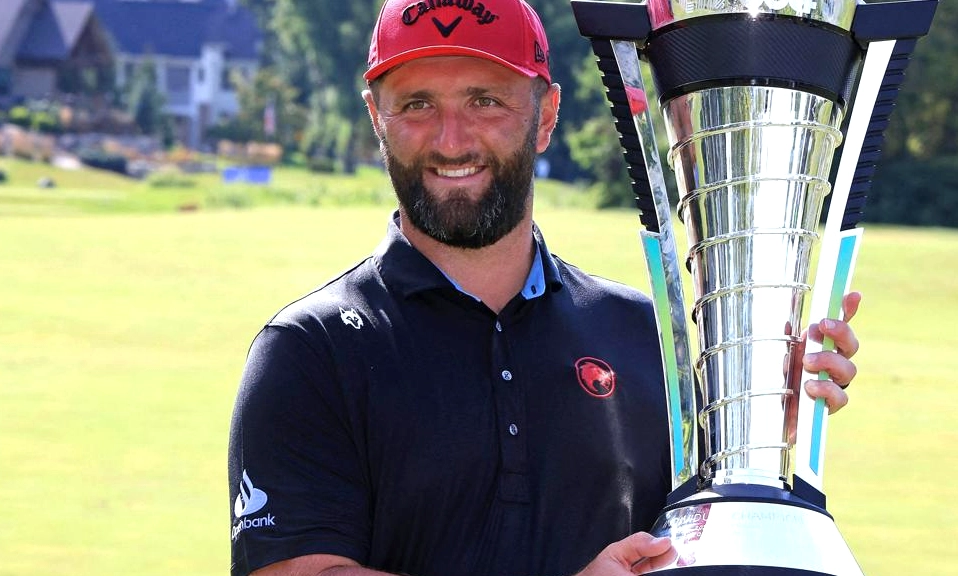
Jon Rahm, the biggest signing in LIV’s history, refused the new terms, forfeited claims worth an estimated $100 million, and left to return to the European Tour. Sergio Garcia, Tyrrell Hatton, Ian Poulter, Graeme McDowell, and Louis Oosthuizen all followed. Brooks Koepka had already left before the 2026 season, accepting a one-time penalty from the PGA Tour to return. Patrick Reed chose not to extend his deal and is poised to return to the PGA Tour through his performance in Europe.
By the October 25 deadline, LIV had commitments from around 30 players—but another 10 or so refused to sign, leaving the league short of the critical mass it needed to convince BC Partners to invest.
The final indignity came from the DP World Tour, which told players that anyone who signed with LIV 2.0 would be ineligible for membership—and therefore ineligible for the Ryder Cup. The Asian Tour, which had received financial support from LIV, renewed its alliance with the PGA Tour and the European Tour in July. LIV was being cut off from the ecosystem it needed to survive.
The Business Model Never Worked
The deeper problem was structural. LIV never found a way to make money.
Its Fox Sports media rights deal, signed in January 2025, was described as “nominal”—a polite way of saying it paid almost nothing. Its U.S. television ratings were consistently below 500,000 viewers, a fraction of what the PGA Tour draws. Corporate sponsorship was limited to a handful of brands like Rolex, and the revenue was “a drop in the bucket” compared to the costs of running a global golf tour.
LIV’s only real financial engine was PIF’s willingness to absorb losses. When that willingness ended, the league had no fallback. As one analysis put it: “Golf tournaments can’t exist without golfers”—and LIV could no longer afford the golfers it needed.
The bankruptcy filings reveal the scale of the failure. LIV owes Rahm, Bryson DeChambeau, and Dustin Johnson more than $5 million each** in past-due payments. It paid **$15.6 million in retention bonuses to seven executives—including $6.375 million to CEO Scott O’Neil**—in the months between PIF’s withdrawal and the bankruptcy filing. And **Greg Norman**, the league’s original CEO, received **$9.4 million when he left in September 2025.
The Merger That Never Happened
For years, the golf world waited for a merger between LIV and the PGA Tour. The framework agreement announced in June 2023 seemed to promise one. It never materialized.
In August 2026, PGA Tour CEO Brian Rolapp ended the speculation definitively: “There’s no merger, no conversations, we’ve been really concentrated on the PGA Tour”.
The collapse of the merger talks, combined with PIF’s withdrawal, left LIV with no path to legitimacy and no path to profitability. It was a league without a home, without a television audience, and without the stars who had made it briefly relevant.
The Legacy: Disruption Without Direction
LIV Golf will not be remembered as a success. But it will be remembered.
It forced the PGA Tour to change. The Tour introduced elevated events with limited fields and massive purses, created a player equity program, and increased prize money across the board. It responded to the competitive threat, even as it refused to merge with the entity that posed it.
It also exposed the limits of sportswashing as a strategy. PIF spent billions to buy legitimacy for Saudi Arabia through golf. It bought headlines, signing bonuses, and a civil war in the sport. It did not buy a sustainable league, a television audience, or a place in the sporting establishment.
And it raised uncomfortable questions about what happens when a league is built entirely on external subsidy. LIV was never a business. It was a campaign—and when the campaign ended, the league ended with it.
LIV Golf is entering liquidation.
Its players are scattering back to the tours it tried to destroy. Its creditors are lining up. Its assets will be sold. And the sport it fractured will have to find a way to heal.
The league’s defenders will point to the money it put in players’ pockets and the pressure it put on the PGA Tour to modernize. Its critics will point to the billions wasted, the careers disrupted, and the sport divided.
Both are true. But the most important truth is simpler: LIV never figured out how to be a business. It figured out how to spend money. It figured out how to generate headlines. It never figured out how to generate revenue.
And in the end, that was enough to bring it down.