Will the New Singles Prove That Love Really Is Blind?
The pods are open, Boston.
Netflix’s Love Is Blind has arrived in New England for Season 11, bringing 30 Massachusetts-area singles into the show’s familiar experiment: fall in love without seeing the person on the other side of the wall, get engaged sight unseen, and then test whether that emotional connection survives the real world.
Hosted by Nick and Vanessa Lachey, Love Is Blind: Boston premiered on Wednesday, October 14, 2026. The first five episodes are now streaming on Netflix, with new batches arriving weekly through the finale.
The concept is unchanged, but the setting gives the season a distinct personality. These singles are not simply entering the pods as anonymous romantics. They are bringing Boston neighborhoods, sports loyalties, work pressures, family expectations and strong opinions about the local dating scene with them.
The question is whether the Boston singles can prove that a relationship built through conversation is strong enough to survive attraction, cohabitation, friends, family, money and a wedding deadline.
How the Boston experiment works
The first stage removes physical appearance from the dating process. The singles meet through private pods, where they can hear each other but cannot see one another. They date, form connections and decide whether to propose without knowing what the other person looks like.
Only after an engagement do they meet face to face.
From there, the couples leave the pods for a vacation, move into production-provided housing and begin confronting the parts of a relationship that the pod conversations cannot fully reveal. They meet each other’s families and friends, discuss their lives outside the experiment and decide whether their emotional connection translates into daily compatibility.
The final test comes at the altar. Each person must decide whether to say “I do” or walk away.
That structure is what makes the series more than a conventional dating show. The contestants are not just choosing a partner. They are choosing whether to trust a relationship before they have access to the visual information that normally shapes first impressions.
Why Boston is an interesting setting
Boston gives the show a strong sense of place without changing the mechanics of the experiment.
The local singles describe the city’s dating scene in mixed terms. Some call it difficult to break into, cliquey or repetitive. Others are deeply attached to the city and imagine building their entire future there.
Rachel, a 32-year-old academic advisor, told Netflix that she wants to stay in Boston permanently and have “Bostonian babies.” Jax, a 32-year-old entrepreneur, admitted that she usually avoids dating Boston men and would rather date in places such as New York, Miami or Europe.
Those contrasting attitudes create a useful tension. One group wants to escape the patterns of local dating; another wants to find a partner who will commit to staying in the city.
Boston also brings built-in lifestyle questions. How important are Red Sox loyalty, neighborhood identity, career ambition, family proximity and the cost of building a life in New England? A couple may agree emotionally while imagining very different futures geographically and financially.
In that sense, the city becomes another character in the season. The pods are deliberately artificial, but the lives waiting outside them are recognizably Bostonian.
Meet the Boston pod squad
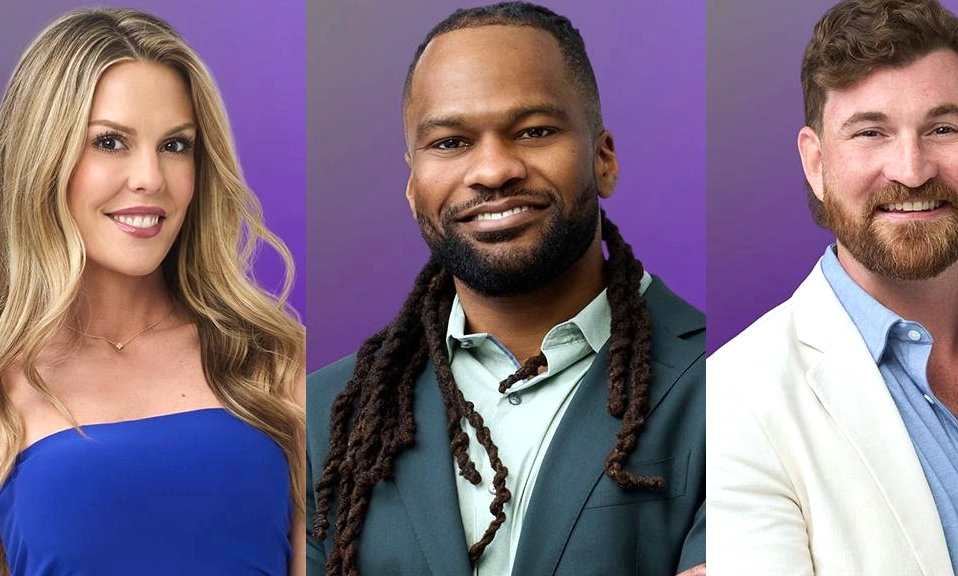
Netflix’s official guide introduces 30 singles, ranging from ages 28 to 40. The group includes 14 men and 16 women, with careers ranging from engineering and medicine to sports, sales, finance and entrepreneurship.
The men include:
•Blake, 38, a yacht captain who has sailed across the Atlantic twice and wants a partner who can keep up with his adventurous life.
•Cam, 29, an HR generalist who taught himself to sew and hopes to find a lasting relationship like his grandparents’ nearly 70-year marriage.
•Amenawon “Iman”, 34, a software engineer and cosplay enthusiast who describes himself as a geek at heart.
•Jay, 36, a sales director with more than a decade of experience in professional sports.
•John, 33, an account executive and dog dad whose Doberman, Judo, is a major part of his life.
•Mark, 37, a wine sales consultant who values dependability and acts of service.
•Matt, 37, a beekeeper and father of an eight-year-old son who wants a partner ready to accept his family life.
•Michael, 35, an account executive who says he is now more prepared for commitment than he was in his twenties.
•Morrey, 32, an entrepreneur, boxer and part-time bouncer at a South Boston bar.
The women bring an equally wide set of expectations and experiences. They include a principal engineer, orthodontist, NICU nurse, marketing director, athletic director, master hairstylist, healthcare program manager and entrepreneur.
Among the early standouts are:
•Aneha, 28, a principal engineer.
•Benita, 31, an insurance agent.
•Brittany, 34, an attorney.
•Diana, 29, a nanny.
•Erika, 37, a marketing director.
•Jax, 32, an entrepreneur with a stated reluctance to date Boston men.
•Jenn, 39, a master hairstylist.
•Kara, 32, a strategic account manager who describes Boston as difficult to break into socially.
•Kerry, 37, an athletic director.
•Liz, 34, a NICU nurse.
•Malaine, 33, a senior portfolio analyst.
•Michaella, 35, a retail consultant.
•Rachel, 32, an academic advisor who wants to remain in Boston long term.
•Sahar, 34, an orthodontist.
•Sarah, 34, a healthcare program manager.
•Wilnie, 33, a mental health counselor.
The range of ages and careers may help the season avoid feeling like a single dating demographic. Several contestants are established professionals, while others are still working out how much of their identity is tied to Boston and how much they are willing to change for a relationship.
The singles are older and more specific about what they want
One of the most interesting aspects of the Boston cast is how clearly many contestants articulate their fears and boundaries.
Cam says he has never dated anyone for more than six months and fears marrying the wrong person. His goal is not simply to find a strong spark; he wants a relationship that resembles the long marriage of his grandparents.
Matt is entering the experiment as a father. His eight-year-old son is central to his life, which means a proposal is not only a decision between two adults. Any potential partner must be prepared to join an existing family structure.
Jay wants someone ambitious and independent rather than a partner whose entire identity is absorbed into the relationship. John is looking for strong convictions and careful communication. Mark is hoping that his dependable nature will be recognized rather than overlooked.
These details matter because the pod format can make emotional disclosure feel unusually fast. Contestants often discuss childhood, family, trauma and marriage expectations before they know whether they are physically attracted to one another.
That can create real intimacy—but it can also produce a polished version of someone’s story. The central challenge is deciding whether the person in the pod is being vulnerable or simply presenting the version of themselves most likely to inspire a proposal.
The biggest test comes after the reveal
The pod phase is the show’s most distinctive feature, but it is not necessarily its most difficult stage.
Before the reveal, a contestant can imagine the person on the other side of the wall. That imagined partner may become an emotional ideal: funny, attentive, emotionally intelligent and perfectly aligned with the life they want.
The face-to-face meeting introduces information that cannot be controlled. Attraction may be immediate, uncertain or absent. The person may look different from what the contestant imagined. Their body language may change the tone of the relationship. The emotional confidence built through the wall may become awkward in person.
The question is not whether physical attraction matters. It clearly does. The question is whether the emotional bond is strong enough to allow attraction to develop rather than requiring an instant, cinematic reaction.
That is where Boston’s singles will be tested most intensely. It is easy to say that appearance should not matter in the pods. It is harder to live with the consequences of that belief after the doors open.
The couples must move very quickly
Even successful pod relationships face a compressed timeline.
The couples go from strangers to engaged partners in a matter of days. They then travel together, live together, meet families and discuss marriage within weeks. The show turns major relationship milestones into consecutive tests.
That pace can reveal compatibility quickly, but it can also exaggerate problems. A disagreement that might normally unfold over several months is forced into a few days. A contestant may confuse the intensity of the experiment with the stability of a long-term relationship.
The Boston cast will need to distinguish between:
•Emotional intensity, created by daily pod conversations and the pressure of the experiment.
•Emotional compatibility, demonstrated by how two people handle disappointment, disagreement and uncertainty.
•Practical compatibility, including money, work, family, living arrangements and long-term goals.
•Physical compatibility, which becomes relevant only after the engagement.
The show’s central claim is not that physical attraction is irrelevant. It is that emotional compatibility deserves to be tested before appearance decides the outcome.
Boston sports could become a relationship test
The cast’s local identity extends beyond accents and neighborhoods. Boston sports are clearly part of the dating landscape.
Tucker, a 35-year-old senior solutions consultant, says he spends much of the summer at Fenway and hopes a partner will support his Boston teams. Morrey is a boxer and bouncer who describes the city as full of attitude. Jay has worked in professional sports for more than ten years.
Those details may sound playful, but sports loyalty can function as a shorthand for lifestyle. Does a couple spend weekends at games or avoid crowds? Is the partner comfortable with a demanding sports calendar? Do they share the same relationship to local tradition?
A pod connection may feel universal, but the life after the reveal is full of specific choices. The Red Sox, the city’s social circles and the question of whether someone wants to remain in Boston can all become tests of whether two people are actually building the same future.
The show has a difficult history with “forever”
By Season 11, Love Is Blind has become one of Netflix’s most established reality formats. Netflix says the first ten seasons produced 57 pod proposals, though not all of those relationships made it to the altar or lasted beyond the show.
Season 10, which followed singles from Ohio, ended with two of the four remaining couples saying “I do” after seven couples left the pods engaged.
Those figures are a useful reminder that the show is not measuring success only by the number of proposals. The real question is whether the couples survive each stage of the experiment and what happens after the cameras move on.
A proposal proves that two people formed a powerful connection under unusual conditions. It does not prove that they can share a home, resolve conflict or sustain trust outside the pods.
Boston’s contestants know the format they are entering. They have watched the other seasons. They know that a pod romance can turn into a wedding, a breakup, a viral moment or a relationship that continues quietly after the finale.
That awareness may make them more prepared—but it may also make them more conscious of how they are being perceived.
Will the Boston singles prove love is blind?
The answer depends on what “blind” is supposed to mean.
If it means that physical appearance never matters, the experiment is unlikely to prove it. Attraction remains part of romantic compatibility, and the show itself makes that clear once the couples meet.
If it means that appearance does not have to be the starting point, Boston has a stronger case. The pods can reveal whether two people share humor, values, ambitions and emotional curiosity before they decide whether the connection is worth pursuing.
The experiment is most convincing when it shows couples using that emotional foundation to navigate the reveal honestly. It becomes less convincing when contestants treat the pods as a shortcut to certainty or as a way to perform vulnerability for the cameras.
The Boston season also has a chance to test whether local identity complicates love. A couple may find emotional chemistry but disagree about city life, career mobility, family distance or the future they want in New England.
That is the real meaning of the title question. Love may begin blindly, but marriage cannot remain blind to reality.
What to watch as the season unfolds
Viewers should pay attention to more than the biggest love triangles and most dramatic reveals.
Look for whether the contestants ask practical questions before proposing. Do they talk about children, debt, work schedules and where they will live? Do they listen when a potential partner describes a fear, or simply reassure them long enough to keep the connection alive?
Watch how the couples respond when the fantasy meets a real person. Do they treat uncertainty as a normal part of attraction, or as proof that the pod connection was false?
And notice which relationships become more stable once the experiment stops rewarding grand declarations. The strongest couple may not be the one with the most intense pod conversations. It may be the pair that can disagree without turning every problem into a crisis.
Release schedule
Netflix is releasing Love Is Blind: Boston in weekly batches rather than dropping the entire season at once:
•October 14: Episodes 1–5
•October 21: Episodes 6–8
•October 28: Episodes 9–11
•November 4: Episode 12 and the season finale
Each release gives viewers another stage of the experiment to evaluate: the pod connections, the engagements, the face-to-face reveals, the shared living arrangements and the decisions at the altar.
Boston’s answer to the experiment
Love Is Blind: Boston arrives with everything the format needs: a cast of singles with strong personalities, clear relationship expectations and enough local identity to make the season feel different from a generic dating show.
The city brings ambition, loyalty, tradition and a dating scene that some contestants already describe as difficult to escape. The pods give them a chance to reset those patterns, but the experiment cannot protect them from the lives waiting outside the walls.
The new singles can fall in love through conversation. They can build trust without a first impression. They can discover that emotional intimacy arrives before physical attraction.
But eventually, they must bring that love into the real world.
That is where Boston will decide whether the experiment works. Not when the contestants say “I love you” through a wall, but when they see each other, meet each other’s families, negotiate the city they call home and stand at the altar with every uncertainty in view.
For now, the pods are open—and Boston is ready to make its case that love may not need eyes to begin, but it does need honesty to last.