In the United States, we are obsessed with the “new.” We upgrade our phones every two years, replace appliances the moment they show wear, and view anything without a touchscreen or a Wi-Fi connection as hopelessly obsolete.
But if you travel to parts of Africa, Asia, or Latin America, you will notice something fascinating: many things the US has discarded as “out of date” are not only still fully functional—they are the backbone of daily life, often working better than their modern, high-tech replacements.
This isn’t about being “behind.” It’s about context. In many parts of the world, technology and tools are judged by different metrics: durability, repairability, cost-effectiveness, and community utility.
Here are 6 things the US has largely left in the dust, but which are thriving globally.
📱 1. The “Dumb” Phone and USSD Technology
In the US: A flip phone or basic Nokia is seen as a quirky retro choice or a digital detox tool. If it doesn’t have apps, it’s considered useless.
In Africa & Beyond: The basic feature phone is a powerhouse of financial and social infrastructure.
In Africa & Beyond: The basic feature phone is a powerhouse of financial and social infrastructure.
Take Kenya’s M-Pesa, for example. Launched in 2007, it revolutionized mobile banking not through sleek smartphone apps, but via USSD codes (the text-based menus you access by dialing codes like
*123#). Millions of people across Africa use basic, $20 feature phones to pay bills, send money, and run small businesses. Why? Because USSD works on 2G networks, requires no data plan, has incredible battery life, and is immune to the smartphone theft epidemic. It didn’t just catch up to Western banking; in many ways, it leapfrogged it entirely.🚗 2. Manual Transmission (Stick Shift) Cars
In the US: Over 95% of new cars sold are automatic. Manual transmissions are relegated to sports cars or driving enthusiasts.
In Africa, Asia, & Latin America: The manual car is the undisputed king of the road.
In Africa, Asia, & Latin America: The manual car is the undisputed king of the road.
Walk through the streets of Nairobi, Mumbai, or Bogotá, and you’ll see millions of manual cars, from rugged Toyota Hilux pickups to the legendary, indestructible Peugeot 504. The preference isn’t just about tradition; it’s about survival and economics. Manual transmissions are cheaper to buy, more fuel-efficient, and crucially, much easier and cheaper to repair. If an automatic transmission fails in a remote area, the car is dead. If a manual clutch fails, a local mechanic with basic tools can fix it in an afternoon. It is the ultimate “Right to Repair” technology.
🍼 3. The Returnable Glass Bottle
In the US: We largely transitioned to single-use plastic bottles, aluminum cans, or cardboard cartons in the mid-20th century. Glass is now mostly a premium, one-time-use item.
In Africa & Beyond: The returnable glass bottle is a thriving, true circular economy.
In Africa & Beyond: The returnable glass bottle is a thriving, true circular economy.
In many countries across Africa, Latin America, and parts of Europe, milk, soda, and beer are still sold in thick, standardized glass bottles. When you finish the drink, you don’t throw it in a recycling bin; you return it to the local shop for a small deposit refund. The bottling company collects, professionally sterilizes, and refills the exact same bottle dozens of times. It creates local jobs, eliminates plastic waste, and requires a fraction of the energy of manufacturing new packaging. The US is only now trying to reinvent this “outdated” model under the buzzword of “sustainability.”
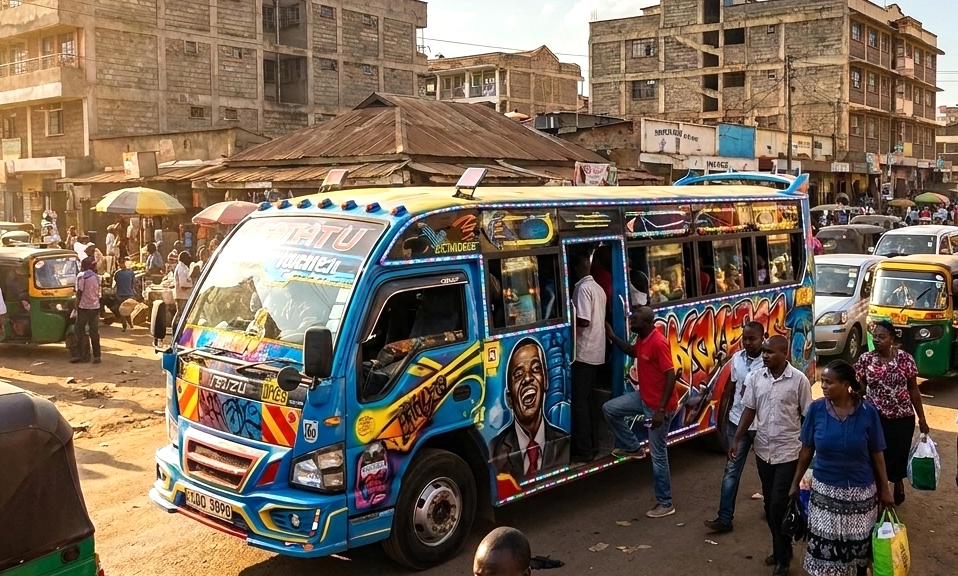
🚐 4. Informal, Shared Minibus Transit (Matatus, Jeepneys, Colectivos)
In the US: Public transit is often underfunded, and the culture heavily prioritizes individual car ownership, leading to massive traffic congestion and isolation.
In Africa & Beyond: Vibrant, community-run shared transit is the lifeblood of the city.
In Africa & Beyond: Vibrant, community-run shared transit is the lifeblood of the city.
In Kenya, they are called Matatus. In the Philippines, Jeepneys. In Colombia, Colectivos. These are not sterile, government-run buses. They are often privately owned, heavily customized, and operate on dynamic, demand-based routes. While they can be chaotic, they are incredibly efficient, highly affordable, and provide livelihoods for thousands of drivers and artists (who paint and decorate the vehicles). They represent a decentralized, community-driven solution to urban mobility that rigid, top-down US transit systems struggle to replicate.
🧵 5. Manual, Human-Powered Tools
In the US: If it’s not electric or battery-powered, it’s considered a museum piece.
In Africa & Beyond: Manual tools are the reliable, off-grid workhorses of daily life.
In Africa & Beyond: Manual tools are the reliable, off-grid workhorses of daily life.
The classic Singer treadle sewing machine, hand-cranked grain mills, and manual water pumps are still in widespread use across rural and semi-urban areas globally. Why? Because they are immune to power outages, require zero expensive batteries or proprietary chargers, and can be maintained by the user. In a world where the US is increasingly frustrated by “planned obsolescence” and unrepairable smart appliances, the enduring utility of a 100-year-old mechanical design is a masterclass in resilient engineering.
💵 6. Cash and Community Trust Networks (Like Hawala)
In the US: We are rapidly moving toward a cashless society, relying on credit cards, Apple Pay, and highly surveilled digital banking.
In Africa, the Middle East, & South Asia: Physical cash and informal trust networks remain dominant.
In Africa, the Middle East, & South Asia: Physical cash and informal trust networks remain dominant.
Systems like Hawala (an ancient, honor-based money transfer system) are still widely used because they are faster, cheaper, and more reliable than formal Western Union or bank transfers, especially in regions with heavy bureaucracy or unstable banking sectors. Furthermore, in many African markets, physical cash is still king because it requires no electricity, no internet, and no transaction fees. It is a frictionless, peer-to-peer technology that has survived for centuries.
“Frugal Innovation” is the Future
In the tech world, there is a concept called “Frugal Innovation” (or Jugaad in India): the ability to create more value with fewer resources, focusing on core functionality rather than flashy extras.
The things on this list aren’t “out of date” because they are bad. They are “out of date” in the US because they don’t generate recurring subscription revenue, they don’t break easily (which hurts corporate profits), and they empower local communities rather than centralized tech giants.
As the US grapples with e-waste, supply chain fragility, and a growing “Right to Repair” movement, we might just find that the future of sustainable, resilient living looks a lot like the “past” that the rest of the world never stopped using.