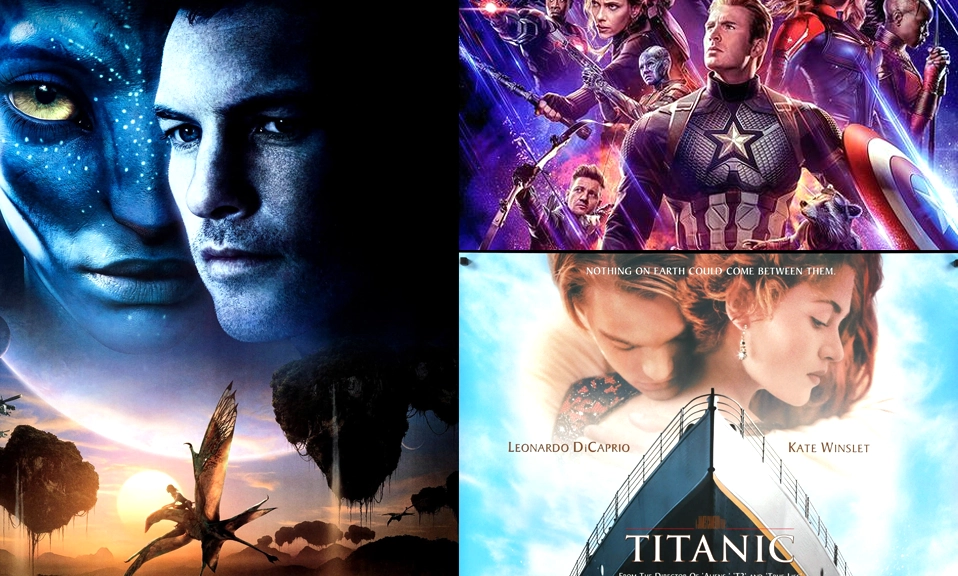
Crossing $1 billion at the worldwide box office is not simply a sign that a movie opened strongly. It usually means the film became a global event.
A billion-dollar hit must attract large audiences in North America and overseas, persuade people to buy theatrical tickets instead of waiting for streaming, and remain popular long enough to survive competition from other releases. The biggest successes often add another advantage: premium-priced formats such as IMAX and 3D.
There is no single formula. Titanic became a cultural phenomenon through romance, disaster spectacle and extraordinary word of mouth. Avengers: Endgame converted 11 years of Marvel storytelling into one enormous opening. Top Gun: Maverick reached younger viewers without abandoning the older audience that remembered the original.
The ten films below show the different ways a movie can cross the billion-dollar line. Box-office figures are worldwide theatrical grosses and can vary slightly between tracking services. Where later re-releases materially change the total, the article identifies the difference rather than presenting one number as perfectly final.
1. Avatar (2009)
Worldwide gross: approximately $2.92 billion across all releases. Box Office Mojo lists $2,923,710,708, while The Numbers lists $2,923,706,026. The original 2009 release accounted for approximately $2.74 billion before later special editions and re-releases.
James Cameron’s Avatar crossed $1 billion after only three weekends. That speed was remarkable, but the film’s final total depended on much more than a large opening.
The first advantage was spectacle. Avatar was designed to be experienced in theaters, especially in 3D and IMAX. Box Office Mojo reported that nearly 81% of its domestic gross came from 3D presentations, with a substantial portion coming from IMAX 3D. Premium tickets increased the revenue generated by each admission.
The film also traveled exceptionally well internationally. Reuters reported that international sales had reached $670.2 million by January 2010 and described the film as playing virtually everywhere. Its eventual all-release breakdown was roughly 73% international, showing that the billion-dollar result was primarily a global achievement.
Timing helped too. The film opened in December and continued drawing audiences through the Christmas and New Year period. Reuters reported a $202 million New Year holiday weekend worldwide and a $68.3 million third weekend in North America. The Numbers recorded a domestic legs multiplier above 10, evidence that the movie did not depend only on opening-weekend excitement.
The formula was unusually effective: a globally accessible science-fiction adventure, a visual experience that justified premium prices, a wide international rollout and strong holiday staying power.
2. Titanic (1997)
Worldwide gross: approximately $2.26 billion across all theatrical releases, according to Box Office Mojo. The original 1997 release accounted for about $1.84 billion, while later 3D and anniversary re-releases added substantially to the cumulative total. The Numbers lists a lower all-release total of about $2.22 billion.
Titanic crossed $1 billion in a very different theatrical era. There was no superhero universe, no social-media campaign and no modern global streaming marketplace competing for immediate attention. Its success grew through long theatrical legs and cultural ubiquity.
The film combined several audience hooks. It offered a familiar historical disaster, a cross-class romance, spectacular effects, a tragic emotional story and Leonardo DiCaprio’s enormous teen appeal. A contemporary New York Times analysis argued that the film worked even in countries where the Titanic sinking was not part of popular culture.
Distribution was just as important as the story. The same analysis credited the film’s worldwide reach to Hollywood’s publicity and distribution network, noting that it was shown in 56 countries and became difficult to avoid culturally. The theme song, media coverage and constant public conversation extended the movie beyond the theater.
The film also displayed extraordinary staying power. The Numbers records a domestic legs multiplier of about 19 and an average run of 29.4 weeks per theater. Those figures show why Titanic became one of the defining box-office successes of its era: audiences kept returning long after its opening.
Its billion-dollar achievement came from a rare combination of broad emotional appeal, spectacle, star power and unusually persistent attendance.
3. Avengers: Endgame (2019)
Worldwide gross: approximately $2.80 billion for the original 2019 theatrical release. Box Office Mojo lists $2,799,439,100 before a later 2026 re-release; its all-release total is higher.
If Titanic built its total gradually, Avengers: Endgame generated an extraordinary share of its revenue immediately. It was presented as the culmination of Marvel Studios’ first 22 films and 11 years of interconnected storytelling.
That accumulated history created a huge pre-existing audience. Boxoffice Pro described the movie as the conclusion of the first major MCU cycle and noted that the 22 preceding films had generated nearly $20 billion worldwide. Viewers were not simply deciding whether to try a new superhero film. They were deciding whether to see the conclusion to a story they had followed for more than a decade.
The opening was unprecedented. Endgame earned about $1.22 billion worldwide in its opening weekend and became the first film to open above $1 billion globally. It also set opening records across dozens of international markets.
China was particularly important. Boxoffice Pro reported a $330.5 million opening in China over five days, while the original release ultimately earned about $1.94 billion internationally. The film needed its global audience to reach its final total, but it established that audience before the first weekend ended.
The wide release also maximized access. The film opened in a record 4,662 North American theaters, while IMAX and 3D presentations added premium revenue. Boxoffice Pro reported a record IMAX global opening and a substantial share of global ticket sales from 3D.
Endgame crossed $1 billion through franchise trust, emotional urgency, global distribution and event-level opening demand.
4. Star Wars: The Force Awakens (2015)
Worldwide gross: approximately $2.07 billion across all releases, with the original 2015 release accounting for about $2.07 billion before later re-releases. The Numbers reports a somewhat lower total because box-office databases differ in their accounting.
Disney faced a difficult task with Star Wars: The Force Awakens: revive one of cinema’s most recognizable franchises for longtime fans while introducing it to a new generation.
The result was an event release. Disney described the film as a relaunch of the Star Wars galaxy and reported a $528.9 million global debut, then the biggest worldwide opening ever. Its $247.9 million domestic opening also set a record.
Nostalgia was central, but nostalgia alone would not have been enough. The film combined familiar characters and symbols with a new cast and a new story direction. That allowed older viewers to revisit the franchise while giving younger viewers characters of their own.
The December release date created a long holiday runway. The film opened just before Christmas and faced no major international release in the following frame, according to Deadline. It could therefore continue playing while families and students were on holiday.
Premium formats added another layer. IMAX reported more than $200 million in global receipts by late January 2016, showing that audiences were willing to pay extra for the large-format version of the return of Star Wars.
The film crossed $1 billion because Disney turned a familiar brand into a global cultural appointment, then supported it with holiday timing, premium screens and a wide international release.
5. Avengers: Infinity War (2018)
Worldwide gross: approximately $2.05 billion across its original and later theatrical releases. Box Office Mojo lists about $2.048 billion for the original release and $2.052 billion across all releases.
Avengers: Infinity War benefited from the same Marvel foundation as Endgame, but it achieved something different. It turned a crossover movie into a cliffhanger event.
By 2018, Marvel had established a reliable global audience. Disney said all 19 preceding Marvel Studios films had opened at No. 1, and The Hollywood Reporter identified Infinity War as the sixth Marvel film in Disney’s billion-dollar group. Viewers already knew the characters, the world and the stakes.
The opening numbers showed the value of that accumulated trust. The movie earned about $257.8 million domestically and $640.4 million worldwide in its first weekend, then records in several markets. It reached $1 billion in 11 days.
Its international performance was especially important. Before the film opened in China and Russia, Deadline reported record or near-record launches in markets including Brazil, the United Kingdom, South Korea, the Philippines, Thailand, Indonesia and parts of Latin America.
Reception helped maintain momentum. Rotten Tomatoes lists an 85% critics score and a 92% audience score, evidence that the film’s scale and crossover structure connected with more than the most committed Marvel fans.
The success came from franchise accumulation, a global release, a high-stakes story and the anticipation created by an unfinished ending.
6. Spider-Man: No Way Home (2021)
Worldwide gross: approximately $1.91 billion for the original theatrical release. Box Office Mojo lists $1,910,982,770 before later re-releases; the all-release total is higher.
Spider-Man: No Way Home was an extraordinary post-pandemic theatrical success. It became the first film released during the pandemic era to pass $1 billion worldwide, reaching approximately $1.05 billion within about 12 days.
Its foundation was the Spider-Man brand and the character’s connection to the Marvel Cinematic Universe. CNBC noted that Tom Holland’s Spider-Man had appeared in six MCU films and that the preceding Spider-Man movies had already generated large global grosses. The character came with both a long history and a younger contemporary audience.
The movie added a powerful element of anticipation: the possibility of characters and villains from earlier Spider-Man films returning. That made the film feel like a shared pop-culture event rather than a routine sequel. Audiences also rushed to see it before spoilers spread, and CNBC reported repeat viewing as part of the film’s demand.
Its timing was risky. The movie opened during the Christmas corridor while the Omicron variant was creating uncertainty around theatrical attendance. Yet Variety reported sold-out screenings, an $81 million second domestic weekend and strong international revenue.
The film also reached its billion-dollar total without playing in China, then the world’s biggest movie market. That made its international performance particularly notable: Box Office Mojo records more than $1.1 billion from international markets in the original release.
The combination of Marvel trust, Spider-Man nostalgia, spoiler-driven urgency and holiday moviegoing helped make No Way Home a rare pandemic-era billion-dollar phenomenon.
7. Jurassic World (2015)
Worldwide gross: approximately $1.67 billion from the original 2015 theatrical release. Box Office Mojo lists $1,670,400,637, while other databases differ slightly.
Jurassic World revived a franchise that had been dormant on the big screen for more than a decade. That gap helped the film reach two audiences at once: adults who remembered the original Jurassic Park and younger viewers encountering the dinosaur spectacle for the first time.
Trade coverage emphasized the importance of nostalgia. Variety and The Hollywood Reporter described the film as a revival of the 1993 series and noted that Universal had reissued the original Jurassic Park in 3D in 2013. The studio had kept the brand visible while preparing a new installment.
The casting also widened the film’s appeal. Chris Pratt had recently become a global star through Guardians of the Galaxy, giving the movie a leading man who could attract audiences beyond the existing dinosaur fan base. The family-friendly adventure format made the film accessible to multiple age groups.
Premium formats were another contributor. Variety reported that 48% of the domestic opening weekend came from 3D screens, with strong IMAX and other premium-large-format results.
International rollout was critical. Jurassic World opened in 66 foreign markets, including China, and The Hollywood Reporter reported an estimated $524.4 million global opening weekend. China ultimately contributed more than $167 million.
The film crossed $1 billion by combining a familiar brand, a new star, family appeal, premium spectacle and one of the broadest international launches of its year.
8. The Lion King (2019)
Worldwide gross: approximately $1.66 billion across all releases, according to Box Office Mojo. The Numbers reports about $1.66 billion, while the original release total is slightly lower because of later re-releases.
Disney’s 2019 The Lion King was marketed as both a remake and an anniversary event. It returned to one of the studio’s most recognizable stories 25 years after the animated original.
The original film supplied enormous built-in awareness. Deadline described it as one of Disney’s most prized animated properties, while Disney’s promotional campaign turned the remake into a major summer release. Its first teaser reportedly generated more than 224 million global views in 24 hours, showing the scale of pre-release interest.
The film’s opening reflected that awareness. Disney reported a $191.8 million domestic debut, a July record and a record for a PG-rated film. It also reported an A CinemaScore, suggesting strong initial audience satisfaction.
The international performance was equally important. Variety reported that the film opened No. 1 in all 52 international markets in its first weekend, with strong results in China, Russia, Brazil, Mexico and Australia.
The movie also benefited from a broad audience proposition. Families knew the story, adults had nostalgia for the original and the photorealistic visual presentation gave audiences a reason to see the film on a large screen even if they already knew the plot.
The Lion King crossed $1 billion through recognizable intellectual property, anniversary marketing, four-quadrant audience appeal and a worldwide release that made the film feel like a global Disney occasion.
9. Top Gun: Maverick (2022)
Worldwide gross: approximately $1.45 billion for the original 2022 release, according to The Numbers. Box Office Mojo’s current release-group total is higher because it includes later re-release receipts.
Top Gun: Maverick may be the best example of a legacy sequel expanding beyond its original audience.
Tom Cruise returned as Pete “Maverick” Mitchell, connecting the film to the 1986 original. But the sequel was not successful only because older viewers felt nostalgic. It also offered younger audiences large-scale aerial action, a clear emotional story and an experience designed for theatrical viewing.
The result was unusually broad audience composition. Film Independent reported that the opening audience was 55% over age 35 and 37% between 18 and 34, while the demographic split was 58% male and 42% female. The film reached the older audience that remembered Top Gun without becoming only an older-audience movie.
Reviews and word of mouth sustained its run. Variety described it as an old-fashioned word-of-mouth hit, and Film Independent cited a 96% Rotten Tomatoes critics score and a 99% audience score during the film’s theatrical momentum.
Repeat viewing also mattered. Variety reported that Paramount said 16% of the audience had returned at least once and 4% had returned three or more times. IMAX screenings helped preserve the film’s event quality.
The film reached $1 billion without playing in China or Russia, proving that a movie did not need every major market if it could generate exceptional demand elsewhere.
Its success came from a recognizable star and brand, cross-generational appeal, strong word of mouth, repeat viewing and a genuinely theatrical action experience.
10. Inside Out 2 (2024)
Worldwide gross: approximately $1.70 billion. Box Office Mojo and The Numbers list about $1,698,863,816 in worldwide theatrical revenue.
Inside Out 2 demonstrated that original-style animation and family films could still create a billion-dollar theatrical event. It reached $1 billion in 19 days and became the fastest animated film to reach that milestone at the time.
The sequel had a strong foundation. The 2015 original had earned about $858 million and won the Academy Award for Best Animated Feature. Nearly a decade later, the return of Riley and the emotions inside her mind gave families a familiar world while introducing a new stage of adolescence.
Audience response helped the sequel maintain momentum. Disney reported an A CinemaScore and a 96% audience score during the billion-dollar run. Variety reported that it opened to $151 million domestically, remained No. 1 for three consecutive weekends and continued performing strongly after its debut.
The film also traveled globally. Box Office Mojo lists more than $1.04 billion from international markets, or roughly 62% of the worldwide total. Variety later reported that it became the first animated film to cross $1 billion overseas.
The success shows how a family film can become a global event without depending on live-action superheroes. Familiar characters, critical goodwill, emotional accessibility and the promise of a shared cinema experience gave Inside Out 2 unusually broad appeal.
What these billion-dollar films have in common
The ten films are very different, but several patterns appear repeatedly.
1. Most began with recognizable intellectual property
Eight of these films are sequels, franchise entries, remakes or legacy continuations. Avatar and Titanic are the exceptions in the sense that their billion-dollar success was not built on an existing movie franchise, although both benefited from strong concepts and major event positioning.
The MCU films had years of accumulated storytelling behind them. The Force Awakens revived Star Wars. Jurassic World reopened the dinosaur franchise. The Lion King and Inside Out 2 built on proven Disney properties. No Way Home combined Spider-Man history with the MCU. Top Gun: Maverick connected a classic character to a new generation.
Known brands reduce the challenge of persuading audiences to try a movie. They do not guarantee success, but they create a much larger starting audience.
2. A billion-dollar film must travel
Every film on this list earned a substantial amount internationally. For some, including Avatar, The Lion King and Inside Out 2, the majority of the total came from outside North America.
The global market is not a bonus anymore. It is central to the economics of blockbuster filmmaking. A movie that performs well at home but fails overseas may become a hit, but it is less likely to become a billion-dollar hit.
3. Spectacle gives audiences a reason to go to theaters
3D, IMAX, large-format sound, aerial photography, visual effects and giant action sequences increase the difference between seeing a film in a theater and waiting for a home release.
The premium-format contribution is documented especially clearly for Avatar, Endgame, The Force Awakens, Jurassic World and Top Gun: Maverick. These formats cannot create demand by themselves, but they can increase revenue per ticket and make the theatrical experience feel more valuable.
4. Opening weekends are only part of the story
Some films reached $1 billion quickly, but a huge opening is not enough by itself. Titanic, Avatar, Top Gun: Maverick and Inside Out 2 all show the importance of sustained attendance, strong holds, repeat viewing or long theatrical legs.
The most durable movies become part of a social conversation. People recommend them, return with different groups and decide that the theater is the best place to experience them.
5. Release timing can amplify demand
Holiday periods helped Avatar, Titanic, The Force Awakens and No Way Home. Summer dates supported Jurassic World, The Lion King and Inside Out 2. The date itself is not a guarantee, but a strong release window can give a film more available audiences and a longer runway before major competition arrives.
Movies cross $1 billion in
different ways, but the biggest successes usually share three foundations: a clear reason for audiences to care, a theatrical experience worth paying for and enough international reach to turn local enthusiasm into global revenue.
Franchise recognition is powerful, but it is not sufficient. Infinity War and Endgame had years of Marvel storytelling behind them, yet they still needed global distribution and event-level urgency. Top Gun: Maverick had nostalgia, but its word of mouth and repeat viewing turned it into something larger than a legacy sequel. Avatar had no existing franchise, but its visual spectacle and worldwide accessibility made it an international phenomenon.
The billion-dollar box office is therefore not one achievement. It is the result of several systems working together: storytelling, stars, intellectual property, distribution, timing, audience breadth, premium formats and cultural conversation.
The movies that master the greatest number of those elements are the ones that do more than sell tickets. They become events.