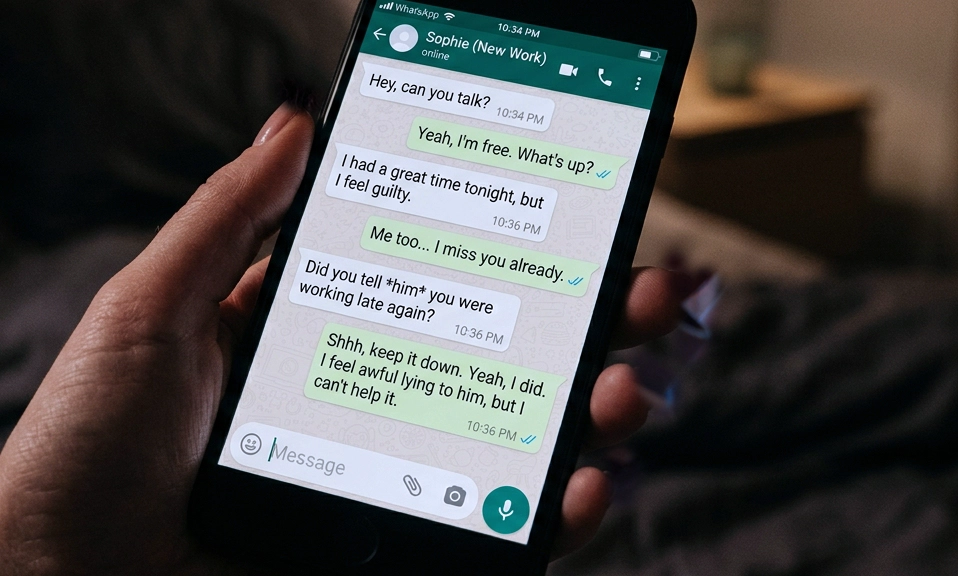
You’ve probably seen the little “1” icon in WhatsApp. You send a photo or video as “View Once,” confident that it will vanish into the digital ether after being opened. WhatsApp even proudly notifies you if the recipient tries to take a screenshot, giving you a false sense of security.
But here is a tech reality check: That notification is not a guarantee.
If you’ve ever heard rumors of people bypassing WhatsApp’s screenshot ban, they aren’t lying. While WhatsApp has robust protections on iOS, the Android ecosystem is a different beast entirely. On certain Android devices, the “View Once” screenshot ban can be silently ignored, bypassed, or completely disabled.
How is this possible? And what does it mean for your digital privacy? Let’s dive into the technical tug-of-war between app developers and the Android operating system.
🛡️ How WhatsApp Tries to Stop Screenshots
To understand the bypass, you first have to understand the defense.
When you open a “View Once” message on Android, WhatsApp doesn’t use magic. It uses a standard, built-in Android developer feature called
FLAG_SECURE.When an app applies this flag to a window, it tells the Android operating system: “Treat this screen as highly sensitive. Block all screenshots, block screen recordings, and hide this content from the recent apps switcher.”
For 95% of Android users on stock, unmodified software, this works perfectly. If you try to screenshot a View Once message, Android intercepts the command, blocks the capture, and WhatsApp triggers the “screenshot blocked” notification to the sender.
🛠️ Why the Ban Fails on Some Android Phones
So, how do some users get around it? It comes down to the fundamental philosophy of Android: The user owns the hardware, and the operating system should ultimately obey the user, not the app.
Here are the primary ways WhatsApp’s
FLAG_SECURE gets ignored:1. Custom ROMs and Rooted Devices
This is the most common technical bypass. Android enthusiasts who “root” their phones or install Custom ROMs (like LineageOS) have administrative (root) access to the operating system. With root access, users can install modules (via Magisk or KernelSU) that systematically strip the
FLAG_SECURE command from any app. To the phone, WhatsApp is just asking nicely to block screenshots, and the modified OS simply says, “No.”2. Aggressive OEM Screen-Capture Tools
Some smartphone manufacturers build their own proprietary screen-recording or screenshot tools directly into their custom Android skins (like certain versions of MIUI, ColorOS, or older custom interfaces). Occasionally, these first-party tools are programmed to capture the framebuffer at a lower system level, inadvertently (or intentionally, for “user convenience”) bypassing the app-level
FLAG_SECURE restriction.3. Third-Party Apps and Accessibility Services
There is a thriving gray market of third-party Android apps designed specifically to bypass screenshot bans. Some achieve this by exploiting Android’s Accessibility Services. Originally designed to help users with disabilities navigate their phones, these services can sometimes be manipulated to read the screen’s content and capture it without triggering the standard screenshot command that WhatsApp is listening for.
4. The WhatsApp Web Loophole (Historically)
While WhatsApp has patched many of these over the years, the desktop and web versions of the app have historically been more vulnerable. Because the browser controls the rendering, certain browser extensions, developer tools, or OS-level screen capture software (like OBS or built-in Windows/Mac screenshot tools) have occasionally managed to capture “View Once” media before WhatsApp’s web client could blur or block it.
5. The Ultimate Bypass: The “Analog Hole”
No amount of software engineering can fix the “Analog Hole.” If someone wants to save a View Once photo, they can simply pick up a second phone and take a picture of the screen. WhatsApp has no way to detect a physical camera pointing at a display.
⚖️ The Philosophy: App Privacy vs. User Control
This cat-and-mouse game highlights a major philosophical divide in tech.
Meta’s (WhatsApp’s) Perspective: Privacy is a promise. If a user sends a “View Once” message, the app has a moral and functional obligation to protect that content. The
FLAG_SECURE is a necessary tool to build trust in the platform.The Android Enthusiast’s Perspective: I bought this device. I own the hardware. No third-party application should have the authority to dictate what I can or cannot do with my own screen. If an app tries to restrict my OS-level functions, I should have the right to override it.
Both sides have valid points, but in the court of digital reality, hardware ownership almost always wins.
Never Trust “View Once” with Sensitive Data
The existence of these bypasses isn’t necessarily a “flaw” in WhatsApp; it’s a feature of how open the Android ecosystem is.
The takeaway for everyday users is simple: Treat “View Once” as a convenience feature, not a security feature.
If you are sending something truly sensitive—financial information, compromising photos, or confidential documents—do not rely on a software toggle to protect it. Once a digital file is displayed on someone else’s screen, you have lost control of it.
WhatsApp can try to lock the door, but on Android, the recipient might just have the master key.
Did you know Android users could bypass the View Once screenshot ban? Do you think apps should have the right to block screenshots, or should the user always have final control over their own device? 📱🔒👀