10 Changes That Could Make Samsung’s Next Flagship a Huge Upgrade
Seven years. That’s how long Samsung has kept the Ultra’s battery at 5,000mAh. That’s how long the camera layout has stayed stubbornly vertical. That’s how long fans have been asking for something — anything — genuinely new.
If the leaks are to be believed, 2027 is the year Samsung finally listens. The Galaxy S27 Ultra, expected to launch in late February or early March 2027, is shaping up to be the most significant overhaul of the Ultra line since it began. Some changes are long overdue. Some are controversial. And at least one might make you question whether Samsung has lost its mind.
Here are the 10 changes that could define Samsung’s next flagship — and why they matter.
1. A Battery That Finally Breaks 5,000mAh
Let’s start with the headline. According to multiple leaks, the Galaxy S27 Ultra will be powered by a 5,700mAh battery — a 14% increase over the S26 Ultra’s 5,000mAh cell. This would be the first time Samsung has moved off the 5,000mAh capacity for an Ultra handset, a number that has remained unchanged since the Galaxy S20 Ultra in 2020.
The increase is made possible by silicon-carbon battery technology, which offers higher capacities in the same physical space. Samsung has already used silicon-carbon in its foldables, but the S27 Ultra would mark its first serious deployment in the S-series. The rated capacity is reportedly 5,534mAh, with Samsung expected to advertise it as 5,700mAh typical.
Why it matters: Samsung has been falling behind Chinese manufacturers, who are already shipping phones with 6,000mAh and even 10,000mAh batteries. A 5,700mAh cell doesn’t just mean longer screen-on time — combined with a more efficient chip, it could mean the S27 Ultra lasts well into a second day for heavy users.
2. The 3x Telephoto Is Gone
For seven years, the Ultra’s camera system has included a dedicated 3x telephoto lens. That’s ending. Multiple leaks confirm Samsung is removing the 10MP 3x telephoto camera from the S27 Ultra, reducing the rear camera count from four to three.
The remaining setup: a 200MP main camera, a 50MP ultrawide, and a 50MP telephoto with 5x optical zoom.
Why it matters: The 3x lens was arguably the least useful of the Ultra’s cameras — low resolution, prone to noise, and largely redundant given the 200MP sensor’s cropping ability. But removing it means there’s a gap between 1x and 5x that only digital zoom can fill. Samsung is betting that computational photography can close that gap. We’ll see.
3. A Massive Horizontal Camera Island
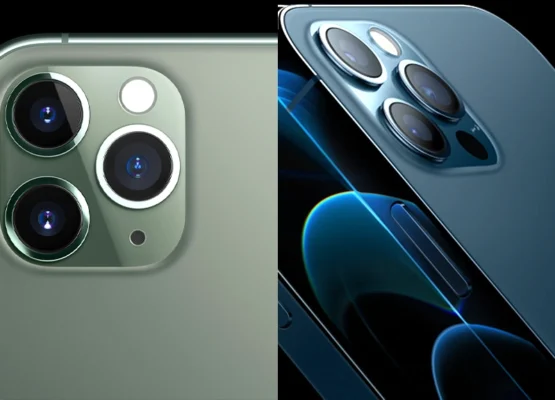
Samsung is abandoning its signature vertical camera arrangement for a horizontal “island” module that stretches across the back of the phone. The design closely resembles the iPhone 17 Pro’s camera plateau — a comparison that has already generated hostile reactions from Samsung fans.
The camera bump is significantly thicker. According to CAD renders, the S27 Ultra measures 163.76 x 78.25 x 7.97mm, but the camera module protrudes an additional 4.43mm to 4.56mm — bringing the total thickness at the bump to 12.53mm.
Why it matters: This is the most divisive change on the list. The camera island is objectively larger and more prominent than ever. It may improve grip and allow for better internal component layout, but it will also make the phone wobble more on a table and feel bulkier in a pocket. Samsung is trading aesthetics for function. Whether that’s a good trade depends on how much you care about how your phone looks from behind. On the plus side, the wider housing could finally put an end to desk wobble by stabilising the upper half of the phone.
4. A New 200MP Main Sensor with LOFIC Technology
The S27 Ultra will retain a 200MP main camera, but it’s not the same sensor. Leaks point to a new ISOCELL HP6 sensor using LOFIC (Lateral Overflow Integration Capacitor) technology, which dramatically improves dynamic range.
LOFIC works by pairing a capacitor with pixels. When light intake overflows a pixel’s full-well capacity, it is collected into the capacitor, allowing the camera to capture more detail in both bright and dark areas of a scene. Reports also suggest the S27 Ultra could introduce variable aperture — a feature last seen on the Galaxy S9 and S10 series — allowing the camera to adjust its lens opening based on lighting conditions.
Why it matters: LOFIC is the real story here. It allows the sensor to capture more highlight detail without clipping, which means better photos in high-contrast scenes — sunsets, backlit portraits, stage performances. Combined with variable aperture, this could be the biggest leap in Samsung camera hardware in years.
5. A Brighter, More Efficient M16 OLED Display
The S27 Ultra’s 6.9-inch display is getting an upgrade to Samsung Display’s new M16 panel material — the first update to Galaxy S-series displays in three years. The M16 panel is capable of 10,000 nits peak brightness and 165Hz refresh rates, and can offer up to 30% lower power consumption.
However, leaks suggest the S27 Ultra will not hit those headline numbers. The hardware-level Privacy Display implementation consumes part of Samsung’s optical budget, making it harder to push both ultra-high brightness and high refresh rates simultaneously. The display is expected to offer a 120Hz refresh rate with a second-generation Privacy Display feature.
Why it matters: Even without the full 10,000 nits, the M16 panel represents a genuine generational leap in efficiency and colour accuracy. The second-generation Privacy Display promises to fix the brightness and colour trade-offs that critics noted on the S26 Ultra’s first-generation implementation.
6. Snapdragon 8 Elite Gen 6 — Built on 2nm
The S27 Ultra will run on Qualcomm’s Snapdragon 8 Elite Extreme Gen 6 — a 2-nanometer chipset that represents a full node shrink from the 3nm Snapdragon 8 Elite Gen 5 in the S26 Ultra. Some leaks suggest the chip may feature prime cores clocked at 5.01GHz, which would be a first for a smartphone processor.
Samsung is also reportedly upgrading to LPDDR6 RAM, paired with up to 16GB of memory and up to 1TB of UFS 5.0 storage.
Why it matters: The 2nm process is a genuine generational leap. It means more performance with less power draw — which, combined with the 5,700mAh battery, could deliver battery life unlike anything Samsung has shipped before. The LPDDR6 upgrade also improves memory bandwidth, which matters for AI workloads and on-device processing.
7. Qi2 Magnetic Charging — Finally
After years of rumours, the S27 Ultra is expected to finally support Qi2 magnetic charging natively. Leaked CAD renders show a circular magnetic ring on the back, confirming that Samsung is adopting native Qi2 wireless charging alignment at the hardware level.
Why it matters: Qi2 has been available on rival Android phones for over a year. Samsung’s absence from the standard has been a glaring omission. Qi2 support means S27 Ultra users can finally use magnetic wallets, car mounts, and charging stands without adhesive rings or special cases. The phone will natively snap onto magnetic accessories with precise coil alignment.
8. Faster Charging with 60W Wired
The S27 Ultra is expected to support 60W wired charging and 25W wireless charging, along with reverse wireless charging. While the wired charging speed remains at 60W — the same as the S26 Ultra — leaks suggest the S27 Ultra will actually charge 2% to 3% faster from 0 to 100% thanks to better battery optimisation.
Why it matters: The combination of a larger battery and faster charging addresses two of the biggest complaints about Samsung’s Ultra line. The 5,700mAh cell paired with 60W charging should deliver both longer endurance and quicker top-ups — exactly what power users have been asking for.
9. IP68 and Seven Years of Updates
The S27 Ultra is expected to retain its IP68 rating for dust and water resistance, and Samsung is expected to continue offering seven years of software updates and security patches.
Why it matters: Samsung’s software update commitment remains the best in the Android ecosystem, matching Google’s Pixel line. Seven years of support means the S27 Ultra will still receive security patches well into the 2030s — a genuine long-term value proposition for buyers who keep their phones for years.
10. Five Colour Options — Including a Special Violet
The S27 Ultra will be available in five colourways: Black, Blue, Light Pink, White, and a special Violet exclusive to Samsung.com purchases. The Violet option is expected to be the standout, replacing the Titanium Violet of previous generations with a more saturated purple hue.
Why it matters: Samsung’s colour strategy has become a key differentiator for the Ultra line, with exclusive online colours driving direct-to-consumer sales. The addition of Light Pink suggests Samsung is targeting a broader demographic — a notable shift for a phone that has historically leaned toward conservative, business-oriented colourways.
Bold, Risky, and Long Overdue
The Galaxy S27 Ultra isn’t a modest refresh. It’s a statement of intent. Samsung is finally addressing the criticisms that have dogged the Ultra line for years — stagnant battery capacity, an aging camera layout, and a design that felt increasingly dated.
But the changes aren’t universally positive. The loss of the 3x telephoto is a real downgrade in versatility. The massive camera island is ugly. And the iPhone-inspired design will alienate some longtime Samsung fans.
What’s clear is that Samsung is no longer playing it safe. After seven years of incremental updates, the Ultra is getting a genuine overhaul. Whether that overhaul pays off depends on execution — and on whether the leaked specs translate into real-world improvements.
The Galaxy S27 Ultra is expected to launch in late February or early March 2027, with pricing in India potentially starting around Rs 1.6–1.7 lakh. If the leaks are accurate, it could be the most important Samsung flagship in years. And it might finally give Ultra users a reason to upgrade that isn’t just “the screen is slightly brighter.”