After a bitter, 11-month legal saga that threatened to tear African football apart, Senegal have finally been confirmed as the winners of the 2025 Africa Cup of Nations. On November 24, 2026, the Court of Arbitration for Sport (CAS) ruled in Senegal’s favour, overturning a Confederation of African Football (CAF) decision that had stripped them of the title and awarded it to Morocco. It was a verdict that brought clarity to a deeply messy situation, but it also left lingering questions about how the continent’s biggest tournament reached this point.
The Final That Descended Into Chaos
The controversy began on January 18, 2026, in Rabat. Senegal and hosts Morocco played out a tense, goalless final that exploded into drama in second-half stoppage time. First, referee Jean-Jacques Ndala disallowed a Senegalese goal for a foul in the build-up. Minutes later, he awarded Morocco a penalty after a VAR review, judging that El Hadji Malick Diouf had fouled Brahim Diaz in the box.
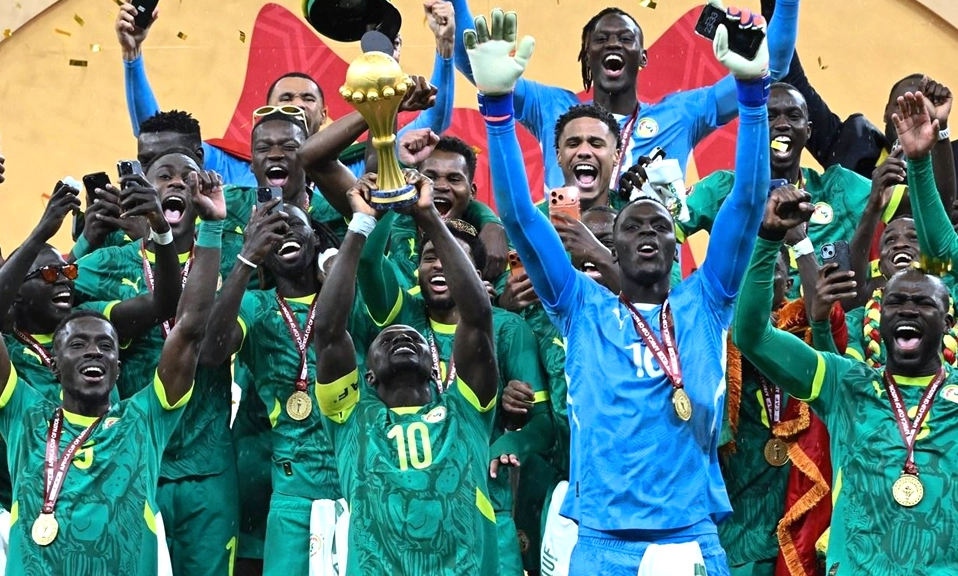
The decision sparked fury on the Senegalese bench. Coach Pape Thiaw ordered his players off the pitch in protest. The match was halted for roughly 15 minutes as chaos unfolded, with fans attempting to invade the pitch and stewards struggling to restore order. Senegal captain Sadio Mané urged his teammates to return, and eventually, they did. Brahim Diaz stepped up to take the penalty—and produced a casual Panenka that was easily saved by goalkeeper Édouard Mendy. The match went to extra time, where Pape Gueye scored the only goal to give Senegal a 1-0 victory and their second-ever AFCON title.
The CAF Ruling: From Champions to Forfeiture
Senegal’s celebrations lasted less than two months. Morocco lodged a formal appeal, arguing that Senegal’s walk-off had breached Articles 82 and 84 of the AFCON regulations, which prohibit teams from leaving the field without the referee’s authorisation. In March 2026, a CAF appeals board accepted that argument, declaring that Senegal had “forfeited” the final and awarding Morocco a 3-0 default victory.
The ruling was stunning. It raised the bizarre prospect of Senegal having to return the trophy and their medals. The Senegalese Football Federation (FSF) immediately denounced the decision and took the case to CAS, sport’s highest legal authority.
Why CAS Reinstated Senegal
The CAS panel, which heard the case behind closed doors in Lausanne on October 8, issued a unanimous verdict in Senegal’s favour on November 24. The legal reasoning was precise, and it hinged on a single question: did the referee permanently call off the match?
The panel concluded that he did not. According to the ruling, the AFCON regulations invoked by Morocco and CAF are “intended solely to determine the outcome of a match when a team’s conduct leads the referee to call off the game permanently”. Because referee Ndala blew his whistle to restart the match after Senegal returned, both teams expressed their willingness to resume, and the game was played to its conclusion, those forfeiture rules did not apply.
CAS effectively backed the referee’s authority. “The referee’s decision to resume the match or to stop it fell definitively within his sole authority,” the court stated. By restarting play, Ndala had determined that the conditions for resuming had been met, and his decision was “not arbitrary” and did not constitute a “legal error” that CAS could overturn. The panel also invoked the “field of play” doctrine, a principle that prevents courts from reviewing decisions taken on the pitch by match officials. In short: the result on the field stood.
Reactions: Relief, Defiance, and a Lingering Feud
Senegal celebrated with a social media post proclaiming the team to have won the title “twice: first on the field and then at CAS”. The FSF shared a picture of the team lifting the trophy in January, captioned “again and always champions of Africa”.
Morocco, however, was defiant. The Royal Moroccan Football Federation (FRMF) issued a statement expressing its “surprise” at the ruling and said it would “pursue all available legal avenues to challenge the decision”. Its only remaining avenue is an appeal to the Swiss Federal Court, which can only be pursued on limited procedural grounds and would not be heard on the facts of the case. Notably, Morocco captain Achraf Hakimi had earlier said he would disagree with stripping Senegal of the title, stating that “what happens on the pitch should be the most important thing of all”.
The Broader Fallout: A Rule Change and a Reputational Wound
The chaos of the final has already changed football’s rules. In April 2026, the International Football Association Board (IFAB), the game’s lawmaking body, introduced a new rule allowing referees to sanction with a red card any player who leaves the field in protest at a decision—and any team official who incites them to do so. A team that causes a match to be abandoned will, in principle, forfeit the match.
The saga has also inflicted severe reputational damage on AFCON. As The Athletic‘s Jay Harris noted, the legal battle “threatened to tear African football apart,” and the concern remains that “this saga is just going to continue rumbling on despite CAS’ verdict”. CAF president Patrice Motsepe has said his organisation will respect the CAS ruling, but the episode has exposed deep tensions between the federation, its member associations, and the limits of on-field authority.
Justice, or Just a Legal Technicality?
For Senegal, the CAS ruling is vindication. They won the final on the pitch, and they have now won the argument off it. For Morocco, it is a painful defeat delivered by a court in Switzerland, and the fight may not be entirely over. For African football, it is a resolution that brings certainty but not closure.
The decision rests on a legal technicality—the distinction between a match being temporarily halted and permanently called off—but it also upholds a fundamental principle: that the referee’s authority on the field of play is paramount. Whether that principle is enough to heal the wounds of a chaotic final and a bitter legal war remains to be seen. Senegal are champions. The record books will say so. But the controversy of how they got there will linger far longer than the trophy itself.