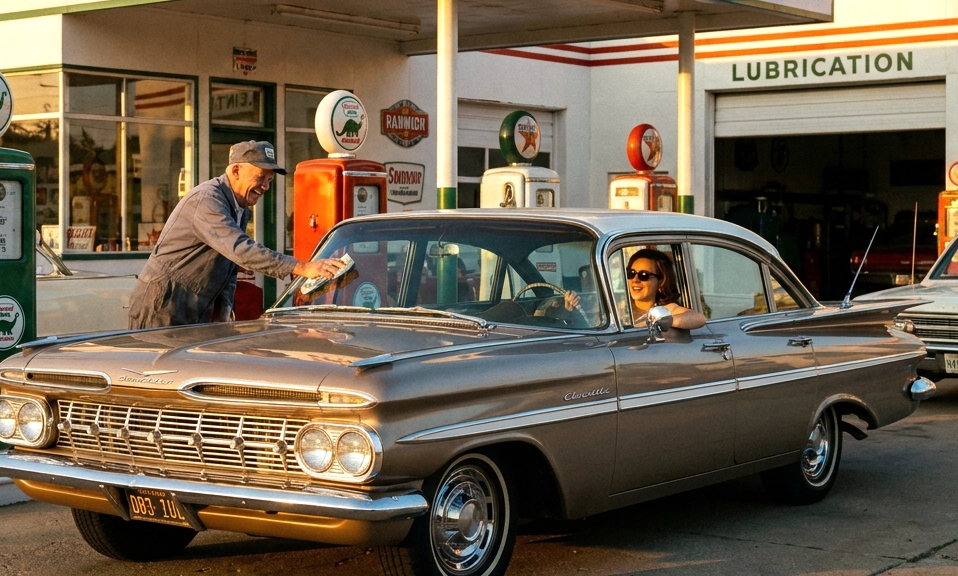
For millions of drivers around the world, pulling up to a gas station means handing the keys or your card to a fuel attendant. Most of these workers are honest, hardworking individuals doing a tough job.
But unfortunately, the fuel industry has a well-documented dark side: short-filling.
Short-filling is the practice of dispensing less fuel than the customer pays for. For the dishonest few, it’s an easy, low-risk way to pad their pockets. Because fuel is a high-volume, fast-paced transaction, it’s the perfect environment for sleight-of-hand tricks.
If you want to protect your wallet, you need to know how the scam works. Here are 5 common tactics dishonest fuel attendants use to give you less fuel, why they do it, and how you can shut them down.
💸 1. The Cash Skim (The “Fill Up” Shortchange)
The Tactic: You hand the attendant a $50 bill and say, “Fill it up, please.” The attendant starts the pump, but manually stops it when it hits $42. They then hand you $8 in change, claiming, “That’s all it would take,” or they simply pocket the $8 difference and hope you don’t notice.
Why it works: Many drivers don’t know exactly how many gallons or liters their tank holds, or how much a “full tank” costs from empty. If the attendant acts confident and hands you some change, the brain assumes the transaction is legitimate and moves on.
Why it works: Many drivers don’t know exactly how many gallons or liters their tank holds, or how much a “full tank” costs from empty. If the attendant acts confident and hands you some change, the brain assumes the transaction is legitimate and moves on.
🛑 2. The Premature Stop (The “Fake Full”)
The Tactic: The attendant is pumping your fuel, but they release the nozzle trigger a few clicks before the tank is actually full, or they stop pumping entirely while there is still room in the tank. When you question it, they might blame the pump (“It keeps clicking off, sir/ma’am”) or simply shrug and walk away.
Why it works: Modern car tanks have complex vapor recovery systems that can cause the nozzle to click off prematurely if inserted at the wrong angle. Dishonest attendants exploit this mechanical quirk to stop the pump early, saving fuel that they can either pocket the cash value of or siphon later.
Why it works: Modern car tanks have complex vapor recovery systems that can cause the nozzle to click off prematurely if inserted at the wrong angle. Dishonest attendants exploit this mechanical quirk to stop the pump early, saving fuel that they can either pocket the cash value of or siphon later.
🧻 3. The Distraction Play
The Tactic: While the fuel is pumping, the attendant aggressively engages you. They might meticulously clean your windshield, check your tire pressure without asking, or strike up a lengthy conversation. Sometimes, they will even ask for a tip before the pump has finished.
Why it works: This is classic misdirection. By drawing your eyes and attention away from the digital meter on the pump, they create a window of opportunity to stop the pump early, manipulate the cash, or short-change you on your return money. If you’re busy chatting, you aren’t watching the numbers climb.
Why it works: This is classic misdirection. By drawing your eyes and attention away from the digital meter on the pump, they create a window of opportunity to stop the pump early, manipulate the cash, or short-change you on your return money. If you’re busy chatting, you aren’t watching the numbers climb.
🧾 4. The Receipt Dodge
The Tactic: The transaction finishes, the attendant hands you your keys, and you drive off. It’s only later that you realize they never gave you a printed receipt, or they handed you a crumpled, faded one from a previous transaction.
Why it works: The receipt is your only objective proof of how much fuel was actually dispensed. Without it, you have no way to verify if the $40 you handed over actually bought $40 worth of gas. Dishonest attendants know that if they withhold the receipt, the customer has no evidence to take to the station manager.
Why it works: The receipt is your only objective proof of how much fuel was actually dispensed. Without it, you have no way to verify if the $40 you handed over actually bought $40 worth of gas. Dishonest attendants know that if they withhold the receipt, the customer has no evidence to take to the station manager.
🐢 5. The “Slow Flow” Deception
The Tactic: Instead of squeezing the nozzle trigger all the way for a fast, steady flow, the attendant only squeezes it halfway or pulses it. The fuel trickles into your tank at a frustratingly slow pace.
Why it works: This is a psychological play. As the minutes tick by and the pump seems to be crawling, many impatient drivers will eventually say, “Alright, that’s enough, just stop it.” The attendant complies, stops the pump, and pockets the remaining cash from your pre-payment, making it seem like you were the one who decided to stop early.
Why it works: This is a psychological play. As the minutes tick by and the pump seems to be crawling, many impatient drivers will eventually say, “Alright, that’s enough, just stop it.” The attendant complies, stops the pump, and pockets the remaining cash from your pre-payment, making it seem like you were the one who decided to stop early.
🧠 The “Why”: What Drives This Behavior?
It’s easy to just label these attendants as “thieves,” but understanding why this happens helps you stay vigilant. The root causes usually boil down to three factors:
- Poverty Wages & Tip Reliance: In many regions, fuel attendants earn well below minimum wage, relying entirely on tips to survive. Short-filling becomes a desperate, albeit unethical, way to “supplement” their income.
- The “Victimless Crime” Illusion: To the scammer, skimming $3 or $5 feels insignificant. They rationalize that the customer won’t notice, the gas station is a faceless corporation, and the risk of getting caught is incredibly low.
- Customer Apathy: The biggest enabler of short-filling is the fact that most people don’t watch the pump. We are distracted by our phones, our passengers, or our own thoughts. Scammers rely on this autopilot behavior.
🛡️ How to Protect Yourself at the Pump
You don’t need to be paranoid, but you do need to be present. Here are 4 simple rules to ensure you get every drop you pay for:
- Watch the Meter: Keep your eyes on the digital display from the moment the attendant starts pumping until the moment they stop. Don’t look at your phone.
- Pay with a Card (and watch the screen): Paying with a credit/debit card at the pump (or handing the card directly to the attendant while watching the terminal) creates an automatic digital receipt. It’s much harder to skim from a card transaction than from a handful of cash.
- Demand the Receipt: Never drive away without the printed receipt. Glance at it immediately to ensure the amount matches what you paid.
- Know Your Tank: Take a quick mental note of roughly how much it costs to fill your car from a quarter tank to full. If the attendant says “$20 filled it,” but you know it usually takes $40, speak up immediately.
Stay Alert, Stay Full
Fuel is one of the most expensive routine purchases we make. Allowing a dishonest attendant to siphon even a few dollars from every fill-up adds up to hundreds of dollars a year.
By simply paying attention, keeping your eyes on the pump, and demanding your receipt, you remove the opportunity for these tricks to work. Most attendants will appreciate an attentive customer, and the dishonest ones will quickly move on to an easier target.