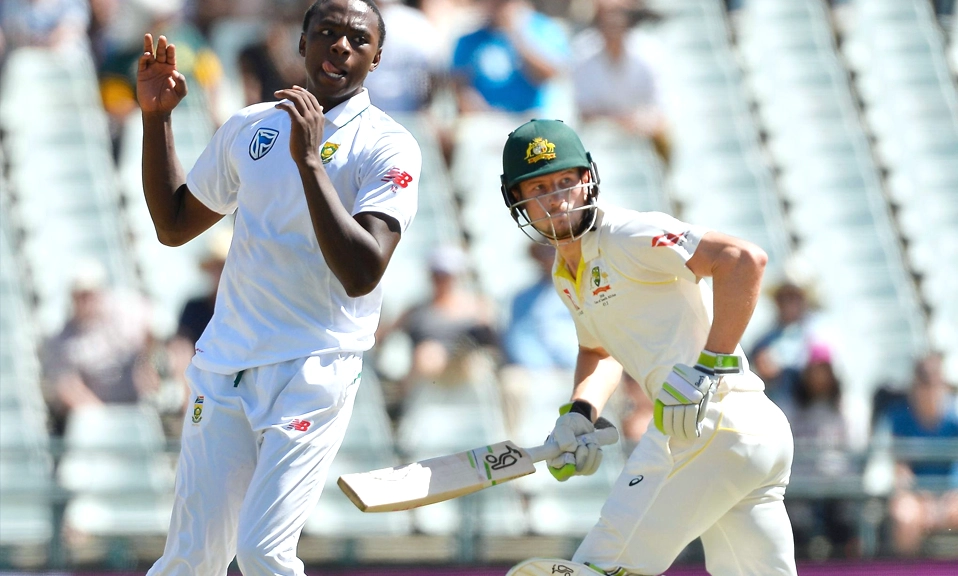
The final day at Newlands was supposed to be a chase. It became a collapse. South Africa needed ten wickets. Australia needed 288 runs. By lunch, the contest was over—not because Australia had been outplayed over five days, but because they had been dismantled in a single session.
Simon Harmer took 6-16, Kagiso Rabada took 3-39 on his way to 350 Test wickets, and Australia were bowled out for 111 in 57.1 overs. South Africa won by 176 runs, clinched the series 2-1, and returned to the top of the ICC Test rankings.
It was a victory built on resilience, on a fourth-day fightback that turned a 100-run deficit into a match-winning lead, and on a final morning of ruthless, clinical bowling that exposed every crack in Australia’s batting order.
The Morning That Broke Australia
Australia resumed on the fifth day needing 288 with ten wickets in hand. The pitch was still good. The sun was out. The target was daunting but not impossible.
Rabada made it impossible within his first over.
He removed Matt Renshaw for a duck, then Marnus Labuschagne for four, then Travis Head for 14. Australia were 22/3 before they had time to settle. Josh Inglis, the first-innings centurion, was run out for four after a mix-up with Cameron Green. 40/4.
Then Harmer went to work.
He dismissed Alex Carey for two, Cooper Connolly for a duck, and Mitchell Starc for a golden duck. Australia slipped to 60/7 by lunch. The match was gone.
Cameron Green offered the only resistance, making 27 before Harmer bowled him. Pat Cummins survived 90 balls for his 11, but he was trapped leg-before by Harmer at 107/9. Josh Hazlewood was bowled for a duck. 111 all out.
David Warner, watching from afar, called it “terrible,” “utterly disgraceful,” and “un-Australian”. Pat Cummins was more measured but no less damning: “Within the first hour, the game was away from us. Just didn’t give ourselves a chance”.
The Heroes: Harmer’s Ten, Rabada’s 350
Harmer’s 6-16 were career-best figures. His match haul of 10-120 was his first ten-wicket haul in Tests. He became the third South African spinner to take ten wickets in a Test against Australia.
Rabada’s 3-39 on the final day took him to 350 Test wickets. He reached the milestone in fewer balls bowled than any fast bowler in history—a testament to his relentless pace and accuracy.
Together, they had turned a target of 288 into a foregone conclusion before the first hour was done.
The Foundation: Rickelton, Mulder, and a Fourth-Day Fightback
The final-day collapse was dramatic, but the match was won on day four.
South Africa had conceded a 100-run first-innings lead after Australia posted 429 on the back of Josh Inglis’s 102 and Alex Carey’s 80. When South Africa slipped to 140/4 in their second innings, a series defeat looked likely.
Then Ryan Rickelton and Wiaan Mulder—schoolmates, friends, and now the architects of a famous comeback—put on a partnership that changed everything. Rickelton made 101 from 219 balls. Mulder made 115 from 221 balls, with ten fours and four sixes. Their stand took South Africa to 387, setting Australia a target that was always going to be difficult on a fifth-day pitch—but not impossible.
Australia made it look impossible.
The Series: A Tale of Two Teams
The series had been a rollercoaster. Australia won the first Test in Durban by 214 runs. South Africa responded with an innings-and-31-run victory in Gqeberha. The decider at Newlands was supposed to be a classic. For four days, it was. On the fifth, it became a procession.
For South Africa, it was a statement. They had been beaten soundly in the opener. They had lost key players to injury. They had been behind in the third Test. And they had won anyway—because of their batting depth, their bowling discipline, and the kind of resilience that Temba Bavuma described as “the whole South African trait” .
For Australia, it was a warning. Their batting, so dominant in the first innings, folded under pressure. Their middle order—Renshaw, Labuschagne, Head, Carey, Starc—offered almost no resistance when it mattered most. Cummins acknowledged the trend: “Once you got yourself in, there were runs to be scored there and you could face lots of balls. Within the first hour, the game was away from us”.
The question was who
would survive the final day. The answer, emphatically, was South Africa.
They survived because Rabada struck in the first over. They survived because Harmer spun a web that Australia could not escape. They survived because Rickelton and Mulder had already done the hard work on day four, turning a deficit into a target that was just beyond Australia’s reach.
And they survived because, when the pressure was at its highest, they did not blink.
South Africa are the No. 1 Test team in the world again. They have won a series against Australia for the first time in nine years. And they have done it in the most South African way possible—by being written off, falling behind, and refusing to stay there.
The final day at Newlands was not a contest. It was a reckoning. And South Africa delivered it.