7 Ways the Sequel to The Social Network Takes on Big Tech
Sixteen years after David Fincher’s The Social Network turned the founding of Facebook into a Shakespearean tragedy of ambition and betrayal, Aaron Sorkin is back with a follow-up that swaps the dorm room for the boardroom — and the courtroom. The Social Reckoning arrives in theaters on October 9, 2026, written and directed by Sorkin, with Jeremy Strong taking over the role of Mark Zuckerberg. It’s not a sequel in the traditional sense. Sony calls it a “companion piece”. But it’s undeniably a reckoning.
Here are seven ways the film takes on Big Tech — and why it matters.
1. It Turns the Whistleblower Into the Protagonist
Where The Social Network centered on Zuckerberg’s ascent, The Social Reckoning pivots to the people who tried to stop him. The film follows Frances Haugen (Mikey Madison), the former Facebook product manager who leaked thousands of internal documents in 2021, and Jeff Horwitz (Jeremy Allen White), the Wall Street Journal reporter who turned those documents into “The Facebook Files” — an investigative series that exposed the platform’s harmful effects on teens and its role in spreading misinformation.
It’s a deliberate inversion. The hero isn’t the founder. It’s the person who tried to hold him accountable.
2. It Names the Algorithm as the Villain
The Social Network was about a website. The Social Reckoning is about what that website became.
The film’s central focus is MSI — Meaningful Social Interactions — Facebook’s internal metric that prioritized engagement over safety, amplifying divisive content and destabilizing democracies in the process. The algorithm isn’t a background detail. It’s the antagonist.
Sorkin said he felt compelled to return to this story because “there isn’t a life that Facebook’s algorithm hasn’t touched, and that influence has shaped everything. So it’s time to say more”.
3. It Recasts Zuckerberg — and Reframes Him
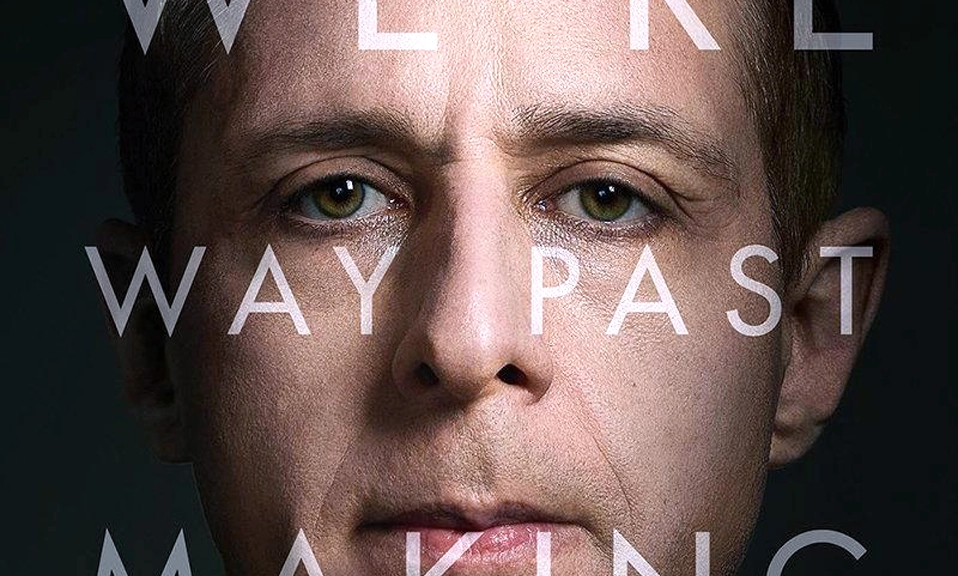
Jesse Eisenberg famously declined to return, telling Sorkin he didn’t want to be “conflated” with Zuckerberg anymore. In his place, Jeremy Strong steps in — and by all accounts, he’s outstanding in a limited role.
Strong’s Zuckerberg isn’t the awkward genius of the first film. He’s a tech oligarch — powerful, insulated, and increasingly detached from the consequences of his creation. The recasting isn’t just a logistical necessity. It’s a statement: this is a different Zuckerberg, in a different era, with a different kind of power.
4. It Takes On the “Tech Oligarch” Era
The Social Reckoning arrives at a moment when the tech industry’s political and cultural influence is under unprecedented scrutiny. The CBC review noted that the film positions itself as a takedown of “one of the three tech oligarchs of the apocalypse,” alongside Alex Gibney’s Musk and Luca Guadagnino’s Artificial, which critiques Sam Altman and OpenAI.
This isn’t a film about a startup. It’s a film about empire — and about what happens when the people who built the empire no longer answer to anyone.
5. It’s a Journalism Thriller, Not a Tech Origin Story
Where The Social Network was a character study of a founder, The Social Reckoning is a procedural about investigative journalism. Horwitz and Haugen’s partnership — a reporter and a source, working against a company with infinite resources — is the engine of the film.
It’s a familiar genre, but a potent one. The tension isn’t whether Facebook will survive. It’s whether the truth will get out.
6. It Asks Whether Reckoning Is Even Possible
The film’s title promises a reckoning. The reviews suggest it doesn’t quite deliver one. Slant Magazine noted that like the original, The Social Reckoning ends with Zuckerberg suffering a PR defeat “that does nothing to dull his exponential growth”.
That ambiguity is the point. The film doesn’t offer a triumphant ending where the bad guy gets what he deserves. It offers something messier: a story about accountability that resists easy closure.
7. It’s a Companion Piece — Not a Sequel
Sorkin has been clear that The Social Reckoning isn’t a direct sequel. It’s a standalone story set in the same universe, with a different cast and a different focus. It doesn’t follow the events of the 2010 film. It exists alongside it.
That’s a smart choice. It frees the film from the burden of comparison. It’s not trying to be The Social Network. It’s trying to be something new — a film about the consequences of the world that movie helped explain.
The Social Reckoning
has received mixed reviews. Some critics have called it a letdown, a bore, a film that fails to live up to its predecessor’s legacy. But even its detractors acknowledge that it’s tackling something important: the story of how a platform built to connect people became a machine that radicalizes them.
Whether the film succeeds as drama is up for debate. Whether it succeeds as a reckoning is another question entirely. But it’s asking the right questions — and in an era of algorithmic amplification and tech oligarchy, that might be enough.
The Social Reckoning is in theaters now.