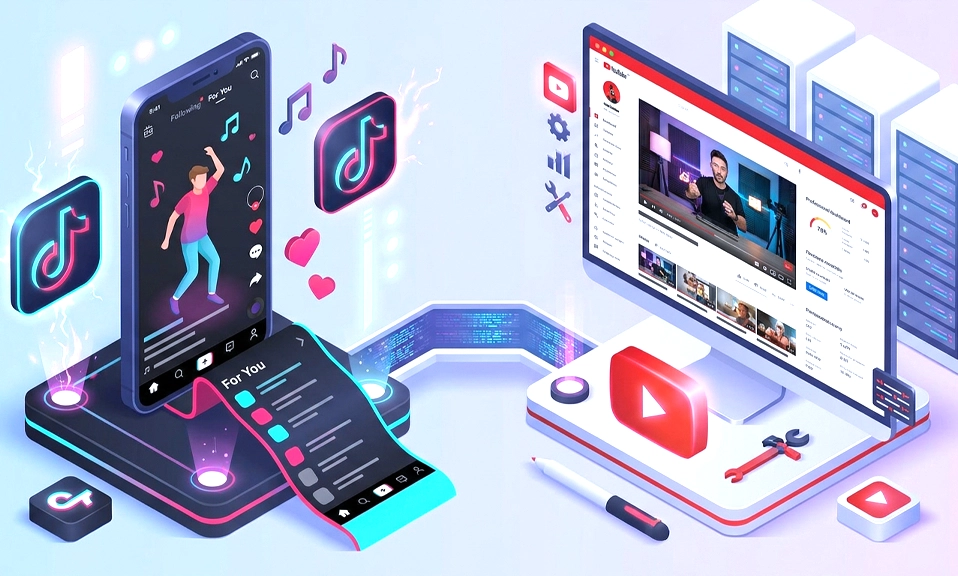
If you look at the screen time report on your phone right now, there is a 99% chance that one of the top two apps is a video platform.
For the last decade, YouTube has been the undisputed king of online video. It is the world’s second-largest search engine, a sprawling library of human knowledge, and the birthplace of modern internet celebrity.
But then came TikTok.
In just a few short years, TikTok didn’t just compete with YouTube; it fundamentally rewired how a generation consumes content, forcing the entire tech industry to pivot to short-form, algorithmically driven video.
Today, the battle for our eyeballs is fiercer than ever. But which platform is actually better? The answer depends entirely on whether you are a viewer, a creator, or a marketer.
Here is the no-nonsense breakdown of the TikTok vs. YouTube war, and who is really winning.
🧠 1. The Algorithm: The Slot Machine vs. The Library
The core difference between the two platforms lies in how they decide what you see.
- TikTok (The Interest Graph): TikTok’s “For You Page” (FYP) is a hyper-personalized, relentless discovery engine. It doesn’t care who you follow; it cares about what you watch. It tracks your watch time, your re-watches, and your micro-pauses to feed you an endless, highly addictive stream of content tailored to your subconscious preferences. It is a dopamine slot machine designed to make you lose track of time.
- YouTube (The Search & Subscription Hybrid): YouTube is fundamentally a library. While its homepage algorithm is incredibly smart, YouTube’s superpower is intent. People go to YouTube to search for “how to fix a leaky sink,” “review of the new iPhone,” or “1-hour lofi beats to study to.” It balances algorithmic recommendations with a user’s active choices (subscriptions and search history).
The Winner: TikTok for pure, mindless entertainment and discovery. YouTube for intentional learning, deep dives, and finding exactly what you are looking for.
🎬 2. Content Style: Raw Authenticity vs. Polished Depth
The format of the platform dictates the type of content that thrives.
- TikTok: The barrier to entry is practically zero. You can shoot, edit, and publish a video in 5 minutes using just your phone. The culture rewards raw authenticity, quick humor, trending audio, and fast-paced editing. It’s highly reactive; a trend can start at 9 AM and be globally ubiquitous by 9 PM.
- YouTube: While vlogging exists, YouTube’s ecosystem heavily rewards high production value, deep research, and strong narrative structure. A 20-minute video essay, a detailed tech review, or a cinematic travel vlog requires scripting, lighting, and hours of editing. The culture rewards parasocial relationships; viewers feel like they truly know the creator.
The Winner: TikTok for quick laughs, trends, and cultural zeitgeist. YouTube for education, storytelling, and building a deep, loyal connection with an audience.
💰 3. The Creator Economy: Virality vs. Sustainability
If you want to make a living creating videos, the platform you choose changes your entire business model.
- TikTok: TikTok is the ultimate “top of funnel” platform. It is incredibly easy to go viral and gain a million followers overnight. However, TikTok’s direct monetization (the Creator Rewards Program) is notoriously inconsistent and pays a fraction of what YouTube does. TikTok creators make their real money through external brand deals, selling their own products, or driving traffic to other platforms. It’s a high-risk, high-reward environment.
- YouTube: YouTube is the gold standard for creator sustainability. The YouTube Partner Program (AdSense) shares a generous portion of ad revenue directly with creators. Add in channel memberships, Super Chats, and long-term, high-paying sponsorships, and a YouTuber with 100,000 loyal subscribers can often make a full-time living. YouTube videos also have a “long tail”—a video you posted three years ago can still generate daily income.
The Winner: YouTube, hands down. It is a real business. TikTok is a marketing channel.
🔄 4. The Convergence: They Are Copying Each Other
The funniest part of this rivalry is that both platforms are desperately trying to become each other.
- YouTube Shorts: Terrified of losing Gen Z to TikTok, YouTube launched Shorts. It has been wildly successful (garnering over 70 billion daily views), but it has created a weird dichotomy where creators are trying to funnel Shorts viewers into their long-form content, often with mixed results.
- TikTok’s Pivot to Long-Form: TikTok is actively pushing 10-minute videos, improving its search functionality, and even testing a “TikTok Studio” for desktop uploading. They know that to keep users on the app longer and attract higher-paying advertisers, they need to move beyond 15-second dance clips.
The lines are blurring. We are entering an era of “omni-format” creators who post a 60-second hook on TikTok/Shorts to drive traffic to a 20-minute deep dive on YouTube.
⚖️ The Verdict: Who Actually Wins?
It’s not a zero-sum game, but each platform has a distinct crown.
- For the Viewer: YouTube is the better overall product. It respects your time more, offers higher-quality information, and doesn’t trap you in a bottomless, manipulative scroll (unless you specifically go to the Shorts tab).
- For the Creator: You need both, but for different reasons. Use TikTok as your billboard to get discovered, build brand awareness, and go viral. Use YouTube as your home base to build a loyal community, establish authority, and actually make a sustainable income.
- For the Advertiser: TikTok is unbeatable for reaching Gen Z and creating viral, native-looking brand moments. YouTube is superior for detailed product demonstrations, reaching older demographics with higher disposable income, and driving direct conversions.
The Attention War is a Tie
TikTok changed the internet forever. It forced legacy platforms to adapt, shortened our attention spans, and democratized virality. But YouTube remains the foundational bedrock of online video, offering a depth, reliability, and creator economy that TikTok has yet to replicate.
In the end, the real winner of the TikTok vs. YouTube war isn’t a corporation. It’s us, the viewers, who now have access to more diverse, creative, and accessible video content than at any point in human history.
The only real question is: Which app are you going to open first?