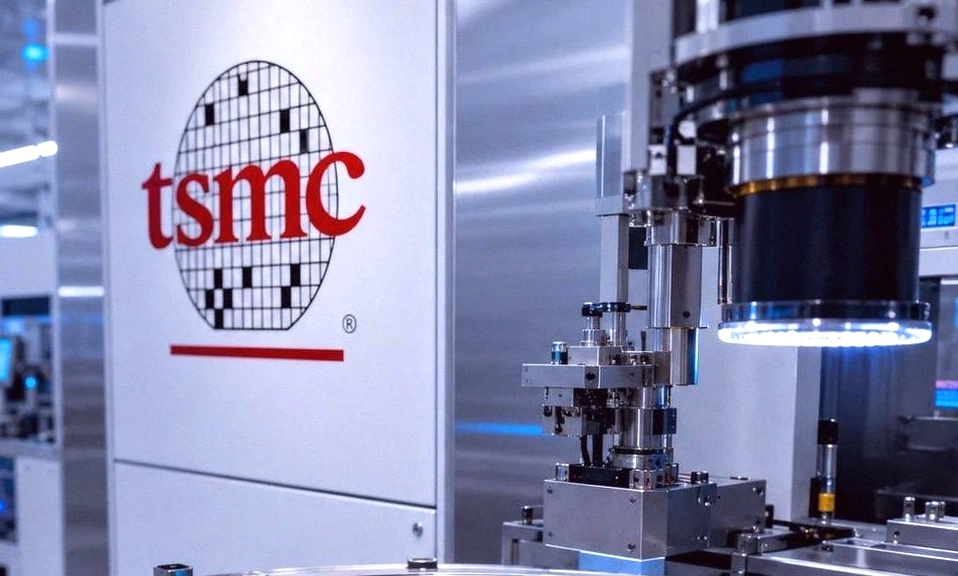
On November 10, 2026, TSMC’s board approved something it had never done before: a direct equity bet on the companies driving the AI boom. The world’s largest contract chipmaker committed up to $1 billion—$500 million each—to Anthropic and OpenAI. For a company that has spent decades as the quiet, indispensable manufacturer behind everyone else’s silicon, it is a striking pivot. But the logic behind it is less about chasing returns and more about protecting the foundation of its own business.
What TSMC Actually Bought
The structure of the deal is deliberate. TSMC is buying Anthropic common shares at its IPO price and OpenAI preferred stock. Anthropic, the maker of Claude, priced its IPO at $70 to $78 per share, seeking a valuation of up to $1.4 trillion—one of the largest stock market debuts on record. OpenAI, still private, offers preferred shares, a structure that typically carries liquidation preferences and other protections.
TSMC also approved a separate $500 million investment company** focused on the semiconductor ecosystem, and a **$40.9 billion capital budget for advanced process capacity, packaging, and R&D. The equity stakes are a small piece of a much larger spending plan. But they are the piece that signals a change in posture.
As recently as July 2026, TSMC chairman C.C. Wei dismissed the idea that the foundry would follow customers like Nvidia in financing users of its silicon. Asked whether TSMC would invest in end-market consumers, Wei said: “So far, no”. Five months later, that answer has changed.
Why a Foundry Is Buying Its Customers
The core reason is structural. TSMC does not sell chips under its own brand. It manufactures for fabless designers like Nvidia, AMD, and Apple, earning a manufacturing fee without owning the end product or the customer relationship. That model has been enormously profitable—TSMC reported a sixth consecutive quarter of record profit and expects full-year 2026 revenue growth of about 44%—but it leaves the company one step removed from the demand that ultimately fills its fabs.
Anthropic and OpenAI are changing that calculus. Both are developing their own custom chips—ASICs designed to reduce their dependence on Nvidia GPUs. Those chips still require advanced manufacturing and packaging. If they go to TSMC, TSMC wins. If they go to Samsung, Intel, or another foundry, TSMC loses a customer that is becoming more important every quarter.
The investment is, in effect, a contract insurance policy. Equity stakes in semiconductor companies often come with non-public capacity guarantees. With advanced fab queues stretching to 9–18 months in the second half of 2026, TSMC can reserve tool time for these “shareholder-level customers” when capacity is tight. It is not giving away orders. It is paying real money to secure the certainty of priority access.
There is also a value-chain argument. Liu Pei-chen of the Taiwan Institute of Economic Research described the move as helping TSMC “move beyond being a wafer foundry and take a bigger share of the AI value chain”. By owning stakes in the model developers, TSMC gains insight into end-user demand and a seat at the table where AI infrastructure decisions are made. The supply chain, Liu argued, is shifting “from a collection of individual players to cross-sector capital alliances” that share the risk of enormous infrastructure investments.
The Risks Nobody Is Ignoring
The deal is not without real tensions, and analysts have been candid about them.
Anthropic and OpenAI are competitors. Investing in both raises questions about which one gets priority when capacity is scarce. TSMC’s existing customers—Nvidia, AMD, and others—may also worry about fairness in advanced capacity allocation, especially when the queue is already long.
Both companies are building their own chips. TSMC is investing in customers who are, in a sense, trying to reduce their reliance on the broader merchant silicon ecosystem. That is good for TSMC’s manufacturing business if they choose TSMC. But it complicates the relationship with Nvidia, TSMC’s largest and most important customer.
The AI commercialization risk is real. If demand slows or returns on AI investment fall short of expectations, the close capital ties between supply-chain players could come under pressure. TSMC is tying a small but symbolic piece of its balance sheet to the fortunes of two companies whose valuations depend on the continued acceleration of AI spending.
Regulatory scrutiny is increasing. Cross-border equity investments in strategic technology are facing tighter review in many jurisdictions, adding a layer of uncertainty that did not exist a few years ago.
TSMC’s $1 billion bet
is not a financial investment in the conventional sense. It is a strategic move to lock in the demand side of its business as the AI industry’s center of gravity shifts from general-purpose GPUs toward custom silicon designed by the model developers themselves. TSMC is no longer content to be the quiet manufacturer at the end of the chain. It wants to be a shareholder in the companies that will decide how much advanced capacity the world needs—and whose orders will fill its fabs.
The risks are real. The conflicts are real. But the logic is difficult to argue with. In a market where capacity is scarce, demand is uncertain, and the biggest customers are becoming chip designers themselves, owning a piece of the customer is one way to make sure you are not left behind. TSMC has spent decades building the best factories in the world. Now it is buying a stake in the future that will keep them busy.