For forty years, the way we use computers has barely changed. We open an application, navigate a menu, click a button, and repeat. The software does exactly what it was programmed to do—no more, no less. It is deterministic, predictable, and utterly dependent on the human at the keyboard to decide what happens next. AI agents propose something fundamentally different: software that decides for itself, that takes a goal rather than a command, and that acts on your behalf rather than waiting for your instructions. The question is not whether this will change how we use computers. It is whether the change will be an upgrade or a rupture.
The shift is already underway. Microsoft has launched Microsoft 365 Copilot with agentic capabilities that can execute multi-step tasks across Outlook, Teams, and SharePoint. Salesforce has introduced Agentforce, a platform for building autonomous agents that handle customer service and sales workflows. Google’s Gemini can now complete purchases through Agentic Checkout. And a wave of startups—from Devin for software engineering to Harvey for legal work—are building agents that don’t just assist professionals but perform the work themselves.
The promise is enormous. The risks are equally real. And the outcome will depend on how well the industry navigates the gap between what agents can do and what users can trust.
The Traditional Software Paradigm: Deterministic, Reliable, Limited
Traditional software is built on a simple contract: the programmer defines the rules, the user provides the inputs, and the software produces the outputs. This model has powered the entire computing revolution, and it has three defining strengths.
Predictability. A spreadsheet calculates the same result every time. A banking system transfers the same amount regardless of context. A word processor formats text according to explicit rules. This determinism is what makes software reliable enough to run hospitals, airlines, and financial markets. You can test it, audit it, and prove that it works.
Auditability. Every action a traditional application takes can be logged, traced, and explained. If a transaction fails, you can find the exact line of code that caused the failure. If a report is wrong, you can trace the data flow. This transparency is essential for compliance, debugging, and accountability.
Efficiency at scale. Traditional software does one thing exceptionally well, and it does it millions of times per second without fatigue or error. A database query does not get bored. A payment processor does not have a bad day.
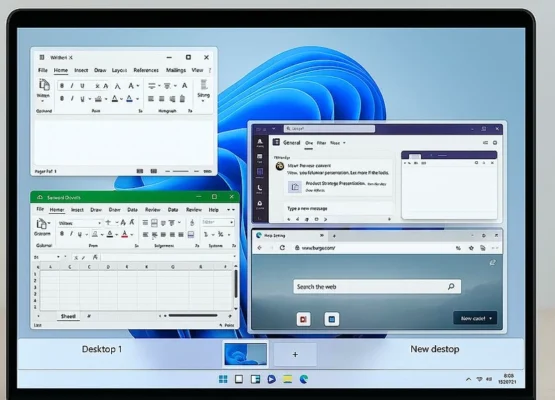
But traditional software has a fundamental limitation: it cannot handle ambiguity. It cannot read an email and decide what to do next. It cannot look at a messy spreadsheet and figure out what the user meant. It cannot navigate a website it has never seen before. Every new task requires a new application, a new menu, a new set of buttons. The human is the integrator—the one who moves information between applications, decides which tool to use, and translates a goal into a sequence of clicks.
The AI Agent Paradigm: Goal-Oriented, Adaptive, Probabilistic
AI agents invert the contract. Instead of giving the software a command, you give it a goal. Instead of navigating menus, you describe what you want in natural language. Instead of the software waiting for your next instruction, it plans, acts, and adapts on its own.
From commands to goals. A traditional application requires you to know what you want to do and how to do it. An agent requires only the first part. You tell it to “find the cheapest flight to Chicago next Tuesday that arrives before noon and has a refundable fare,” and it does the searching, comparing, and booking. You tell it to “summarize the customer complaints from last month and flag the ones that need immediate attention,” and it reads the emails, categorizes them, and produces the report.
From apps to agents. In the traditional model, each application is a silo. Your calendar doesn’t know about your email. Your spreadsheet doesn’t know about your CRM. Your agent can operate across all of them, because it is not bound by the boundaries of a single application. It can read an email, check a calendar, update a spreadsheet, and send a message—all as part of a single task.
From deterministic to probabilistic. This is the critical difference, and the source of both the agent’s power and its risk. An agent does not follow a fixed set of rules. It uses a large language model to reason about the task, generate a plan, and decide what to do next. That means it can handle ambiguity, adapt to unexpected situations, and solve problems that were never explicitly programmed. But it also means it can make mistakes, hallucinate facts, or take actions that were not intended.
Where Agents Will Replace Software (and Where They Won’t)
The honest answer is that agents will not replace all software, and they will not replace it overnight. The transition will be uneven, driven by the nature of the task.
Tasks that are well-suited to agents:
Research and synthesis. Finding information across multiple sources, summarizing it, and producing a report.
Workflow orchestration. Moving data between applications, triggering actions based on conditions, and coordinating multi-step processes.
Customer service. Answering common questions, resolving routine issues, and escalating complex cases to humans.
Coding and testing. Writing code, generating tests, and debugging—tasks where the agent can iterate rapidly and learn from feedback.
Tasks that are better suited to traditional software:
High-stakes, deterministic operations. Financial transactions, medical device control, aviation systems—anything where a single error could be catastrophic. These require the predictability and auditability of traditional software.
Real-time systems. Industrial control, autonomous vehicle safety systems, and network infrastructure require millisecond response times and deterministic behavior. Agents, which rely on cloud-based inference, cannot yet meet these requirements.
Regulated workflows. Compliance, auditing, and legal processes require explicit rules and traceable decision paths. Agents can assist, but the final decision must be auditable and defensible.
The most likely outcome is a hybrid model. The core systems that run the world—databases, operating systems, payment networks, industrial controls—will remain deterministic and traditional. The layer above them, where humans interact with information and make decisions, will increasingly be mediated by agents. You will not replace your bank’s core ledger with an agent. But you might use an agent to interact with your bank, to dispute a charge, or to plan a budget.
The Risks: What Could Go Wrong
The transition to agentic computing is not without significant risks, and the industry is only beginning to grapple with them.
The accountability gap. When an agent makes a mistake—books the wrong flight, sends an email to the wrong person, deletes a file—who is responsible? The developer who trained the model? The company that deployed it? The user who gave the instruction? The agent itself cannot be held accountable. The legal and ethical frameworks for agentic computing are still being written, and the gaps are significant.
The security surface. An agent that can access your email, your calendar, your files, and your financial accounts is a powerful tool. It is also a powerful target. A compromised agent could be manipulated into leaking data, making unauthorized transactions, or taking destructive actions. The same capabilities that make agents useful make them dangerous.
The trust problem. Users are being asked to trust software in a way they never have before. Traditional software does what it is told. An agent decides what to do. That is a fundamental shift in the relationship between humans and machines, and it will take time for users to adjust—and for the industry to earn that trust.
The complexity of failure. When traditional software fails, it fails in predictable ways. When an agent fails, it can fail in ways that are difficult to diagnose and even harder to prevent. An agent might misinterpret a goal, take a shortcut that violates a policy, or hallucinate a fact that leads to a bad decision. The failure modes are more diverse, and the tools for detecting and correcting them are still maturing.
A New Interface, Not a New Computer
AI agents will not replace computers. They will replace the way we interact with them. The desktop, the menu, the button, the app—these are all interfaces, and interfaces are not permanent. The command line gave way to the graphical user interface. The graphical user interface may give way to the conversational agent.
But the underlying systems—the databases, the networks, the processors—will remain. The agent is a layer on top, a translator between human intent and machine execution. It is a new kind of software, but it is still software. It is a new way of using computers, but it is still computing.
The transition will be gradual, uneven, and contested. It will produce enormous productivity gains and new categories of risk. It will create new winners and new losers. And it will force us to confront questions about accountability, trust, and control that we have never had to answer before.
The agentic era is coming. But the computer is not going anywhere. It is just learning to listen.