For decades, the fitness industry sold intensity. No pain, no gain. Sweat is fat crying. If you weren’t gasping for air, you weren’t trying hard enough. But in 2026, a quiet rebellion is underway—and it’s happening at a comfortable, conversational pace.
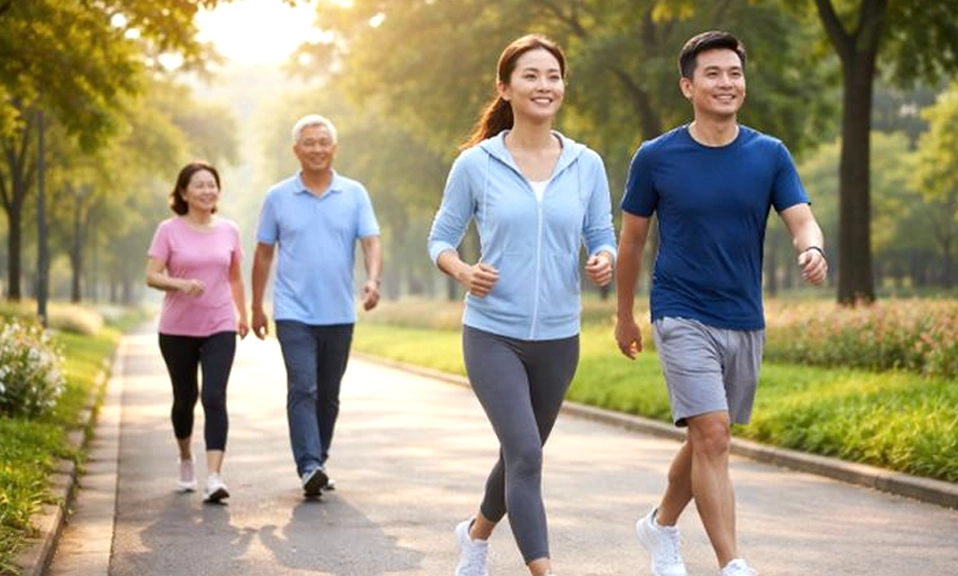
Walking has become the defining workout of the year. Not walking as a compromise. Not walking as a stepping stone to “real” exercise. Walking as the workout itself—deliberate, intentional, and increasingly social. The 12-3-30 treadmill trend, the hot girl walk, the post-meal stroll, the walking meeting, the rucking craze: they all point to the same cultural shift. People are choosing simple movement over punishing gym sessions, and the science is backing them up.
Here is why walking is the new workout, and why that’s a good thing.
The Science: Walking Is Not a Consolation Prize
The most important thing about the walking revival is that it’s not based on vibes. It’s based on evidence—and the evidence is remarkably strong.
Walking reduces the risk of dying from any cause. A Harvard study published in BMJ Medicine tracked more than 110,000 people for over 30 years and found that walking was associated with a 17% reduction in all-cause mortality—a stronger association than running (13%) or jogging (11%). The researchers noted that walking is accessible, low-impact, and easy to sustain, which means people actually keep doing it.
Walking protects your brain. A 2026 study from Harvard Medical School and Massachusetts General Brigham found that 3,000 to 5,000 steps per day delayed cognitive decline by an average of three years in people at risk of Alzheimer’s. At 5,000 to 7,500 steps, the benefit more than doubled, delaying decline by seven years. The mechanism appears to be a slowing of tau accumulation—the protein tangles that define Alzheimer’s disease.
Walking is enough to count as exercise. The CDC and the American College of Sports Medicine recommend at least 150 minutes of moderate-intensity activity per week. Brisk walking qualifies. You do not need to run. You do not need to lift weights. You do not need to do burpees. You need to walk, at a pace that elevates your heart rate and makes conversation slightly difficult but not impossible.
Walking beats the gym on adherence. The best exercise is the one you will actually do. Walking has the highest adherence rate of any form of physical activity because it requires no equipment, no membership, no commute, and no learning curve. You can do it in jeans. You can do it with a friend. You can do it in the rain, in the sun, in a mall, or on a treadmill. It fits into life in a way that a 6 a.m. HIIT class rarely does.
The Cultural Shift: From Punishment to Pleasure
The walking revival is not just about the science. It is about a broader change in how people think about exercise.
The gym-bro era is losing its grip. For years, fitness culture was dominated by a specific aesthetic: shredded bodies, protein powder, and a punishing relationship with exercise. That culture still exists, but it is no longer the default. The rise of walking—and the decline of “no pain, no gain” messaging—reflects a generational shift toward sustainable, pleasurable movement. People are tired of exercising as punishment for what they ate. They want to move because it feels good.
Walking is social. The “hot girl walk” was never really about burning calories. It was about a reason to leave the house, call a friend, listen to a podcast, and spend an hour outside. The 12-3-30 treadmill trend—12% incline, 3 mph, 30 minutes—turned walking into a structured, shareable challenge. Walking clubs, walking meetings, and “walk-and-talks” have replaced happy hours and coffee dates as the default way to spend time with people. Walking is not a solitary grind. It’s a social activity that happens to be good for you.
Walking is accessible. You do not need a gym membership, expensive equipment, or a certain level of fitness to walk. You do not need to be young, thin, or athletic. You do not need to recover from a hard session or worry about injury. Walking meets people where they are—and that matters enormously for anyone who has ever felt excluded from fitness culture.
Walking is a protest against hustle culture. In a world that demands productivity from every moment, walking is a deliberate act of slowness. It is not optimised. It is not tracked (unless you want it to be). It is not a “hack.” It is just movement, for the sake of movement. And in 2026, that feels radical.
The Formats: How People Are Walking
The walking revival is not a single trend. It is a constellation of them.
The 12-3-30 treadmill workout. The viral routine—12% incline, 3 mph, 30 minutes—is a low-impact, high-effort walk that raises your heart rate without the joint stress of running. It is popular because it is structured, scalable, and easy to follow.
The hot girl walk. A term coined on TikTok, it refers to a deliberate, outdoor walk with a podcast, a friend, or just your thoughts. The goal is not intensity. The goal is the walk itself—a moment of calm, connection, and movement.
Rucking. Walking with a weighted backpack has exploded in popularity, particularly among people who want to add strength training to their walking routine. It burns more calories, builds muscular endurance, and is easily scalable—you just add more weight.
The post-meal walk. A short walk after eating has been shown to improve digestion and blood sugar control. It has become a daily ritual for people managing their metabolic health—and it requires nothing more than ten minutes and a pair of shoes.
Walking meetings. In a post-pandemic world of hybrid work, walking meetings have become a way to combine productivity with movement. The benefits are practical: walking side by side is often more comfortable than sitting across a table, and the physical activity seems to make difficult conversations easier.
Walking vs. the Gym: Is One Actually Better?
The honest answer is: it depends on your goals.
If your goal is cardiovascular health and longevity, walking is not just sufficient—it may be superior, because people actually do it. The Harvard data shows a stronger mortality association for walking than running, likely because walking is more sustainable and more widely adopted.
If your goal is weight loss, running and high-intensity exercise burn more calories per minute. But walking is easier to sustain over time, and the total calories burned through daily walking can add up. A 30-minute run might burn 450 calories; a 30-minute walk might burn 250. Over a year, if the walker walks five times a week and the runner runs twice, the walker may end up burning more total calories.
If your goal is muscle building, walking is not enough. You need resistance training—weights, bodyweight exercises, or something that challenges your muscles against resistance. Walking is not a substitute for strength training.
If your goal is mental health, walking is exceptional. It reduces anxiety, improves mood, and provides a quiet, screen-free space for your brain to decompress. The rhythmic nature of walking is meditative in a way that a high-intensity interval session rarely is.
The bottom line: Walking is not a replacement for all exercise. It is a foundation. It is the base layer that supports everything else—strength training, sport, mobility, and recovery. It is the exercise you can do every day, for your whole life, without injury or burnout.
Movement Doesn’t Have to Hurt
The walking revolution is a correction. It is a rejection of the idea that exercise must be punishing to be effective. It is a return to something simpler and more sustainable—something our bodies were designed to do for millions of years before someone invented the treadmill.
You do not need to run a marathon. You do not need to lift heavy weights. You do not need to sign up for a 6 a.m. boot camp. You need to move your body, regularly, in a way that feels good and fits into your life.
Walking is not a compromise. It is not a warm-up. It is not a “beginners” form of exercise. It is one of the most evidence-backed, accessible, and sustainable forms of physical activity on the planet—and in 2026, people are finally treating it that way.
So put on your shoes. Leave the house. Take a walk. Your body, your brain, and your future self will thank you.