There is a particular kind of gardening heartbreak that happens every August. You come back from a week away to find your hydrangeas crisped at the edges, your hanging baskets reduced to hay, and your water bill sitting on the doormat like a threat.
For decades, we’ve been sold a fantasy of gardening that simply doesn’t match the climate most of us live in: emerald lawns, thirsty bedding plants, and borders that demand a hosepipe every evening from June to September. Meanwhile, hotter summers, longer dry spells, and increasingly common hosepipe bans are quietly rewriting the rules.
Here’s the good news, and it’s genuinely good news: the plants that need the least water are often the most beautiful, most fragrant, and most interesting plants you can grow.
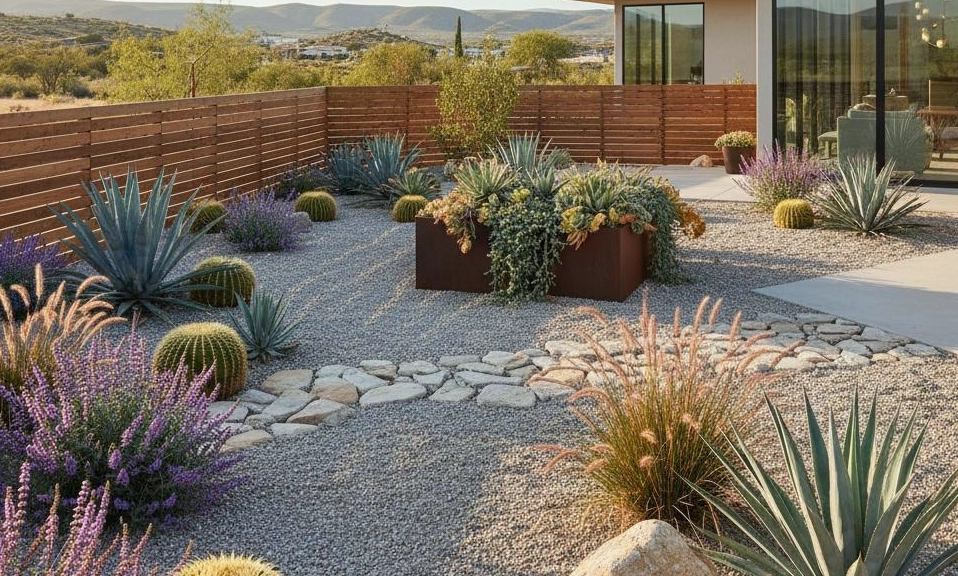
Silver foliage. Architectural shapes. Aromatic leaves that release scent when you brush past. Flowers absolutely humming with bees. Drought-tolerant gardens aren’t a compromise — they’re an upgrade. They’re the gardens that look better in a heatwave, not worse.
If you want a garden that thrives on neglect, survives your holidays, and slashes your water use, here are 15 drought-tolerant plants to build it around.
💧 First, the Biggest Myth: “Drought-Tolerant” Doesn’t Mean “Never Water”
This trips up more beginners than anything else, so let’s clear it up before you buy a single plant.
Every plant needs regular water to establish. When you first plant something, its roots are confined to the small rootball it came in. It physically cannot reach moisture in the surrounding soil yet. For the first growing season — sometimes two for shrubs — you need to water it through dry spells.
What “drought-tolerant” actually means is: once established, this plant can survive and look good on rainfall alone, or with only occasional deep watering.
So the deal is: water generously in year one, then largely walk away. That’s a genuinely excellent trade.
🌿 The Silver & Aromatic Mediterraneans
Notice a theme here: silver, grey, and fuzzy leaves. That’s not a coincidence. Those hairs and waxy coatings are evolved sun protection — they reflect light and trap moisture. Silver foliage is basically a drought-tolerance badge.
1. Lavender (Lavandula)
The vibe: The fragrant, bee-magnet cornerstone of every dry garden. Why it works: Native to rocky Mediterranean hillsides, lavender actively resents rich soil and regular watering. It wants poor drainage, full baking sun, and to be left alone. Care: Full sun, sharp drainage, no fertiliser. Prune after flowering to keep it from going woody and leggy. Hardiness note: English lavender (L. angustifolia) handles cold far better than French or Spanish types. Choose accordingly.
2. Rosemary (Salvia rosmarinus)
The vibe: The evergreen, edible workhorse. Why it works: Leathery, needle-like leaves lose almost no moisture. A mature rosemary shrub can sail through months without irrigation, and you get a kitchen herb for life. Care: Full sun, well-drained soil. Genuinely thrives on neglect. Avoid heavy, wet clay. Bonus: The blue flowers in early spring are a lifeline for hungry emerging bees.
3. Santolina (Cotton Lavender)
The vibe: The clipped, silvery-white ball that looks impossibly neat. Why it works: Fine, densely hairy foliage that reflects heat brilliantly. It’s the plant behind those crisp silver spheres you see in gravel gardens. Care: Full sun, poor soil, minimal water. Clip once or twice a year to keep the shape tight. Pro tip: Plant it against dark green foliage or a brick wall — the contrast is startling.
4. Rock Rose (Cistus)
The vibe: The papery, crinkled-petal shrub that blooms its heart out then rests. Why it works: Built for Mediterranean scrubland. Each flower lasts only a day, but the plant produces so many in early summer that it looks like a flowering snowdrift. Care: Full sun, sharp drainage, no feeding. Do not prune hard into old wood — it won’t regrow. Note: Individual flowers are fleeting. That’s normal, not a sign you’ve done something wrong.
🌸 The Flowering Perennials (Colour Without the Thirst)
5. Russian Sage (Salvia yangii, formerly Perovskia)
The vibe: A hazy lavender-blue cloud floating above silver stems. Why it works: Deep roots and aromatic silver foliage. It blooms for months in the hottest, driest part of summer and looks better for it. Care: Full sun, excellent drainage. Cut back hard in early spring. Pro tip: Give it room and plant it where evening light hits it — backlit Russian sage is one of the great sights in a garden.
6. Catmint (Nepeta)
The vibe: The soft, billowing, idiot-proof edging plant. Why it works: One of the toughest flowering perennials in existence. Drought-tolerant, cold-hardy, and blooms from late spring into autumn if you shear it back mid-season. Care: Full sun to light shade, average to poor soil. Cut back by half after the first flush for a second showing. Honest warning: Cats may roll in it. Consider this a feature or a hazard depending on your household.
7. Yarrow (Achillea)
The vibe: Flat-topped, sun-faded plates of colour — mustard, terracotta, dusty pink. Why it works: Feathery, aromatic foliage and deep roots. Yarrows are prairie and meadow plants; dry summers are their natural habitat. Care: Full sun, well-drained soil. Avoid rich compost — it makes them floppy and short-lived. Bonus: Excellent cut flowers, and the dried seedheads look great into winter.
8. Coneflower (Echinacea)
The vibe: The cheerful, daisy-shaped prairie native that keeps going. Why it works: Deep taproots let it access moisture well below the surface. Established clumps handle serious dry spells. Care: Full sun, average soil. Leave seedheads standing — goldfinches love them. Note: Newer, highly bred double varieties are often less tough than the plain purple E. purpurea. Start with the classic.
9. Blanket Flower (Gaillardia)
The vibe: Sunset in plant form — red, orange, and yellow rings. Why it works: A short-lived but relentlessly flowering prairie plant that blooms hardest in heat and drought. Care: Full sun, sharp drainage, minimal water. Deadhead to extend flowering. Note: It’s not long-lived, but it self-seeds readily. Let a few seedlings establish and you’ll never be without it.
10. Globe Thistle (Echinops)
The vibe: Architectural, metallic-blue spheres on upright stems. Why it works: Taprooted, thistle-family toughness. It looks structural and slightly wild, and bees treat it like a nightclub. Care: Full sun, poor to average soil. Very drought-tolerant once established. Pro tip: Cut the spheres before they fully open for dried arrangements that last for years.
🌵 The Succulents & Structural Statements
11. Sedum / Stonecrop (Hylotelephium, Sedum)
The vibe: The fleshy-leaved succulent that saves autumn. Why it works: It literally stores water in its leaves. ‘Autumn Joy’ and its relatives are almost impossible to kill through drought. Care: Full sun, well-drained soil. Ignore it entirely. Divide every few years if the clump flops. Bonus: Late flowers are one of the most important nectar sources for bees and butterflies before winter.
12. Agave
The vibe: Bold, sculptural, unapologetically dramatic. Why it works: The ultimate water-storing plant. A well-placed agave turns a gravel bed into something that looks designed rather than planted. Care: Full sun, extremely sharp drainage, almost no water once established. Two warnings: The leaf tips are genuinely sharp — don’t plant beside paths or where children play. And check hardiness carefully; many agaves need winter protection in cold, wet climates.
13. Aloe
The vibe: The functional succulent that doubles as a first-aid kit. Why it works: Same water-storing strategy as agave, but softer and more forgiving in containers. Care: Full sun to bright light, free-draining compost, water deeply but rarely. Note: Most aloes are frost-tender. In cool climates, grow them in pots and move them under cover for winter.
🌾 The Grasses & Groundcovers
14. Ornamental Grasses (Mexican Feather Grass, Blue Fescue)
The vibe: Movement, light, and sound — the things flowers can’t give you. Why it works: Grasses are the great survivors. Narrow leaves lose little moisture, and they look their best backlit by low sun with a breeze running through them. Care: Full sun, well-drained soil. Comb out dead foliage in late winter rather than cutting hard. Design tip: Grasses are the connective tissue of a dry garden. Repeat the same grass through a border and the whole thing suddenly looks intentional. Check locally: Stipa tenuissima self-seeds enthusiastically and is invasive in some regions. Blue fescue (Festuca glauca) is a well-behaved alternative.
15. Creeping Thyme (Thymus species)
The vibe: The fragrant, flowering carpet that replaces lawn. Why it works: A low mat of tiny aromatic leaves that thrives in baking heat, poor soil, and foot traffic. It flowers into a haze of pink or purple in early summer. Care: Full sun, sharp drainage. Tolerates light walking — perfect between paving stones or spilling over a wall. Pro tip: Plant it where you’ll brush against it. Scent released by footsteps is one of gardening’s small, perfect pleasures.
📋 Quick-Reference Cheat Sheet
Plant | Type | Best Use | Water Once Established |
|---|---|---|---|
Lavender | Sub-shrub | Edging, scent, bees | Very low |
Rosemary | Evergreen shrub | Structure, cooking | Very low |
Santolina | Sub-shrub | Clipped silver shapes | Very low |
Rock Rose | Shrub | Sunny banks, walls | Very low |
Russian Sage | Perennial | Height, hazy colour | Very low |
Catmint | Perennial | Soft edging | Low |
Yarrow | Perennial | Cut flowers, colour | Low |
Coneflower | Perennial | Prairie planting | Low–moderate |
Blanket Flower | Short-lived perennial | Hot, dry spots | Very low |
Globe Thistle | Perennial | Architecture | Very low |
Sedum | Succulent | Autumn interest | Very low |
Agave | Succulent | Focal point | Extremely low |
Aloe | Succulent | Containers | Extremely low |
Ornamental grasses | Grass | Movement, texture | Low |
Creeping thyme | Groundcover | Lawns, paving, walls | Very low |
🛠️ 6 Rules That Matter More Than Plant Choice
You can buy every plant on this list and still fail if you ignore these.
1. Drainage is more important than drought tolerance. Most of these plants don’t die from lack of water — they die from wet roots in winter. Mediterranean plants in heavy, waterlogged clay will rot long before drought gets them. If your soil is heavy, plant into raised beds, mounds, or gravel-enriched soil.
2. Stop improving the soil. This feels wrong, but it’s crucial. Rich compost and fertiliser produce soft, sappy, floppy growth on plants evolved for贫 poor ground. Yarrow falls over. Lavender goes leggy. Poor soil is the correct soil. Skip the manure.
3. Water deeply and rarely, not little and often. Frequent shallow watering trains roots to stay near the surface, where they’re most vulnerable. A rare, thorough soak drives roots downward and builds genuine resilience. This single change makes plants dramatically tougher.
4. Mulch with gravel, not bark — for these plants. Organic mulch holds moisture against the crown and encourages rot on silver-leaved Mediterraneans. A 5cm layer of horticultural grit or gravel reflects light, keeps crowns dry, and looks right. Save bark mulch for woodland plants.
5. Practise “hydrozoning.” Group plants by water need. Don’t put a thirsty hydrangea in the same bed as lavender — you’ll either drown one or parch the other. Keep all your low-water plants together on one irrigation zone (or none at all).
6. Give them full sun. Actually full sun. “Sun-loving” is not a suggestion. Six-plus hours of direct light, minimum. In shade, these plants become leggy, flower poorly, and rot more easily. There is no drought-tolerant plant that fixes a genuinely dark corner.
🚫 4 Mistakes That Kill Drought-Tolerant Gardens
Killing them with kindness. The number one cause of death. You water because you feel guilty, and the plant rots. Neglect is the correct care strategy here. Genuinely.
Planting in autumn in cold, wet climates. Mediterranean plants planted in autumn sit in cold, wet soil all winter with unestablished roots. In cool, damp regions, plant in spring so they get a full growing season to establish before winter.
Buying tiny plugs and expecting instant results. Small plants establish well but take time. Conversely, very large specimens often struggle to establish because their root systems can’t support the top growth. Mid-sized plants in modest pots usually establish best.
Forgetting the establishment year. People read “drought-tolerant,” plant it, never water it, and watch it die in July. Then they conclude the plant was a lie. Year one needs water. Year two onwards, largely doesn’t.
🐝 The Bonus Nobody Mentions
Here’s the lovely side effect: water-wise gardens are usually pollinator magnets.
Lavender, catmint, Russian sage, sedum, coneflower, globe thistle, yarrow, thyme — this list reads like a pollinator garden roster. Many drought-adapted plants produce concentrated nectar and long flowering seasons, and they’re blooming precisely when thirsty insects need them most.
So you’re not just saving water. You’re building habitat, cutting your maintenance hours, and creating something that hums with life all summer.
Work With Your Climate, Not Against It
The most sustainable garden isn’t the one you fight hardest for. It’s the one that’s suited to where you actually live.
For too long, gardening has been about forcing thirsty plants to survive in dry places, with hosepipes and sheer stubbornness. Water-wise gardening flips that entirely: choose plants that want your conditions, give them what they need to establish, and then get out of the way.
The result is a garden that looks better in a heatwave, costs less to run, survives your holidays, feeds the bees, and asks almost nothing of you.
Start with three plants. A lavender, a sedum, and a clump of something grassy. Give them sun, grit, and a first-year drink. Then watch what happens when you stop fighting your climate and start gardening with it.