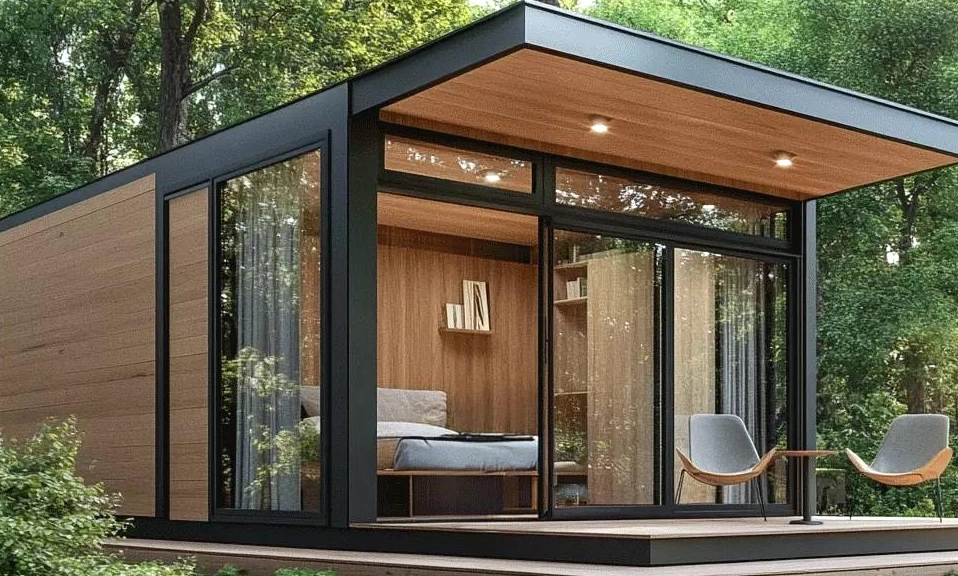
The average American home is now over 2,300 square feet. The average tiny home is under 400. And yet, a growing number of people are voluntarily trading space for something they value more: freedom, financial breathing room, and a life that isn’t defined by a mortgage.
The tiny home movement isn’t new. It’s been building for two decades, fueled by rising housing costs, a desire for sustainability, and the minimalist ethos popularized by Marie Kondo and the van-life boom. But in 2026, it has crossed from niche curiosity to mainstream conversation. TikTok is flooded with tours of 200-square-foot cabins. YouTube channels dedicated to tiny living have millions of subscribers. And with housing affordability at its worst in a generation, a growing number of people are asking the question that was once unthinkable: do I really need all this space?
The answer, for a surprising number of people, is no. But the tiny home life isn’t for everyone. Here’s what the movement actually offers—and what it demands in return.
The Appeal: Why People Are Downsizing
1. Financial Freedom
The most obvious draw is cost. A typical tiny home on wheels can cost anywhere from $30,000 to $100,000—a fraction of the median home price in most American cities. For people who are tired of spending half their income on rent or a mortgage, a tiny home offers a path to debt-free living. Many tiny home dwellers own their homes outright, freeing up money for travel, savings, or early retirement.
2. Environmental Impact
A smaller home uses less energy for heating, cooling, and lighting. It requires fewer materials to build. It occupies less land. A 2026 study found that tiny homes can reduce a person’s carbon footprint by up to 45% compared to a conventional home, largely due to reduced energy consumption and lower embodied carbon in construction.
3. Simplicity and Intentionality
Tiny living forces you to confront your possessions. There is no room for the “maybe I’ll need this someday” pile. Everything must earn its place. For many people, this is not a deprivation but a liberation—a way to live more deliberately, with less clutter and more focus on what matters.
4. Mobility and Flexibility
A tiny home on wheels can be moved. That means you can follow job opportunities, travel the country, or live closer to family without the hassle of buying and selling a house. For remote workers and retirees, this flexibility is a major draw.
5. Community
Counterintuitively, tiny homes often foster more social connection, not less. Tiny home communities—where homes are clustered around shared outdoor spaces—encourage neighbours to spend time together. The smaller the home, the more life happens outside it.
The Reality: What Tiny Living Actually Demands
The tiny home dream is real, but it comes with trade-offs that the glossy YouTube tours rarely show.
1. Zoning and Legal Barriers
The biggest obstacle is often the law. Many municipalities have minimum square footage requirements for homes, typically around 400 to 600 square feet. Tiny homes on wheels are often classified as RVs or trailers, which means they can only be parked in certain places, for limited durations. Finding a legal place to park your tiny home can be a nightmare.
Some states and cities are changing their rules. In 2026, several jurisdictions have introduced tiny home-friendly zoning and pilot programs. But progress is slow, and the patchwork of regulations remains one of the movement’s biggest frustrations.
2. Financing Challenges
Getting a mortgage for a tiny home is difficult. Most lenders won’t finance a home that doesn’t meet minimum size requirements or isn’t permanently affixed to a foundation. Tiny home buyers often rely on personal loans, savings, or RV loans—all of which come with higher interest rates and shorter terms.
3. Space Constraints (Obviously)
Living in 200 square feet is not for everyone. There’s no room for a guest bedroom, a home office, or a full-sized kitchen. Storage is limited. Privacy is scarce. Couples who move into a tiny home together often discover that they need to negotiate every square inch of their shared space—and some discover they can’t.
4. Resale Value and Appreciation
A conventional home is an investment. A tiny home is often not. Tiny homes depreciate like vehicles, especially if they’re on wheels. They can be difficult to sell, and their resale value depends heavily on finding a buyer who wants exactly what you built.
5. The “Stuff” Problem
Even after downsizing, stuff accumulates. A tiny home requires constant vigilance against clutter. There is no garage, no basement, no attic. Every purchase must be weighed against the space it will occupy. For some, this is a welcome discipline. For others, it’s exhausting.
6. Utilities and Infrastructure
Connecting a tiny home to water, electricity, and sewage is not always straightforward. Off-grid systems—solar panels, composting toilets, rainwater collection—can be expensive and require maintenance. Hooking up to municipal utilities may not be possible depending on where you park.
Who Is Tiny Living For?
Tiny homes are not a universal solution. They work best for:
Singles and couples who don’t need extra bedrooms
Remote workers who can live anywhere
Retirees looking to downsize and simplify
People who prioritize experiences over possessions
Those with a clear plan for parking, utilities, and long-term goals
They work less well for:
Families with children (space and privacy become significant challenges)
People who work from home and need a dedicated office
Those who entertain frequently
People who value resale value and long-term investment
Anyone who isn’t prepared for the legal and financial hurdles
The Future: A Niche or a Movement?
The tiny home movement has grown from a fringe curiosity to a genuine alternative housing model. But it faces structural barriers that won’t be resolved overnight. Zoning laws, financing systems, and building codes were designed for a different kind of housing—and changing them takes time.
What’s clear is that the conversation has shifted. The question is no longer “why would anyone live in a tiny home?” It’s “why wouldn’t they?” The answer, for a growing number of people, is that they would—if the systems allowed it. The tiny home movement is not just about living small. It’s about questioning the assumption that bigger is always better.
Less House, More Life?
Tiny homes are not a panacea. They are not for everyone. They are not a simple solution to the housing crisis, and they are not without significant challenges.
But for the right person, at the right time, they can be a transformative choice. A tiny home can mean financial freedom. It can mean less time cleaning and more time living. It can mean a smaller footprint and a larger sense of purpose. It can mean trading square footage for the things that actually matter.
The tiny home movement asks a question that is worth asking, regardless of where you live: how much space do you really need to be happy? The answer is different for everyone. But the fact that more people are asking it—and finding that the answer is smaller than they expected—is a sign that the conversation about housing is changing.
Maybe living in less really does mean living better. Maybe not. But it’s a question worth exploring.