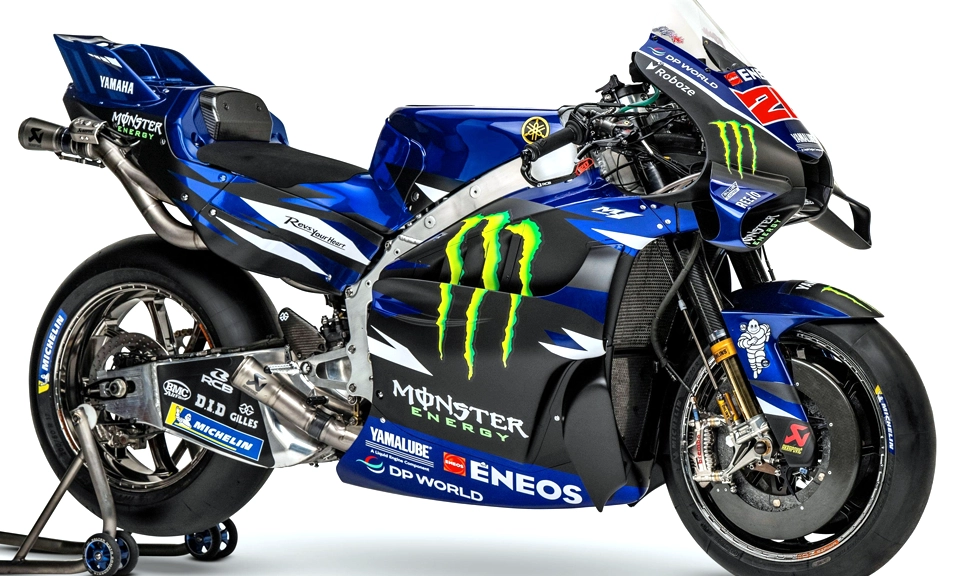
Yamaha’s withdrawal from the Qatar Grand Prix was not a sporting decision. It was a corporate one—and it has exposed a deep fracture between the teams, the riders, and the championship organisers that has been building for months.
On November 1, 2026, Yamaha announced that it would not travel to Lusail for the Qatar MotoGP round, citing “company-wide travel restrictions” linked to the ongoing conflict in the Middle East. The decision removes four riders from the grid—Fabio Quartararo, Alex Rins, Jack Miller, and Augusto Fernandez—and affects both the factory Yamaha team and its satellite partner, Pramac. It is the most dramatic escalation yet in a standoff that has been simmering since the race was postponed from its original April slot to November because of the conflict.
But the official explanation only scratches the surface. Behind Yamaha’s withdrawal lies a story of rider revolts, contractual threats, and a championship pushing ahead with an event that a significant portion of its competitors believe should not be happening.
The Official Reason: Corporate Policy, Not Sport
Yamaha’s statement was carefully worded. The manufacturer said it had “not identified sufficient grounds to change its existing company-wide travel restrictions” following its latest assessment of the situation in the Middle East. Crucially, it stressed that the decision was “independent of the measures implemented by MotoGP Group and the event organizer”.
In other words, Yamaha was not rejecting MotoGP’s safety assurances. It was following its own internal rules. Japanese companies have a longstanding policy of not sending employees to conflict zones, and the Japanese government’s advice has been to “refrain from non-essential travel” to Qatar. For Yamaha, a Japanese manufacturer with a global corporate footprint, the risk calculus was straightforward: no amount of sporting consequence was worth overriding a company-wide policy designed to protect its staff.
The decision was met with disappointment from MotoGP, which argued that it did not “reflect the extensive assurances provided to all championship stakeholders”. The championship said it had consulted with Qatari authorities, the Lusail International Circuit, and independent security advisers, and had found “no reason to change plans for the event”. It warned that Yamaha’s withdrawal carried “contractual implications,” with any sporting consequences to be handled by the FIM.
The Riders’ Revolt: 19 Out of 22 Said No
Yamaha’s withdrawal did not happen in a vacuum. It came at the end of a weekend of extraordinary tension in Sepang, where the Malaysian Grand Prix was overshadowed by meetings, threats, and a growing rebellion among the riders.
Multiple reports confirmed that 19 of the 22 riders on the grid signed a letter to MotoGP’s sporting and entertainment group (MGPSEG) demanding that the championship either assume full responsibility for any safety failures in Qatar or cancel the race. The letter was a final play after weeks of private meetings and mounting frustration. Jack Miller, the Pramac Yamaha rider who was one of the most outspoken critics, did not hold back. “I don’t want to go,” he said. “There are 19 of us who don’t want to go there. I don’t think we should be racing like that. We’ve made our opinion very clear on that”.
Miller’s concerns were specific and chilling. He pointed out that MotoGP’s location and schedule are no secret. “We are not hiding our location or the time of day we will be at said location,” he said. “If anyone does want to make an example, do whatever they [want to] do”. The riders were wary of an escalation in the conflict while the paddock was in Qatar. Even without a direct attack, they feared being trapped in Doha if airspace in the region was closed—a scenario that would jeopardise not just the Qatar round, but the final two races of the season in Portugal and Valencia.
The riders had demanded written guarantees on evacuation plans, insurance coverage for airspace closure, and repatriation costs in an extreme scenario. They set a deadline of 4 p.m. on the Sunday of the Malaysian Grand Prix for MGPSEG to accept full responsibility. That deadline passed without a resolution.
MotoGP’s Response: Contracts, Consequences, and a Financial Trap
MotoGP’s response to the riders’ letter was firm, and the subtext was financial. The championship warned that any rider who missed Qatar could face financial and sporting penalties, including race bans. It emphasised that teams and riders were contractually obligated to participate, and that non-attendance would have negative consequences for the championship, the FIM, promoters, broadcasters, sponsors, and fans.
But the organisers were caught in a trap of their own making. Without a government ban on travel to Qatar or a cancellation by the race organisers, MotoGP could not call the race off without taking a significant financial hit. The race had already been postponed once, and cancelling it entirely would have meant absorbing losses that the championship was not prepared to accept. The result was a standoff: the riders did not want to go, the organisers could not afford to cancel, and the only way out was to push ahead and hope that the safety assurances held.
MotoGP also had to contend with the optics. Most global sporting events had steered clear of the Middle East for much of 2026. MotoGP would be the first major event to be held in the region for some time, ahead of Formula 1’s arrival at the end of November. Cancelling would have been a significant statement. Proceeding, even without Yamaha, was a way of asserting that the championship was in control.
What It Means for the Championship
Yamaha’s absence has immediate and long-term implications for the 2026 title fight.
On the sporting side, the withdrawal removes four riders from the grid, including Quartararo and Miller, two of the most experienced and outspoken figures in the paddock. It also creates a precedent. If Yamaha can withdraw on corporate policy grounds without immediate sanction, other manufacturers or teams facing similar pressures could follow suit in future rounds or future seasons. The FIM’s response will be closely watched, because whatever penalty—or lack thereof—is applied will shape how much autonomy teams have to make their own safety decisions.
For Marc Márquez, the championship leader, Yamaha’s absence changes nothing about his own approach. He planned to arrive in Qatar as late as Thursday, one day before practice, a signal that he was preparing to compete but not necessarily endorsing every safety measure. With a 44-point lead over Jorge Martín and a first mathematical chance to clinch the title, Márquez had every incentive to race. But the controversy around him only deepened the sense that the Qatar Grand Prix was proceeding under a cloud.
And for the championship itself, the Yamaha withdrawal is a warning. The riders’ letter, the threats of sanctions, and the public frustration of figures like Miller have exposed a governance problem that will not disappear when the paddock leaves Lusail. The relationship between MotoGP, its manufacturers, and its riders is built on trust. That trust has been strained before, but rarely so publicly, and rarely over something as fundamental as whether it is safe to go racing at all.
Yamaha withdrew from
Qatar because its corporate travel policy would not allow its employees to travel to a region affected by conflict. That is a defensible decision for a global manufacturer, and it is one that MotoGP’s contractual threats cannot easily override. But the deeper story is one of a championship that pushed ahead with an event that 19 of its 22 riders did not want to attend, and a paddock that is increasingly willing to say so in public.
The Qatar Grand Prix will go ahead without Yamaha. The title may be decided. But the questions raised this weekend—about safety, about contracts, and about who ultimately has the power to decide when and where MotoGP races—will not be settled by a single race. They will shape the sport long after the chequered flag falls at Lusail.