We often joke about human “helicopter parents” who hover over their kids, micromanage their lives, and fiercely defend them on the soccer field.
But if you think human parents are intense, you haven’t met the animal kingdom.
In the wild, the stakes aren’t about getting into a good college or winning a trophy; the stakes are literal life and death. Evolution has armed some species with mind-blowing, extreme, and sometimes tragic strategies to ensure their offspring survive. From fathers who endure freezing starvation to mothers who turn their own bodies into living bunkers, nature’s parents are the ultimate bodyguards.
Here are the 10 most fiercely protective parents in the animal kingdom, and the extraordinary lengths they go to for their young.
🐘 1. The African Elephant: The Matriarchal Bodyguard
The Superpower: Allomothering and collective defense.
The Vibe: An impenetrable, highly organized fortress of love.
The Vibe: An impenetrable, highly organized fortress of love.
Elephant mothers don’t raise their calves alone; they raise them with an entire village. Led by the oldest, wisest female (the matriarch), elephant herds practice “allomothering,” where aunts, sisters, and older cousins all take turns babysitting, nursing, and protecting the young. If a predator like a lion or hyena approaches, the adults instantly form a tight, defensive circle around the babies, facing outward with their trunks and tusks ready to strike. They will fiercely chase down threats, and they have even been known to mourn and protect the calves of other herds.
🦧 2. The Orangutan: The Marathon Mom
The Superpower: The longest childhood in the animal kingdom.
The Vibe: Patient, deeply bonded, and fiercely independent.
The Vibe: Patient, deeply bonded, and fiercely independent.
Orangutan mothers are the ultimate dedicated single parents. Because the rainforest canopy is so complex and dangerous, an orangutan mother will stay with her offspring for up to eight or nine years—the longest dependency period of any non-human animal. She teaches her baby everything: which fruits are safe to eat, how to build a new sleeping nest every single night, and how to navigate the treetops. She will aggressively fight off predators (and even aggressive male orangutans) to protect her child, and they share a bond so deep that they often stay in overlapping territories even after the juvenile becomes independent.
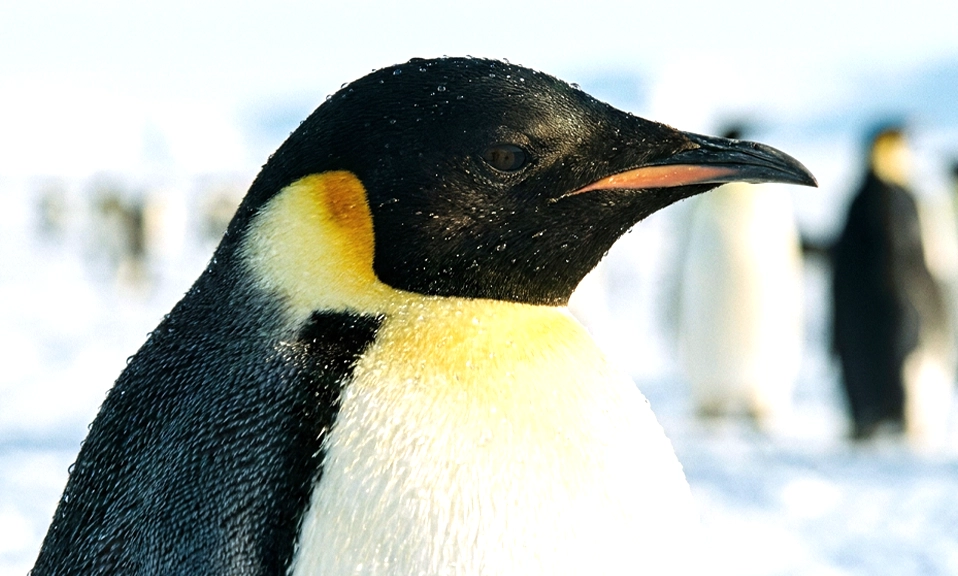
🐧 3. The Emperor Penguin: The Ultimate Dad Dedication
The Superpower: Enduring the harshest winter on Earth.
The Vibe: Stoic, self-sacrificing, and deeply committed.
The Vibe: Stoic, self-sacrificing, and deeply committed.
Forget the “absent father” stereotype; Emperor Penguin dads are the gold standard of paternal sacrifice. After the mother lays a single egg, she immediately leaves to hunt at sea for two months. The father takes the egg, balances it precariously on his feet, and covers it with a warm brood pouch. For 65 to 75 days, he stands in the freezing, pitch-black Antarctic winter, enduring winds up to 120 mph and temperatures dropping to -40°F. He doesn’t eat a single bite. To survive, the fathers huddle together in massive, rotating groups to share body heat, all to keep that one precious egg alive until mom returns.
🐙 4. The Octopus: The Tragic, Ultimate Sacrifice
The Superpower: Starving to death to guard the nest.
The Vibe: Devoted to the point of self-destruction.
The Vibe: Devoted to the point of self-destruction.
This is perhaps the most heartbreaking example of parental love in nature. When a female octopus lays her tens of thousands of eggs in a hidden den, she stops eating entirely. For months (sometimes up to 4 years for deep-sea species), she guards the eggs, gently blowing oxygenated water over them to prevent fungus and cleaning them with her tentacles. She will aggressively fend off any predator that comes near. By the time the eggs hatch, the mother is literally skin and bones. She has starved herself to death to ensure her babies have the best possible start in life.
🐊 5. The Saltwater Crocodile: Fierce Guardian, Gentle Transport
The Superpower: A terrifying bite paired with surprising tenderness.
The Vibe: “I will kill anything that looks at you wrong, but I will carry you gently.”
The Vibe: “I will kill anything that looks at you wrong, but I will carry you gently.”
Despite their reputation as mindless, aggressive killing machines, crocodile mothers are incredibly attentive. A mother crocodile builds a nest of vegetation and guards it fiercely for months, chasing away monitor lizards, wild pigs, and humans. When the babies hatch, they make a specific grunting sound from inside the eggs. The mother carefully digs them up, and then does something astonishing: she picks them up in her massive, bone-crushing jaws and carries them to the water with such delicate precision that she doesn’t harm a single one. She will continue to guard and protect her hatchlings for up to two years.
🐻 6. The Grizzly Bear: The “Do Not Mess With Me” Mom
The Superpower: Unmatched aggressive defense.
The Vibe: A walking, roaring force of nature.
The Vibe: A walking, roaring force of nature.
There is a reason park rangers have one golden rule in bear country: Never get between a mother bear and her cubs. A grizzly sow is a loving, playful, and patient teacher to her cubs, showing them how to forage, fish, and dig. But if she perceives a threat—whether it’s a wolf, a rival bear, or a hiker who stumbled too close—her demeanor flips instantly. She will charge, bluff, or attack with terrifying speed and power. Her sole objective is to eliminate the threat to her babies, making her one of the most formidable and respected protectors in the wild.
🐴 7. The Seahorse: The Ultimate Single Dad
The Superpower: Male pregnancy and incubation.
The Vibe: The ultimate hands-on (or hands-in-pouch) father.
The Vibe: The ultimate hands-on (or hands-in-pouch) father.
In the seahorse world, the females do the courting, but the males do the heavy lifting of parenting. The female deposits her eggs into a specialized brood pouch on the male’s abdomen. The male then fertilizes the eggs and “gets pregnant.” For weeks, he regulates the salt and oxygen levels inside his pouch to perfectly mimic the surrounding water, ensuring the embryos develop safely. He protects them from the inside out, and when they are fully formed, he goes into labor, expelling hundreds of fully independent, tiny baby seahorses into the ocean.
🐟 8. The Mouthbrooding Cichlid: The Living Safe Space
The Superpower: Turning their own mouth into a nursery.
The Vibe: Extreme, literal “helicopter” parenting.
The Vibe: Extreme, literal “helicopter” parenting.
Certain species of cichlid fish (both male and female, depending on the species) practice “mouthbrooding.” After the eggs are fertilized, the parent scoops them up and holds them inside their mouth. For weeks, the parent will not eat a single bite of food to avoid accidentally swallowing the eggs. Even after the eggs hatch into fry, the babies will swim in and out of the parent’s mouth, darting back inside at the first sign of danger. The parent’s mouth is the ultimate, inescapable panic room.
🐸 9. The Poison Dart Frog: The Ultimate Uber Driver
The Superpower: Taxi service for tadpoles.
The Vibe: Tiny, colorful, and incredibly hands-on.
The Vibe: Tiny, colorful, and incredibly hands-on.
These tiny, brilliantly colored frogs are tiny but mighty parents. After the female lays eggs on a leaf, the male guards them, keeping them moist. Once the eggs hatch into tadpoles, the real work begins. The mother (or sometimes the father, depending on the species) will allow the tadpoles to wriggle onto their back. The parent then embarks on a perilous climb high up into the rainforest canopy, searching for tiny, water-filled pools in the axils of bromeliad plants. They deposit one tadpole per pool to prevent cannibalism, and the mother will even return periodically to lay unfertilized “feeder eggs” for the tadpole to eat.
🐋 10. The Orca (Killer Whale): The Matriarchal Masterminds
The Superpower: Grandmotherly wisdom and lifelong protection.
The Vibe: Highly intelligent, strategic, and deeply loyal.
The Vibe: Highly intelligent, strategic, and deeply loyal.
Orca pods are led by older, post-menopausal females. Unlike most mammals, female orcas live for decades after they can no longer reproduce. Why? Because these “grandmothers” are the keepers of vital knowledge. They know where to find salmon during droughts, how to navigate treacherous waters, and how to hunt. They actively share this knowledge with their children and grandchildren. If a calf is in danger, the entire matrilineal pod will mobilize to defend it, using coordinated, strategic maneuvers to ward off sharks or rival pods.
Love is an Evolutionary Superpower
When we look at these animals, it’s easy to project human emotions onto them. But whether it’s driven by deep emotional bonds or hardwired evolutionary instincts, the result is the same: an awe-inspiring display of sacrifice, patience, and fierce defense.
From the freezing Antarctic ice to the depths of the ocean, the drive to protect the next generation is one of the most powerful, unifying forces in the natural world. It reminds us that parenting, in all its exhausting, terrifying, and beautiful forms, is a truly universal experience.