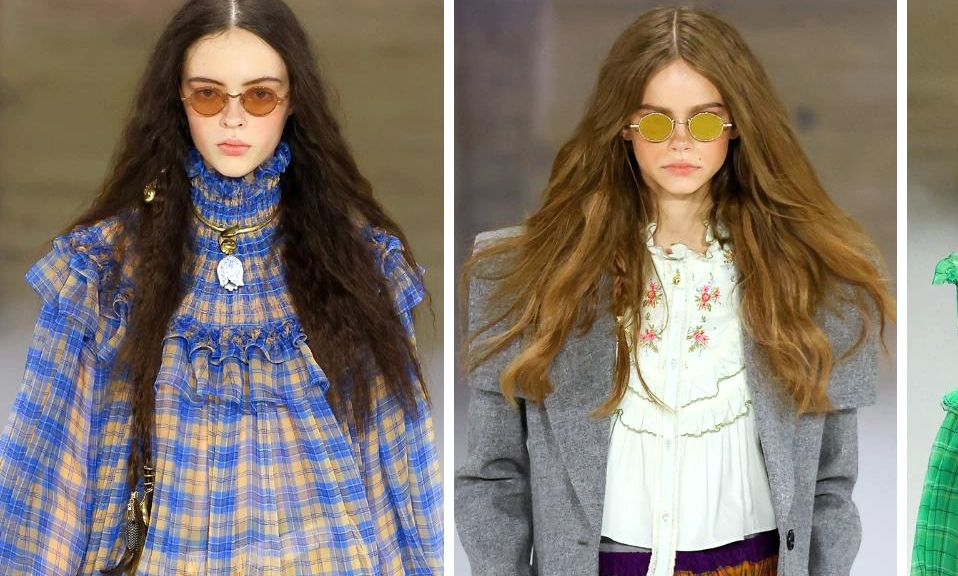
Plaid is no longer just for lumberjacks, school uniforms, or the grunge revival. In 2026, fashion designers have taken the heritage pattern and turned it on its head—and the results are anything but predictable.
For decades, plaid has been boxed into a handful of familiar roles: the preppy button-down, the punk-era flannel, the holiday-season tartan. But across the Spring/Summer and Fall/Winter 2026 runways, something shifted. Designers from Chloé and Acne Studios to Dries Van Noten and Burberry began treating plaid not as a nostalgic reference, but as a raw material for reinvention. The pattern was stretched, sliced, clashed, and elevated into something that feels genuinely new.
The result is a season where the old rules no longer apply. You can forget about “match your plaids” or “keep it classic.” The most exciting plaid looks of 2026 are the ones that break every convention—and somehow make it work.
Here are seven ways designers and street-style stars are rewriting the plaid playbook this year.
1. The “Deliberately Undone” Contrast
The first rule of 2026 plaid is that it should look like you almost didn’t try—even when you absolutely did. The CBC’s fall trend report describes the dominant styling mood as “polished and deliberately undone”. In practice, that means pairing something crisp and formal with something loose and casual.
The easiest version: a crisp plaid button-down tucked into tailored trousers, finished with leather mules for a put-together vibe. But the more interesting version flips the script. Take an oversized plaid shirt, leave it unbuttoned and slouchy, then cinch the waist by tying a cardigan around it. The result is neat and nonchalant at the same time—a balance that defines the season.
2. Play with Proportions, Not Just Patterns
If you want to make plaid feel less predictable, stop treating it as a pattern and start treating it as a shape. Vogue Arabia’s styling guide puts it simply: “The easiest way to make plaid less predictable is to play with its proportions”.
Think an oversized plaid bomber jacket paired with an asymmetrical plaid skirt, or a structured plaid jacket thrown over a fitted dress with an exaggerated hem. The idea is to let the silhouette do the work, rather than pairing plaid with equally classic pieces that cancel each other out. This is where the “rules” start to dissolve—a plaid jacket over a delicate dress isn’t a mismatch; it’s the whole point.
3. Plaid Tailoring That Means Business
Plaid has officially entered the boardroom—but not in the way you might expect. The new plaid suit is sharply cut and intentionally modern, not fusty or heritage-obsessed. A relaxed blazer paired with wide-leg plaid trousers instantly gives the pattern a refined edge, especially when the layers underneath are kept simple.
Elle’s spring trend report confirms the runway version: tailored plaid pants worn with structured blazers, and checked tops peeking out from underneath ladylike wool coats. The key is to treat plaid tailoring as a neutral—let the cut and the silhouette carry the outfit, and keep everything else minimal.
4. Clash with Confidence
This one is not for the faint-hearted, but when it works, it really works. The old rule said plaid should be paired with solids. The 2026 rule says: pair it with polka dots, stripes, or florals and see what happens.
The secret to making it look intentional rather than accidental is to give the clashing prints something to agree on—a shared color, a common tone, or a repeated accent. Keep everything else relatively simple, and let the prints have their moment. Designers have been doing this all season: Acne Studios clashed plaid across blazers, bodysuits, and trousers, while other collections mixed the classic print with floral patterns and embroidery.
5. Pair Plaid with Something That “Doesn’t Belong”
Texture is the quiet weapon of 2026 plaid styling. The trick is to take something traditional—a checked shirt, a plaid blazer—and pair it with a texture that feels like it comes from a completely different wardrobe.
Think a checked shirt with a sleek leather skirt. A plaid blazer with sheer lace. A tailored check offset by sequins or metallic accents. The contrast is what makes it work: juxtaposing plaid’s heritage appeal with something softer, sharper, or more glamorous keeps the look from feeling too predictable or too precious. This is rule-breaking at its most wearable—you’re not abandoning plaid’s character, you’re putting it in conversation with something unexpected.
6. Rework the Shirt Itself
The plaid shirt is the most democratic piece in fashion, but in 2026, wearing it straight off the hanger is just the starting point. Street-style stars and stylists are manipulating the fabric to reshape it entirely.
Tie the ends into a knot to create a whole new top. Tuck the hem under your bra for a cropped look. Wear it backwards with the collar facing up. Slip it off your shoulders and let it drape. Or go the classic route and tie it loosely around your waist as a layering piece over a simple outfit. The shirt becomes whatever you need it to be—a top, a layer, an accessory. The rule here is simple: if it looks like you just put it on and walked out the door, you haven’t played with it enough.
7. Take Plaid After Dark
Perhaps the most surprising rule-break of all: plaid is no longer confined to daylight or casual settings. The evening-ready plaid look is having a moment, and it’s far more elegant than it sounds.
A long tartan maxi skirt paired with a sleek black top and a minimalist bag transforms the pattern into something sophisticated and after-dark appropriate. Vogue Arabia suggests letting the fabric and the silhouette do the heavy lifting—think a plaid piece in a fluid, romantic fabric, or a tailored check elevated with an evening clutch and unexpected heels. The old association with daytime flannels and school uniforms fades away when the styling shifts toward fluidity, contrast, and a little bit of glamour.
Plaid in 2026 is not a nostalgia trip
. It is a pattern that has been deliberately pulled apart and put back together in ways that feel fresh, irreverent, and deeply wearable. The designers and street-style stars leading the charge aren’t interested in preserving plaid’s old rules—they’re interested in seeing what happens when you ignore them.
The through-line across all seven approaches is a willingness to treat plaid as a starting point, not a finished statement. Pair it with something that clashes. Change its shape. Wear it when you’re supposed to wear something else. And above all, don’t be afraid to look like you broke a rule on purpose—because in 2026, that’s exactly the point.