Tencent’s Hy4 is not the model that closes the gap with OpenAI and Anthropic. It’s the model that shows how quickly the gap is narrowing—and how much further China still has to go.
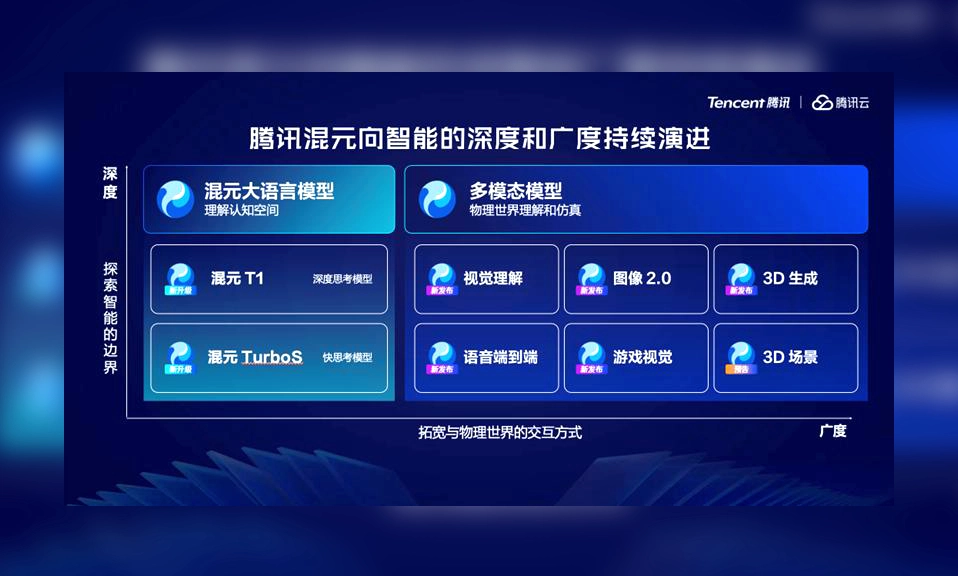
Released on November 4, 2026, Hy4 is Tencent’s first genuine entry into the top tier of open-weight AI models. It is a 770-billion-parameter Mixture-of-Experts system with 49 billion active parameters, a 1-million-token context window, and—for the first time in the Hunyuan series—vision capabilities and the ability to operate a computer. It is priced aggressively, positioned strategically, and benchmarked competitively.
But the benchmarks tell two stories at once. On some tasks, Hy4 beats GPT-6.1 Sol and Claude Opus 5.5. On others, it trails significantly. And on the broader question of whether China is closing the gap with America’s biggest AI labs, the answer is: yes in narrow domains, no in the places that matter most for frontier capability.
Here’s what Hy4 actually delivers, and what it reveals about the state of the AI race.
What Hy4 Is: A Capability Leap, With Caveats
Hy4 is the final release of a model that first appeared as a preview on August 28, 2026. The preview was text-only. The final version adds vision understanding—the ability to interpret charts, documents, and multi-image inputs—and Computer Use, allowing it to operate command-line tools and graphical interfaces to complete tasks.
Tencent trained the model specifically on professional software like Blender and CAD, and on long-horizon tasks spanning multiple applications. The company also emphasized its integration with WorkBuddy, its AI agent for office productivity, where Hy4 achieved an average quality score of 83.18 and a pass rate of 96.15% across 12 scenarios, ranking first in nine of them within the Chinese market.
In a blind evaluation with 213 finance professionals across 579 real-world tasks, Hy4 scored 3.04, ahead of DeepSeek-V4.1-Flash (2.97), Kimi K3.1 Pro (2.68), and GLM-5.3 (2.68). Tencent also claims its hallucination rate in search evaluations fell from 15.76% in the preview to 5.45% now.
On paper, this is a serious model. But the independent benchmarks complicate the picture.
The Benchmarks: Strong in Agentic Coding, Weak in Knowledge
The most authoritative independent evaluation comes from Artificial Analysis, which places Hy4 at 35 points on its overall Intelligence Index. That puts it second among Chinese models, behind Moonshot’s Kimi K3.1 Pro (46 points), and internationally at the level of Grok 4.7, just behind Claude Haiku 5.5 (36 points).
Where Hy4 shines is agentic coding. On FrontierCode 2.0, it scores 31%, nearly matching Claude Fable 5.1 (32%) and outperforming Kimi K3.1 Pro (25%). On OSWorld 2.1, a computer-use benchmark, it scores 78.9, behind Claude Opus 5.5 (81.8) and Kimi K3.1 Pro (79.6), but ahead of GPT-6.1 Sol (75.2). Tencent’s own figures claim Hy4 outperforms Claude Opus 5.5 in agentic coding and surpasses both GPT-6.1 Sol and Claude Opus 5.5 in agentic search and working agent tasks.
But the weaknesses are equally stark. On Terminal-Bench Science 0.1, Hy4 scores 19.8, compared with 60.9 for GPT-6.1 Sol—a gap of more than 40 percentage points. On the AA-Omniscience knowledge test, it answers 50% of questions correctly, just ahead of Kimi K3.1 Pro (49%), but it has a hallucination rate of 89%—meaning when it lacks knowledge, it often gives wrong answers instead of admitting uncertainty. On Terminal-Bench 4.0, it scores 37%, the fourth-best result among Chinese labs.
The pattern is consistent: Hy4 is competitive in the tasks Tencent trained it for—coding, computer use, office workflows—and significantly behind in the tasks that require broad, deep knowledge and scientific reasoning. Tencent itself acknowledged this: “There remains a considerable gap between it and leading closed-source models, particularly on our internally developed, high-difficulty benchmarks covering frontier mathematics, long-horizon software development, model iteration and visual question answering”.
The Broader Gap: Open Weights vs. Closed Frontiers
The question in the headline—is China closing the gap with America’s biggest AI companies? —requires a more nuanced answer than a single model can provide.
On one measure, the gap is narrowing. Kimi K3.1 Pro, Moonshot’s model, scores 46 points on Artificial Analysis, well above Hy4’s 35 and closer to the closed-source leaders. Chinese labs are releasing models at a rapid pace, often at lower costs and with open weights that developers can download and adapt. The open-weight ecosystem in China is vibrant, competitive, and improving quickly.
But a revamped ranking from Artificial Analysis suggests the gap may be wider than previously believed. Under the old system, the best open-weight models trailed the overall leader by just three points. Under the new system—which keeps many tests private to prevent “benchmark hacking”—that gap widened to 12 points. Among models with publicly released weights, the leaders scored just 32 points, compared with 58 for Anthropic’s Claude Opus 5.5.
“When benchmarks went private, the open-model gap went from 3 points to 12,” wrote Sridhar Ramaswamy, CEO of Snowflake. “Were open models catching up, or was the test leaking?”
The implication is uncomfortable for the open-weight narrative. When models are trained on the same public benchmarks they are evaluated on, they can appear more competitive than they are in the real world. When the tests are hidden, the gap reasserts itself.
The Strategic Context: Tencent’s Pivot, and Its Limits
Hy4 is not just a technical achievement. It is a strategic pivot.
Tencent was widely seen as lagging in the AI race. In late 2025, it hired Yao Shunyu, a former OpenAI researcher, as its chief AI scientist, reporting directly to president Martin Lau. Yao led the development of the Hy series, and Hy4 is the most significant result of that investment.
Like most Chinese labs, Tencent has pivoted from closed-source to open-weight models, using them to draw customers to its cloud services. Hy4’s weights will be released “shortly,” along with a system card, though the company has not specified a date. The preview version was released under Apache 2.0; the final version’s weights are still pending.
But there are signs of caution. Tencent said it excluded offensive training content such as vulnerability exploitation, reverse engineering, and penetration testing, to avoid strengthening the model’s potential for attacks. And the delayed weights—even temporarily—hint at a shift toward protecting the most capable models, rather than releasing them immediately.
The strategic logic is clear: Hy4 is a cloud and productivity play, not a bid for frontier supremacy. Tencent is competing on cost, integration, and accessibility—not on raw capability. That is a viable strategy. It is not the same as closing the gap.
Narrowing, Not Closing
Tencent’s Hy4 is a genuine achievement. It is a capable, affordable, open-weight model that performs well in agentic coding, computer use, and office workflows. It is priced at $0.834 per million input tokens and $2.501 per million output tokens, a fraction of what Anthropic charges for Claude Opus 5.5, with a 50% discount through the end of 2026. For developers in China and across Asia who need to automate desktop workflows, it is a serious default option.
But it is not the model that closes the gap with OpenAI and Anthropic. On scientific reasoning, broad knowledge, and frontier benchmarks, it trails significantly. The independent evidence suggests that the open-weight ecosystem—Chinese and otherwise—is competitive in coding and narrow agentic tasks, but still behind the closed-source frontier in the capabilities that define the next generation of AI.
China is closing the gap in some domains. It is not closing it in all of them. And the gap that remains is the one that matters most.