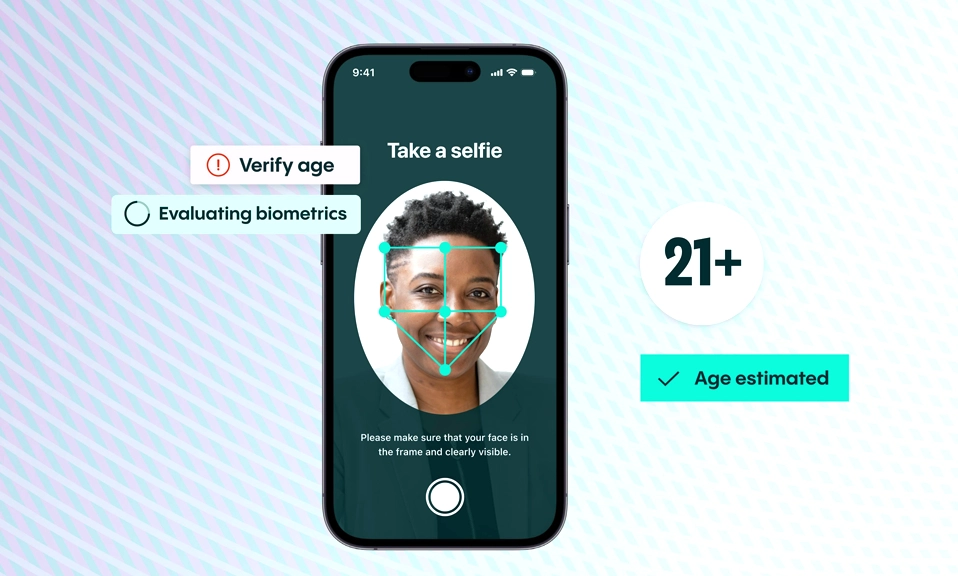
The age-verification era has arrived—not with a single federal law, but with a patchwork of state statutes and proposed regulations that are already reshaping how Americans interact with AI chatbots. The most immediate change comes from Oklahoma’s SB1521, which took effect on November 1, 2026, and New York’s chatbot safety law, signed by Governor Kathy Hochul on October 28, 2026, with an effective date of January 1, 2027. At the federal level, the GUARD Act remains the most sweeping proposal, though it has not yet become law.
Here is what these laws actually require, and why they could change the internet for everyone—not just minors.
The Laws: A Patchwork of Age Gates
The regulatory landscape is fragmented, but the direction is consistent: AI chatbots that can simulate human relationships must verify who they are talking to.
Oklahoma’s SB1521 requires operators of AI chatbots to mandatory age verification for user accounts and prohibits minors from accessing certain AI companions entirely. It also mandates that chatbots disclose their AI nature and prohibits them from posing as licensed professionals. Enforcement is handled by the Attorney General, with civil penalties up to $100,000 per violation.
New York’s law goes further in its specificity. It requires AI companies to conduct age checks and applies child-safety restrictions to anyone under 18. Crucially, it requires that one of the age-verification methods must not rely on a government-issued ID, and companies must erase information collected to establish a user’s age once verification is complete. The law bans chatbots from simulating friendships or romantic relationships with minors, from claiming to be human, and from encouraging minors to keep secrets from parents or avoid professional help. Fines reach $25,000 per violation.
The federal GUARD Act would go further still. It would ban AI companions for anyone under 18 with no parental override, and require “reasonable age verification” for any public-facing AI chatbot that produces certain expressive content. It explicitly outlaws weak methods like self-attested checkboxes or simple birthdate entry. Penalties could reach $100,000 per violation.
How Age Verification Actually Works—and Why It’s Harder Than It Sounds
The technical challenge is not verifying age. It is verifying age without turning the internet into an identity-checking regime.
New York’s law acknowledges this tension by requiring an alternative to government ID. But the GUARD Act’s requirement for “reasonable” verification—tied to the individual, not a self-declaration—would in practice require companies to collect government IDs, financial data, or biometric identifiers, according to the Electronic Frontier Foundation. Companies can outsource verification, but they remain legally responsible, and the law requires ongoing verification, not a one-time check.
The privacy implications are significant. Databases of sensitive identity information become targets for breaches. Anonymous or pseudonymous use of online tools becomes harder or impossible. And millions of people—disproportionately the elderly, the poor, and the young—do not have current government ID, meaning they could be shut out of services entirely.
The Impact: More Than Chatbots
The most consequential aspect of these laws is how broadly they define “AI chatbot.”
The GUARD Act’s definition covers any system that generates responses that are not fully pre-written by the developer—a definition so broad that it sweeps in the basic functionality of all AI-powered tools. Its definition of “AI companion” is even fuzzier: any chatbot that produces human-like responses and is designed to “encourage or facilitate” interpersonal or emotional interaction.
In practice, that could mean:
A high school student could be barred from asking a homework-help tool a question about algebra.
A teenager trying to return a product could be kicked out of a standard customer-service chat.
A general-purpose assistant that asks follow-up questions could be classified as an “AI companion” and blocked for minors.
Faced with steep penalties and vague definitions, companies are unlikely to take chances. The EFF warns that they will block minors entirely or strip their tools down to something less useful for everyone. Smaller developers, unable to absorb compliance costs, could be pushed out, leaving the largest companies even more dominant.
The Debate: Protection vs. Surveillance
The case for the laws is straightforward. AI companion apps pose a particular risk to minors because they can mimic human connection in ways that young users may struggle to distinguish from the real thing. They can generate content that encourages self-harm, disordered eating, or dependency, and they can discourage minors from seeking help from parents or professionals. The concerns are serious, and the harms are real.
But the laws’ critics argue that the response is disproportionate. The EFF calls the GUARD Act “an age-gating bill restricting minors’ access to a wide range of online tools” that would require age gates even for search engines that use AI. It would block minors from everyday online tools, undermine parental guidance, and force adults to sacrifice their privacy. The Free Software Foundation warns that it would open the door to a “surveillance regime”.
The debate is no longer about whether age verification is necessary. It is about who is responsible for it, how it is implemented, and what it costs everyone else.
A Narrow Fix or a Broad Restriction?
The age-verification laws for AI chatbots are, in one sense, a sensible response to a genuine problem. Minors should not be exposed to AI systems that simulate romantic relationships, encourage self-harm, or isolate them from trusted adults. The impulse is protective, and the harms are documented.
But the mechanisms being deployed are blunt instruments for a nuanced problem. The broad definitions, the mandatory identity checks, and the steep penalties create a compliance regime that will push companies to block or limit access for everyone, not just the minors the laws are meant to protect. The internet that emerges from this will be more surveilled, more restricted, and less anonymous—not just for teenagers, but for all of us.
The question is not whether AI chatbots should be safer for minors. The question is whether the solution should require every adult to prove who they are just to use everyday online tools. That is the trade-off these laws are making, and it is a trade-off that deserves more scrutiny than it is getting.