The next great leap in video games won’t come from a bigger map or a shinier gun. It will come from characters that remember you, worlds that build themselves around your choices, and a development process that moves from years to weeks. That future is no longer theoretical. It is being prototyped, demoed, and shipped in 2026.
For decades, the ceiling on what a video game could do was set by how much a human developer could author before launch. Every line of dialogue, every quest, every abandoned shack in the wasteland was written, modelled, and placed by a person. AI is not just lowering that ceiling—it is removing it. The question is no longer whether AI will change games, but which parts of the experience will change first, and which will remain stubbornly, irreducibly human.
The First Wave: NPCs That Actually Listen
If there is one area where AI’s impact is already undeniable, it is the non-player character.
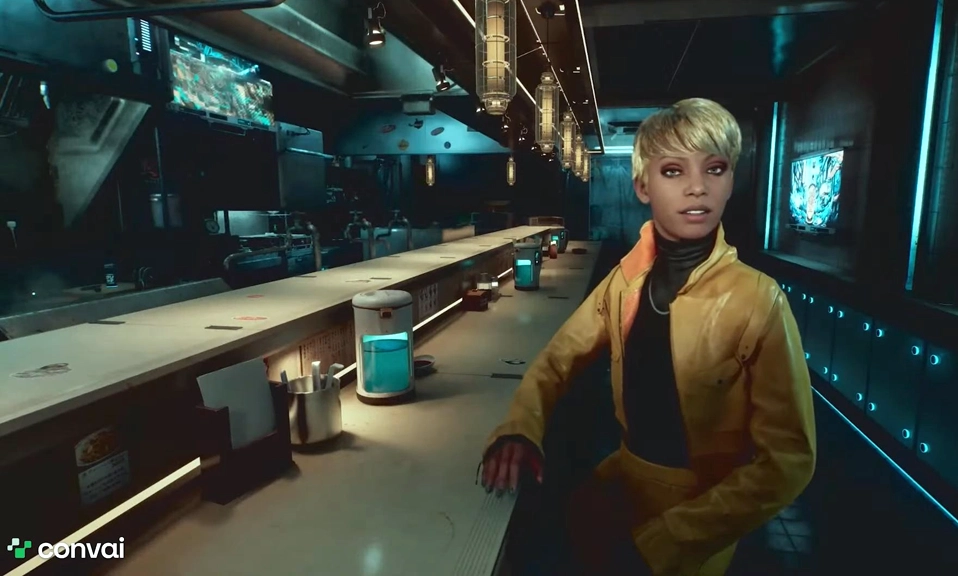
The old model was simple: NPCs were rule-based. They had a script, a set of barks, and a dialogue tree. Once you exhausted the tree, you exhausted the character. The new model is something else entirely. Large language models (LLMs) are enabling NPCs that converse openly, adapt to new situations, and behave in ways developers did not fully author.
Ubisoft’s Teammates prototype, demoed at Nvidia GTC 2026, is the clearest example. It places players in a first-person shooter alongside virtual soldiers who react to natural language, environmental context, and the player’s own slang. You can tell a teammate to “find cover behind that car and wait for my order to shoot the closest enemy”—and the character will parse the command, evaluate its surroundings, and execute the manoeuvre. It is not a dialogue tree. It is a conversation, rendered in real time.
The technical achievement is not just the model. It is the middleware. Ubisoft built an agnostic platform that abstracts the complexity of generative AI, allowing writers, artists, and designers to use it without a background in machine learning. The system translates gameplay building blocks into prompts, feeds them to the language model, and then translates the raw output back into engine-specific formats like facial animation data. It is a pipeline designed for production, not for a demo.
And the scope is expanding. Astrobuilder, an AI-native RPG, features 600+ AI-driven NPCs with unique identities, memories, and ambitions across 160+ planets. Wanderfolk, a medieval survival RPG, gives every villager persistent memory—they remember your interactions, track your reputation, and participate in a gossip network. A Sherlock Holmes game released on Steam in 2026 generates real-time dialogue text and voice acting, with NPCs that “remember, observe, check the player, and can deceive like a living person”.
The systematic evidence is catching up. A 2026 mapping study of 377 papers on LLM-based NPCs found that short-term memory and world-state grounding are already near-universal (60% and 69% adoption). But long-term memory (31%), reflection (38%), and retrieval-augmented generation (14%) remain rare—and response times still span 2.6 to 15 seconds. The technology works. It is not yet fast enough, or rich enough, to replace the best hand-authored characters. But it is close.
The Second Wave: Worlds That Build Themselves
The other great frontier is the world itself.
Google’s Genie 4, launched in research preview in October 2026, generates photorealistic, interactive 3D worlds from text prompts—and lets users type prompts mid-simulation to change the scene in real time. It can generate audio that syncs with the simulated world, including music, ambient sound, and interactive dialogue. Google says developers are already using it to go from “an initial idea to an explorable prototype in seconds, testing visual styles, material aesthetics, and interactive mechanics through natural language prompts before writing a single line of engine code”.
WorldGen, a system from Meta’s Reality Labs, takes a different approach. It combines LLM-driven scene layout reasoning, procedural generation, diffusion-based 3D generation, and object-aware scene decomposition to turn a text prompt into a traversable, fully textured environment that can be immediately explored or edited within standard game engines. The goal is not to replace the engine, but to bridge the gap between creative intent and functional virtual space—allowing creators to design coherent, navigable worlds without manual modelling or specialised 3D expertise.
Google’s Playground, launched in October 2026, goes further still: it lets users create, play, and share 2D and 3D games using simple text instructions, with no programming required. Finished games can be exported as HTML, JavaScript, and CSS files, shared via a link, or published in a public gallery. A partnership with Unity, called Unity Spark, is planned to bring more sophisticated mechanics and higher-quality 3D graphics.
The implications are profound. Prototyping cycles that once took months can now take hours. An indie studio without the budget for a full art team can generate a playable proof-of-concept from a prompt. A AAA developer can test a dozen visual styles before committing to one. The bottleneck is no longer the ability to create assets. It is the ability to decide what is worth creating.
The Third Wave: The Developer’s New Toolkit
The impact on game development itself is less visible to players, but arguably more transformative.
NitroGen, released by NVIDIA and Stanford in January 2026, is a “plays-any-game” AI trained on 40,000 hours of gameplay across more than 1,000 games. It is not a tool for making games. It is a tool for testing them—an AI agent that can play through a build, identify bugs, and provide feedback at a scale no human QA team could match.
Ubisoft’s middleware is being designed as a platform that “thousands of artists, writers and designers can use without needing a background in AI and machine learning”. The goal is to make generative AI a general-purpose tool, not a specialised discipline. The writer who wants a character to respond dynamically to player input should not need to understand inference pipelines or prompt optimisation. They should just need to write.
And the tools are proliferating. Emergence SDK manages belief states for AI characters. EnviroScatter Pro AI uses natural language to place props and optimise meshes in Unity. GameFactory-3A is an agent-driven framework that generates images, 3D models, animations, audio, CG video, gameplay code, and UI from a game requirement, then integrates the results into different engines. The ecosystem is fragmenting and specialising at the same time—a sign of a technology that is maturing fast.
The Counterargument: What AI Still Can’t Do
Not everyone is convinced that AI is the future of games. The most eloquent skeptic is Hideo Kojima, who told Game*Spark in November 2026 that while AI has improved efficiency, “the fun isn’t in finishing the picture. It’s in the process“.
Kojima draws a distinction between using AI for “creative output” and using it to form a “finished product”. “If you’re just making a ‘product,’ that’s fine,” he said, “but I think the fun for creators lies in the creative process itself. I think ‘creativity’ and ‘products’ are different things”.
His concern is not that AI will make bad games. It is that it will make efficient games—games that are optimised for production rather than for the messy, trial-and-error, deeply human process that produces something worth playing. “I’m worried about what will happen to that aspect of the enjoyment of craftsmanship in the future,” he said.
Jason Graves, the composer of Call of Duty: Modern Warfare 4, made a similar argument about AI music: “Music is not just a bunch of notes strung together.” The process is essential—”creative instincts forged by emotion and all the little decisions that give a piece of art its own unique personality”.
These are not Luddite objections. They are arguments about where value comes from in a creative medium. And they are not easily dismissed.
There are also practical concerns. The LLM-NPC mapping study identified six structural barriers to commercial adoption—including latency, safety, and reproducibility. Response times of 2.6 to 15 seconds are fine for a tech demo. They are not fine for a firefight. The technology is not yet reliable enough, or fast enough, to be invisible. And invisible is what it needs to be.
Smarter Games, Not Automatic Ones
Will AI completely change video games? Yes—but “completely” is doing a lot of work in that sentence.
The changes are already here. NPCs that listen, worlds that generate, tools that compress years of production into weeks. The next generation of games will feel different: more responsive, more personal, more alive. The line between a scripted experience and an emergent one will blur. The gap between a AAA studio and a solo developer will narrow, because the tools that were once locked behind institutional budgets will be available to anyone with a prompt and an idea.
But the change will not be automatic. AI does not remove the need for creative vision. It removes the friction that has always stood between vision and execution. The developer who knows what they want to make—who has the taste, the judgment, and the stubbornness to iterate until it is right—will be more powerful than ever. The developer who does not will produce more content, faster, that nobody wants to play.
Kojima is right that the fun is in the process. But the process is changing. The question is not whether AI will replace the human creator. It is whether the human creator will use AI to make something worth the effort—or just to make the effort easier.
The games of 2027 and beyond will be smarter. Whether they will be better is up to us.