Against a backdrop of staggering biodiversity loss, a quiet counter-narrative is unfolding. From the cloud forests of the Philippines to the icy waters of the Antarctic, species that were once on the very edge of existence are clawing their way back. These are not just feel-good stories; they are proof that when humans decide to intervene with sustained, science-led action, nature can, and does, recover.
Here are ten of nature’s greatest comebacks—species that are fighting their way back from the brink.
1. The Sihek (Guam Kingfisher): A Song Returns After 40 Years
The sihek, or Guam kingfisher, vanished from its native island in the 1980s, a victim of the invasive brown tree snake. For decades, it survived only in conservation facilities. In 2024, nine sihek were released into the wild at Palmyra Atoll, a carefully chosen sanctuary. The milestone came in 2026: for the first time in nearly 40 years, sihek pairs are nesting and laying eggs in the wild. Eight of the nine birds have coupled up and built nests, a critical step toward establishing a self-sustaining population and, one day, returning the species to Guam.
2. The Mongolian Saiga: From 1,000 to 28,800
In 1981, only about 1,000 Mongolian saigas remained, confined to a single region of the Gobi desert. A sustained conservation effort—combining legal protection, anti-poaching ranger networks, community engagement, and habitat restoration—has produced a spectacular result. By 2025, the population had grown to approximately 28,800. The saiga has even begun to naturally recolonise parts of its historic range, returning to the Khyargas Lake valley after many years. It is a textbook example of how optimal management can allow a species to recover on its own terms.
3. The Kakapo: A 75-Year High for the World’s Heaviest Parrot
The kakapo, a flightless, nocturnal parrot, is one of the world’s most critically endangered birds. In 1995, only 51 individuals remained. Through intensive conservation management, including supplementary feeding and predator-free island sanctuaries, the population has slowly rebuilt. In 2026, New Zealand recorded its highest kakapo population in 75 years, with 325 birds counted following a record breeding season that produced 90 chicks. The recovery is fragile, and securing safe, long-term habitats remains the next great challenge.
4. The Iberian Lynx: From Under 100 to Over 2,600
The Iberian lynx was the world’s most endangered wild cat. In 2002, fewer than 100 individuals remained. A massive, multi-partner conservation programme focused on habitat restoration, prey recovery, and captive breeding has delivered one of the greatest feline recovery stories ever told. By 2025, the population had reached 2,663 individuals—a nearly 95% increase since 2021. The number of breeding females has also risen, to 542, edging closer to the demographic milestone needed for a favourable conservation status.
5. The Tiger: A 70% Increase in 15 Years
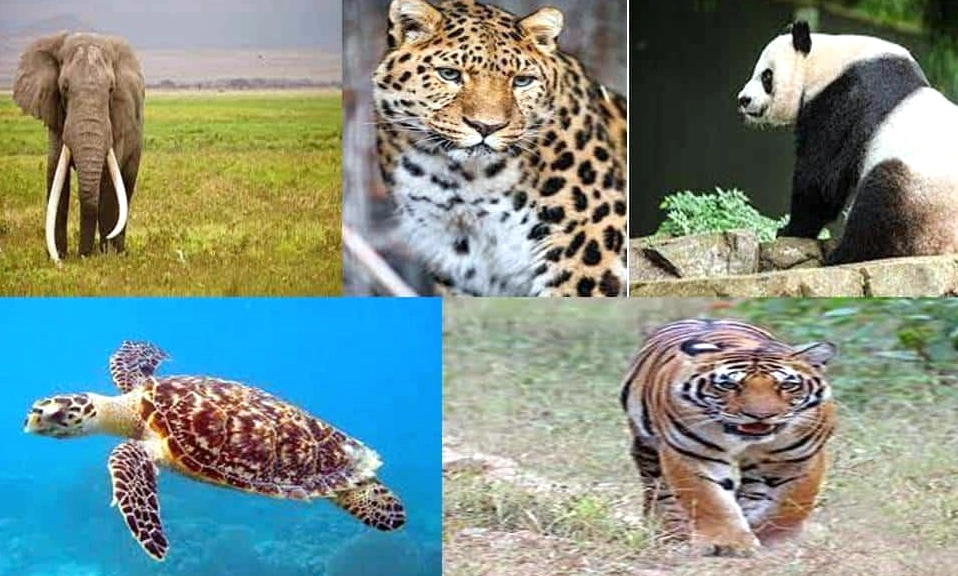
In 2010, the global wild tiger population had crashed to around 3,200 individuals. A coordinated, global effort—the Global Tiger Initiative—brought together governments, rangers, NGOs, and local communities to protect habitats, combat poaching, and restore prey populations. The result is the first documented reversal of the tiger’s long-term decline. By 2025, the population had risen to approximately 5,700—an increase of more than 70%. Tigers still occupy a fraction of their historic range, but the direction of travel has changed.
6. The Giant Panda: From 1,100 to Nearly 1,900
In the 1980s, the wild giant panda population had fallen to about 1,100 individuals. China’s systematic approach—establishing the Giant Panda National Park, integrating 73 nature reserves, building ecological corridors, and restoring habitat—has steadily rebuilt the population. By 2025, the wild population had grown to nearly 1,900. The park now places about 72% of wild pandas under strict protection, and the protected habitat area has expanded from 1.39 million to 2.58 million hectares.
7. The Antarctic Blue Whale: A 4.5% Annual Climb from Near Oblivion
Commercial whaling reduced the Antarctic blue whale population by a staggering 99.8%. By the time the last reported catch occurred in 1973, only a tiny fraction survived. After 50 years of protection, the population is slowly creeping back. A 2026 study estimated the total population at 4,018 individuals, up from an estimated 418, and growing at a rate of approximately 4.5% per year. They remain critically endangered and face new threats, but the long, slow road to recovery has begun.
8. The Green Sea Turtle: First Marine Turtle to Be Downlisted
In 2025, the green sea turtle became the first marine turtle ever to be downlisted from Endangered to Least Concern on the IUCN Red List. The change reflects 50 years of coordinated conservation work across roughly 80 countries—protecting nesting females and eggs, managing beaches, reducing bycatch, and enforcing bans on illegal take. It is a landmark achievement for a species that was once a symbol of marine decline.
9. The Black Rhino: Nearly Tripling from Its Lowest Point
Between 2001 and 2025, the black rhino population more than doubled. By the end of 2024, the estimated population had reached 6,788, an increase of 5.2% from the previous year and nearly three times the number recorded at its lowest point. The recovery is the result of relentless anti-poaching efforts, habitat protection, and range expansion—including the opening of Africa’s largest rhino sanctuary in Tsavo, Kenya, which gave the region’s black rhinos access to 30 times more space.
10. The Humpback Whale: From 2,000 to 35,000 in the South Atlantic
Brazil’s humpback whales were pushed to the brink by commercial whaling. Four decades ago, they were rarely seen in Brazilian waters—some researchers mistook them for rocks. Following the international ban on commercial whaling and Brazil’s own protections for breeding grounds, the population has staged a stunning comeback. In roughly 40 years, the South Atlantic population has risen from about 2,000 to around 35,000, bringing the species close to its pre-whaling levels.
Proof That Recovery Is Possible
These ten stories share a common thread: sustained, science-led, well-funded conservation works. They are not accidents. They are the result of rangers patrolling forests, communities engaging in stewardship, governments enforcing protections, and scientists tracking every individual.
The 2026 Living Planet Report is clear that nature is still in crisis, with monitored populations declining by an average of 73% since 1970. But it also makes the case for hope. Nearly half of all monitored populations are stable or increasing, and the species on this list prove that even the most desperate situations can be turned around.
The comebacks are real. The question now is whether we will build on them—or let them slip away again.