The kitchen has always been the heart of the home, but in 2026, it’s also the showpiece. The days of matching cabinet fronts and sterile white surfaces are fading. In their place: layered textures, warm metals, statement stone, and a quiet confidence that says “expensive” without shouting.
The good news? You don’t need a six-figure renovation to achieve the look. Many of this year’s most luxurious kitchen trends are about choices, not costs—the right materials, the right proportions, the right details. Here are 10 designs that make cooking spaces look expensive in 2026, and how to bring them into your own home.
1. Fluted and Reeded Cabinetry
The look: Vertical grooves carved into wood or painted cabinet fronts, adding texture and shadow play. Fluted cabinetry has moved from high-end furniture to kitchen islands, tall pantry doors, and base cabinets.
Why it looks expensive: Fluting is a detail that requires precision and craftsmanship. It adds depth and dimension to flat surfaces, making even a simple cabinet feel bespoke. It also catches light in a way that draws the eye and creates a sense of movement.
How to get it: Fluted panels are available as ready-made fronts from several manufacturers, or you can commission a local millworker to create custom doors. For a budget-friendly version, use fluted MDF panels painted in a rich, saturated colour.
2. Warm Metals: Brass, Bronze, and Copper
The look: Unlacquered brass hardware, bronze tapware, and copper pendant lights. The key is warmth—the metals that age and patina over time, developing a rich, lived-in character.
Why it looks expensive: Warm metals are associated with luxury and craftsmanship. Unlike cool chrome or stainless steel, they add a sense of history and organic beauty. They also pair beautifully with natural stone, wood, and earthy colour palettes.
How to get it: Swap chrome handles for unlacquered brass. Choose a brass or bronze tap for the sink. Add a brass pendant over the island. If you’re renovating, consider a brass or copper sink as a statement piece.
3. Statement Stone: Dramatic Veining and Book-Matching
The look: Marble, quartzite, or granite with bold, dramatic veining—used not just on countertops but also as a full-height backsplash or a waterfall island edge. Book-matching (mirroring the veining across two slabs) is the ultimate luxury detail.
Why it looks expensive: Natural stone is inherently luxurious, but the way it’s used makes the difference. A continuous vein running from counter to splash to floor creates a seamless, sculptural effect that looks like a work of art.
How to get it: Choose a slab with a pattern you love, and use it in more than one place. A waterfall edge on the island is a simple way to add drama. For a budget alternative, consider porcelain slabs with realistic stone patterns.
4. Integrated and Hidden Appliances
The look: Appliances that disappear—a fridge concealed behind cabinet fronts, a dishwasher with a matching panel, a microwave tucked into a drawer. The kitchen looks like furniture, not a showroom.
Why it looks expensive: Integration is a hallmark of high-end design. It creates visual calm and makes the kitchen feel more like a living space. It also allows the cabinetry to be the star, rather than a collection of stainless steel boxes.
How to get it: Panel-ready appliances are increasingly available at mid-range price points. If a full integration isn’t in the budget, start with the dishwasher or fridge—the two appliances that disrupt the visual line most.
5. Earthy, Saturated Colour Palettes
The look: Deep greens, rich terracottas, chocolate browns, and muted ochres. Not the bright, primary colours of the past, but the saturated, sophisticated tones of the earth.
Why it looks expensive: Colour is one of the most powerful tools in design, and the right palette can transform a space. Earth tones feel grounded, timeless, and connected to nature—all qualities associated with luxury. They also create a warm, enveloping atmosphere that makes a kitchen feel like a retreat.
How to get it: Paint the cabinets in a deep olive or a warm clay. Use a complementary colour on the walls or the island. Add natural wood and stone to ground the palette.
6. The Return of the Butler’s Pantry
The look: A small, secondary room or alcove for food prep, storage, and cleanup. Often hidden behind a cabinet door or a sliding panel, it keeps the main kitchen clutter-free.
Why it looks expensive: The butler’s pantry is the ultimate luxury of space—a dedicated area for the mess of cooking, leaving the main kitchen pristine for entertaining. Even a small pantry can create that sense of ease and organisation.
How to get it: If you have a spare corner or a closet, convert it into a pantry. Use open shelving, a secondary sink, and a countertop for appliances. If space is tight, a tall cabinet with pull-out shelves can serve a similar function.
7. Statement Range Hoods
The look: The range hood as a focal point—a sculptural plaster hood, a custom metal hood, or a sleek, minimalist design that makes a visual statement.
Why it looks expensive: A well-designed hood is a piece of architecture. It draws the eye upward and adds vertical interest to the kitchen. It also signals that the kitchen was designed with intention, not just assembled from a catalogue.
How to get it: Plaster hoods are a popular choice in 2026, offering a soft, organic texture that contrasts with harder surfaces. Metal hoods in brass or bronze add warmth. If you’re keeping your existing hood, consider a custom cover or a fresh coat of paint in a contrasting colour.
8. Layered Lighting
The look: Multiple light sources—pendants, sconces, recessed lights, under-cabinet lighting, and even picture lights—all layered to create depth and flexibility.
Why it looks expensive: Lighting is the most underrated element of luxury design. A single overhead light makes a kitchen feel flat and functional. Layered lighting creates warmth, highlights architectural features, and allows you to change the mood of the room at the flick of a switch.
How to get it: Add a pendant over the sink or the island. Install under-cabinet lighting for the counters. Use sconces on either side of a window or a hood. Add a dimmer switch so you can adjust the intensity.
9. Textural Backsplashes: Zellige, Slab, and Fluted Glass
The look: Backsplashes that add texture and personality—handmade zellige tiles with their irregular surfaces and glossy finish, full-height stone slabs, or fluted glass panels that catch the light.
Why it looks expensive: The backsplash is one of the most visible surfaces in the kitchen, and the right material can elevate the entire space. Zellige tiles, in particular, are prized for their artisanal quality and the way they reflect light. Fluted glass adds a contemporary, tactile element that feels both retro and modern.
How to get it: Zellige tiles are available at a range of price points. Use them on a smaller area, like the splash behind the hob, to keep costs down. Fluted glass panels are a budget-friendly alternative to custom tilework.
10. Curved Islands and Organic Edges
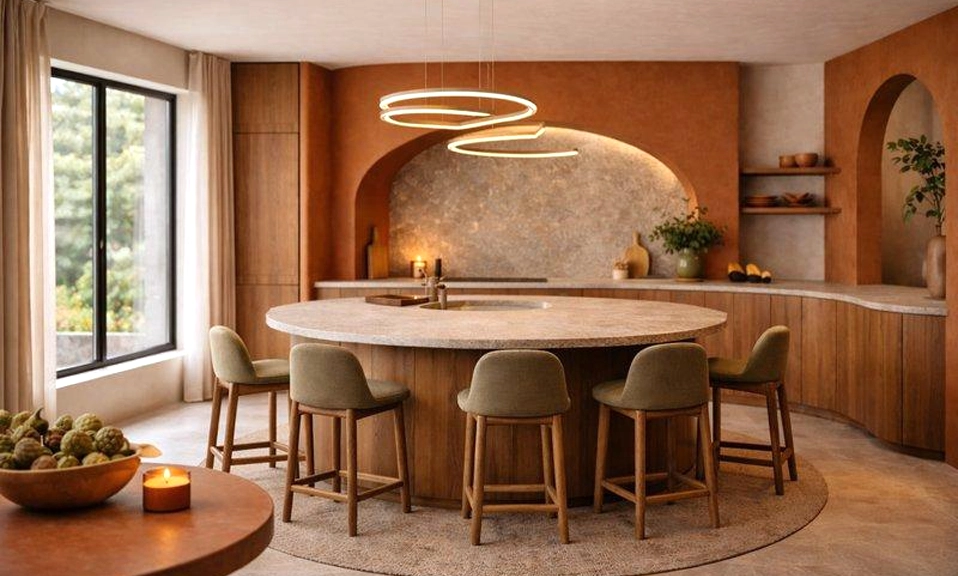
The look: Kitchen islands with rounded corners, curved edges, and organic shapes that soften the hard lines of a traditional kitchen.
Why it looks expensive: Curves are a sign of craftsmanship—they are harder to build than straight lines and they require a higher level of skill. They also create a softer, more welcoming space, which is increasingly valued in modern kitchen design.
How to get it: Choose an island with a rounded or bullnose edge. If you’re ordering a custom island, ask for curved corners. For a budget-friendly version, use a round dining table instead of a traditional island, or add curved bar stools to break up the straight lines.
The most expensive-looking
kitchens in 2026 are not necessarily the ones with the biggest budgets. They are the ones with intention—a clear point of view, a commitment to quality materials, and an eye for the details that make a space feel considered.
Fluted cabinetry, warm metals, statement stone, integrated appliances, earthy colour, butler’s pantries, sculptural hoods, layered lighting, textural backsplashes, and curved islands: these are the elements that define the modern luxury kitchen.
You don’t need all ten. Pick one or two that resonate with you, and build from there. The goal is not to imitate a showroom. It is to create a kitchen that feels like it was designed for you—because it was.