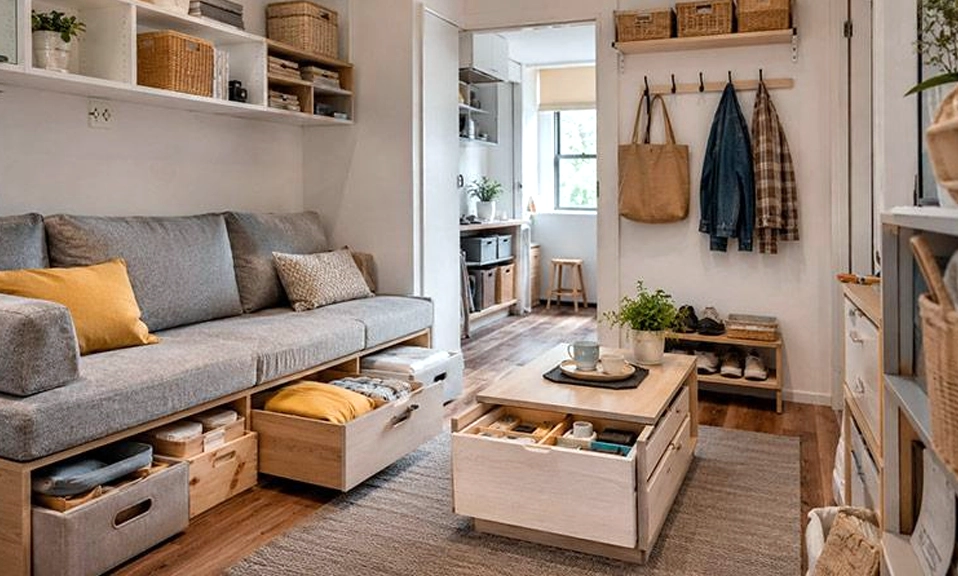
Small spaces are not a limitation. They’re a puzzle. And like any good puzzle, the solution isn’t about having more pieces—it’s about arranging the ones you have in a smarter way.
The average American home has shrunk by nearly 10% since the 1970s, while the average rent has skyrocketed. More people are living in studios, one-bedrooms, and converted lofts than ever before. The result is a cultural shift: small-space living is no longer a compromise. It’s a design challenge that has spawned an entire industry of clever solutions, from furniture that transforms to storage that hides in plain sight.
But not all organization tricks are created equal. Some sound brilliant on paper and fall apart in practice. Others require a contractor, a fortune, or a level of discipline most of us can’t sustain. The ten tricks below are different. They’re affordable, renter-friendly, and—most importantly—they actually work.
1. Go Vertical (Every Wall Is Storage)
The problem: Floor space is precious. Every square foot occupied by a bookshelf or a cabinet is a square foot you can’t walk on, sit in, or use for anything else.
The solution: Move storage upward. Install floating shelves above doorways, in corners, or along empty wall space. Hang a pegboard in the kitchen for utensils and pans. Mount a rail in the bathroom for towels and toiletries. Use the space above the toilet for a shelving unit. In a small apartment, the walls are your untapped real estate.
Why it works: Vertical storage keeps the floor clear, which makes a room feel larger. It also draws the eye upward, creating an illusion of height. And it’s cheap—a set of floating shelves and brackets can cost under $40.
2. Choose Furniture That Does Double Duty
The problem: A bed is just a bed. A sofa is just a sofa. In a small space, every piece of furniture occupies space that could be used for something else.
The solution: Choose furniture that serves multiple purposes. An ottoman with hidden storage. A bed with drawers underneath. A coffee table that lifts up to become a desk. A dining table that folds down from the wall. A sofa bed that turns a living room into a guest room.
Why it works: Multi-functional furniture reduces the number of items you need, which reduces clutter. It also maximizes the utility of every square foot. The key is to prioritize function without sacrificing style—there are beautiful, well-designed options at almost every price point.
3. Master the “One In, One Out” Rule
The problem: Clutter accumulates slowly. A new mug here, a new shirt there. Before you know it, your small space is overflowing with things you don’t use and don’t need.
The solution: Adopt a simple rule: for every new item that comes into your home, one item must leave. Buy a new sweater? Donate an old one. Get a new book? Finish one and pass it on. The rule forces you to be intentional about what you keep and prevents the slow creep of accumulation.
Why it works: Professional organizers often cite this as the single most effective habit for maintaining a clutter-free home. It’s not about deprivation—it’s about curating. You’re not saying no to new things. You’re saying yes to space.
4. Use Hidden Storage Spaces (They’re Everywhere)
The problem: You’ve filled the closets, the cabinets, and the shelves. There’s nowhere left to put anything.
The solution: Look for the spaces you’ve overlooked. The space under the bed (use flat storage bins or rolling drawers). The space behind the door (over-the-door organizers for shoes, cleaning supplies, or pantry items). The space above the refrigerator (baskets for rarely used items). The space under the sink (tension rods and stackable bins). The space inside the sofa (some models have hidden compartments).
Why it works: Hidden storage doesn’t add visual clutter, and it doesn’t require new furniture. It simply uses the space you already have more efficiently. A set of under-bed bins can cost under $30 and double your storage capacity.
5. Create Defined Zones (Even in a Studio)
The problem: In a small space, everything bleeds together. The bed is the sofa is the office is the dining table. It’s hard to relax when you can see your laptop from your pillow.
The solution: Create zones, even if they’re just a few feet apart. Use a rug to define the living area. A room divider or a bookshelf to separate the bedroom from the office. A small table that serves as a dining area and folds away when not in use. The goal is to give each activity its own physical space, so your brain can switch modes.
Why it works: Zones create psychological boundaries. They help you feel like you have more space, not less, because each area has a clear purpose. They also make a small space feel more intentional and less chaotic.
6. Use Clear Containers and Labels (The Visibility Effect)
The problem: You have storage bins and boxes, but you can’t remember what’s in them. So you buy duplicates, or you avoid using what you have because it’s too much effort to find it.
The solution: Swap opaque containers for clear ones. Use labels—written or printed—to identify contents. In the kitchen, decant dry goods into clear jars. In the bathroom, use clear bins for toiletries. In the closet, use clear shoe boxes or labeled bins for accessories.
Why it works: Visibility reduces duplication and wasted time. When you can see what you have, you use it. When you use it, you don’t buy more of it. Clear containers also create a sense of order that makes a small space feel calmer.
7. Install Tension Rods (The Renter’s Secret Weapon)
The problem: You can’t drill holes in your walls. You can’t install permanent shelving. You need storage that doesn’t require a handyman or a security deposit.
The solution: Tension rods. They’re cheap, removable, and endlessly versatile. Use them under the kitchen sink to hang cleaning spray bottles. Use them in the closet to hang extra clothes or bags. Use them in the bathroom to hang towels or shower caddies. Use them in a cabinet to create a second tier of storage.
Why it works: Tension rods require no tools, no drilling, and no permanent commitment. They’re perfect for renters, and they cost under $10 each. They’re the kind of small, clever solution that makes a big difference.
8. Fold Clothes Vertically (The KonMari Method That Actually Sticks)
The problem: You fold your clothes, stack them in a drawer, and then can’t find anything without pulling the whole stack apart. Within a week, the drawer is a mess again.
The solution: Fold clothes vertically, so they stand upright in the drawer like files in a filing cabinet. You can see every item at a glance, and you can pull one out without disturbing the others. This method—popularized by Marie Kondo but used by professional organizers for decades—works for t-shirts, jeans, underwear, and anything else that fits in a drawer.
Why it works: Vertical folding maximizes drawer space and eliminates the “bottom of the stack” problem. It also makes it easier to put things away, which means you’re more likely to maintain the system. Once you try it, you won’t go back.
9. Digitize and Minimize Paper
The problem: Paper is the silent clutter. Bills, receipts, manuals, letters, notes—it piles up in drawers and on counters, taking up space and creating visual noise.
The solution: Scan documents and store them digitally. Use a scanning app on your phone (many are free) to digitize receipts, bills, and important documents. Opt for paperless billing. Cancel paper statements. Keep only the documents you absolutely need—birth certificates, passports, deeds, wills—in a single, fireproof folder.
Why it works: Paper is one of the easiest categories to declutter because most of it is unnecessary. Digitizing eliminates the physical clutter, reduces the risk of losing important documents, and makes it easier to find what you need. A single folder can replace a filing cabinet.
10. Do a Seasonal Rotation (Store What You Don’t Need)
The problem: You’re storing winter coats in the same closet as summer dresses. You’re keeping holiday decorations in the same cabinet as everyday dishes. You’re using prime real estate for items you use two months a year.
The solution: Rotate your belongings seasonally. Store off-season clothing, holiday decorations, and seasonal gear in labeled bins in a closet, under the bed, or in a storage unit. Keep only the items you’re currently using in your prime storage spaces. When the season changes, swap them out.
Why it works: Seasonal rotation frees up valuable space for the things you use every day. It also protects off-season items from dust and damage. And it makes your space feel fresh and updated, because you’re effectively redecorating twice a year with items you already own.
Smart Storage, Not More Space
The most important lesson of small-space organization is that you don’t need more space. You need better systems.
The tricks on this list aren’t about buying expensive storage solutions or renovating your apartment. They’re about using the space you already have more intelligently. Going vertical. Choosing furniture that works harder. Hiding storage in plain sight. Creating zones. Adopting habits that prevent clutter from accumulating.
Start with one. Try the “one in, one out” rule for a week. Install a tension rod. Fold your t-shirts vertically. See how it feels. Then add another. The transformation doesn’t happen overnight, but it does happen—one small, clever decision at a time.
Your space is small. But your ideas don’t have to be.