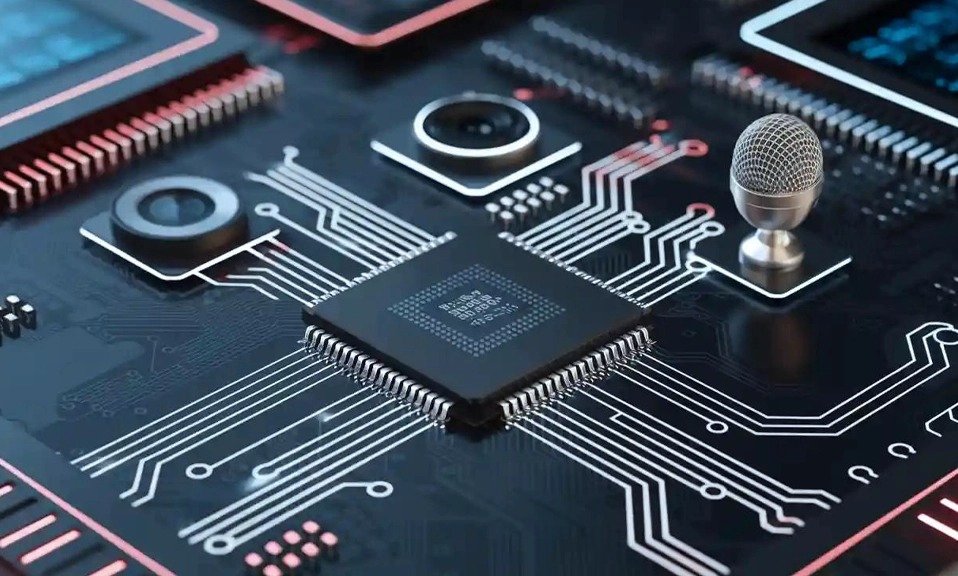
The voice assistant on your phone is backed by billions of parameters, massive data centers, and years of engineering. A new wave of research suggests that a model small enough to fit in a text message—just 32 megabytes—might be able to handle many of the same tasks. It sounds like a fantasy. But it is also a serious question that cuts to the heart of how we think about artificial intelligence: does bigger always mean better, or have we been overbuilding the assistants we use every day?
The model in question is part of a growing class of ultra-compact, on-device AI systems designed specifically for voice interaction. These are not general-purpose language models. They are specialised tools, trained on narrow tasks—wake-word detection, intent recognition, basic command execution—and compressed to a fraction of the size of a cloud-based assistant. At 32MB, such a model can run entirely on a low-power microcontroller, with no internet connection, no data leaving the device, and near-instant response times.
The claim that it can “compete” with Siri, Alexa, or Google Assistant is both true and misleading. It depends entirely on what you mean by compete.
What a 32MB Model Can Actually Do
The first thing to understand is that a 32MB model is not a scaled-down version of a large language model. It is a different kind of system altogether. It does not generate free-form text, answer trivia questions, or hold a conversation about the meaning of life. It does not know what the weather is in Tokyo unless that information is explicitly programmed or retrieved from a connected service.
What it can do is handle the narrow, repetitive, high-frequency tasks that make up the vast majority of voice assistant interactions. It can recognise wake words. It can parse simple commands: “set a timer,” “turn on the lights,” “call Mom,” “play my playlist,” “what’s the temperature?” It can understand a limited vocabulary and a constrained grammar, and it can execute the corresponding actions reliably and quickly.
For these tasks, a 32MB model can be remarkably effective. It is fast—often faster than cloud-based assistants because there is no round-trip to a server. It is private—no audio leaves the device. It is always available—no connectivity required. And it is cheap—it can run on hardware that costs pennies, enabling voice control in devices that would never justify a full cloud assistant.
Where It Cannot Compete
The limitations are just as important as the capabilities.
Complex reasoning and context. A 32MB model cannot follow a multi-turn conversation, remember what you said five minutes ago, or understand nuanced language. It cannot answer open-ended questions, generate creative content, or handle ambiguity gracefully. If you ask “what’s the best restaurant near me that’s open now and has good reviews for vegan food,” it will not be able to reason through the options.
Breadth of knowledge. A cloud assistant has access to the entire internet and a vast database of facts. A 32MB model has only what it was trained on. It cannot tell you the capital of a country it was not explicitly taught, or the score of last night’s game.
Continuous learning and updates. Cloud assistants improve over time as the underlying models are updated. A 32MB model is static unless it is retrained and redeployed—a process that is far more cumbersome than pushing a server-side update.
Multimodal understanding. Modern assistants can process images, understand screen context, and integrate with apps. A 32MB model is typically audio-only and app-agnostic.
In short, a 32MB model can compete on speed, privacy, and cost for a narrow set of tasks. It cannot compete on capability, flexibility, or intelligence.
The Real Breakthrough: Specialisation Over Scale
The significance of the 32MB model is not that it replaces the big assistants. It is that it demonstrates a different design philosophy: specialisation over scale.
For years, the dominant trend in AI has been to build ever-larger models that can do everything. The 32MB model suggests an alternative: build tiny, highly optimised models that do one thing exceptionally well. This is not a new idea—it is how embedded systems have always worked—but it is newly relevant as AI moves into every device, from earbuds to appliances to cars.
The implications are significant. If voice control can be embedded in a $5 chip, it can go everywhere. It can make devices more accessible for people with disabilities. It can enable hands-free operation in environments where cloud connectivity is unreliable. It can reduce the energy footprint of AI by orders of magnitude. And it can do all of this without the privacy concerns that come with always-listening cloud devices.
The Hybrid Future
The most realistic outcome is not a choice between tiny on-device models and powerful cloud assistants. It is a hybrid architecture where the two work together.
Your device could use a 32MB model for wake-word detection, basic commands, and routine tasks—handling them instantly and privately. When you ask something complex—a multi-step request, a question that requires external data, a conversation that needs context—the device escalates to a cloud-based assistant. The tiny model acts as a first line of defence, reducing latency, saving bandwidth, and protecting privacy for the majority of interactions.
This is already happening in some devices. The 32MB model is not a competitor to Siri or Alexa. It is a complement to them—a way to make voice assistance faster, more private, and more ubiquitous without sacrificing the intelligence that cloud models provide.
Can a tiny 32MB AI model
really compete with powerful voice assistants? The honest answer is: it can compete on the tasks that matter most, but it cannot replace the intelligence that makes modern assistants useful.
A 32MB model is not a smaller Siri. It is a different kind of tool—a specialised, efficient, private, and cheap voice interface that excels at the routine and struggles with the complex. It represents a genuine breakthrough in on-device AI, and it points toward a future where intelligence is distributed across devices rather than centralised in the cloud.
The big assistants will not disappear. They will become the “heavy lifters” for complex queries, while the tiny models handle the day-to-day. The question is not whether a 32MB model can beat a billion-parameter assistant. It is whether we can design systems that use both to their strengths. On that front, the answer is a resounding yes—and that is where the real innovation lies.